




Timing Belt Age
Addict
Rennlist Member
Rennlist Member

Joined: Aug 2002
Posts: 3,489
Likes: 163
From: Plano, Tx.

Sean and Chuck are more than correct, the dollar ratio from TB/WP replacement to pulling a head is reason enough. Peace of mind. you will enjoy the car more if the TB isn't the first thing you think about when you turn the key.
I think time is more important than mileage unless the miles are big.
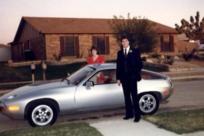
Where was the picture of "Smilin Sean" taken Chuck?
I think time is more important than mileage unless the miles are big.
Where was the picture of "Smilin Sean" taken Chuck?
We went to Motorsport Ranch outside of Ft. Worth for a track day to kick it off.
Good times!!


Race Car

Joined: Jan 2010
Posts: 3,722
Likes: 5
From: Greensboro, NC
My 2006 Honda Civic Hybrid is 6 1/2 years old with 80,000 miles. The serpentine belt does very little work compared to a 928 and with far less torque. Lifespan is 80-105,000 miles.
Just had it replaced as it looked like dry rot was setting in. Mind you the car sees a lot of miles in all weather and salt--but also remember we all warn each other that tires over 6 years old should be avoided for the same reason.
I would not keep a belt for more than 6 years regardless of mileage-regardless of belt. Mine is 3 years old and being changed next month after a few thousand miles.
Just had it replaced as it looked like dry rot was setting in. Mind you the car sees a lot of miles in all weather and salt--but also remember we all warn each other that tires over 6 years old should be avoided for the same reason.
I would not keep a belt for more than 6 years regardless of mileage-regardless of belt. Mine is 3 years old and being changed next month after a few thousand miles.

Rennlist Member
Joined: Oct 2003
Posts: 2,050
Likes: 760
From: Saco, Maine/ Scarborough, Maine
The 91 GT I just picked up had 24K miles and all repair docs showed belt was never changed and it was the original TB. When we pulled it, it looked good, no cracks it dry rot. All the rest of the drive belts same way, looked new. Changed out the TB, Tensioner and WP, as well as changed drive belts also and should be good for about 5 years. Gears looked new..
Race Car
Joined: Jan 2010
Posts: 3,722
Likes: 5
From: Greensboro, NC
The 91 GT I just picked up had 24K miles and all repair docs showed belt was never changed and it was the original TB. When we pulled it, it looked good, no cracks it dry rot. All the rest of the drive belts same way, looked new. Changed out the TB, Tensioner and WP, as well as changed drive belts also and should be good for about 5 years. Gears looked new..
Rennlist Member
Joined: Oct 2003
Posts: 2,050
Likes: 760
From: Saco, Maine/ Scarborough, Maine
Mickster...yes, temp and humidity as well as radiant heat floor!!
The tires on the car were from 1995 and they didn't have any cracks or dry rot. I actually drove the 70 miles home on them and only had a slight shake at around 65 MPH. They are off the car now, but look like new sitting in my garage.
So far about 650 miles clocked on it since I got it and no leaks anywhere!!
The tires on the car were from 1995 and they didn't have any cracks or dry rot. I actually drove the 70 miles home on them and only had a slight shake at around 65 MPH. They are off the car now, but look like new sitting in my garage.
So far about 650 miles clocked on it since I got it and no leaks anywhere!!
Intermediate
Joined: Dec 2010
Posts: 33
Likes: 0
From: anytown
My '83 has 63000 miles, the belt was done at 33,000. I believe that as a US car no damage would be done to the motor, IT THAT TRUE?
The belt change was like 9 years ago i have all paperwork. I won't rev it hard until i do the belt.
I just bought the car this past July and have owned 911s for almost 20 years.
I really enjoy the 928.
The belt looks fine, but it's always on my mind.
I am trying to get it back on the road after paint restoration.
The belt change was like 9 years ago i have all paperwork. I won't rev it hard until i do the belt.
I just bought the car this past July and have owned 911s for almost 20 years.
I really enjoy the 928.
The belt looks fine, but it's always on my mind.
I am trying to get it back on the road after paint restoration.

Official Bay Area Patriot
Fuse 24 Assassin
Rennlist Member
Fuse 24 Assassin
Rennlist Member
Joined: Nov 2001
Posts: 31,684
Likes: 127
The last few posts indicate that if cars are stored inside in a somewhat stable temperature, does that mean the belt lasts longer? I took a look at mine yesterday when I took the intake tubes off and shoved a flashlight down the inspection hole. There were no cracks on the belt, but obviously you can see the factory Conti label worn as a result since passing through the rollers. The belt looks okay still and I'm not driving the car that much. I think when my first DIY belt job comes around, I may ask for some local Rennlister help on here.
Rennlist Stories
The Best Porsche Posts for Porsche Enthusiasts

Thinking of Buying a Porsche? Do These 10 Things First
Joe Kucinski
Pixar Pals Turned Into 1-of-1 Porsches!
Michael S. Palmer
Theon Goes Full Carbon Fiber With Stunning New Build
Verdad Gallardo
Genius Porsche-Themed Gifts That'll Make Any Dad or Grad Smile
Joe Kucinski
10 Used Porsches Are Selling for Way Too Cheap
Joe Kucinski
Tuner Is Converting Porsche 911s Into Shooting Brakes
Verdad Gallardo
This Coachbuilt Creation Is A Modern Take on the Legendary Porsche 917
Verdad Gallardo
Is This Convertible Cayenne A Steal, Or A Returnless Investment?
Verdad Gallardo
10 Best Non-Flat Six Porsches You Can Buy For Under $100K
Joe Kucinski
Former Vendor
Joined: Feb 2005
Posts: 15,228
Likes: 2,530
From: Anaheim
The last few posts indicate that if cars are stored inside in a somewhat stable temperature, does that mean the belt lasts longer? I took a look at mine yesterday when I took the intake tubes off and shoved a flashlight down the inspection hole. There were no cracks on the belt, but obviously you can see the factory Conti label worn as a result since passing through the rollers. The belt looks okay still and I'm not driving the car that much. I think when my first DIY belt job comes around, I may ask for some local Rennlister help on here.
Three Wheelin'
Joined: Feb 2009
Posts: 1,808
Likes: 0
From: Washington "Dc"
Take an old belt and twist it. Look between the teeth. You will usually see some degrading or cracking. When an old belt fails, it doesnt 'pop' .. Usually the teeth seperate from the belt. This more often than not occurs not at High RPMS (where the momenteum of the rotating parts is high.) Its usually at startup or when you pull off (changing enging speeds from 0 -800RPM or idle to 3krpms). That feeling of a dead engine followed by a spinning crank is not one that should be experienced. I had a timing chain break on a inline 6 chevy in highschool. Tried to start from a light on a hill and that was that. Age matters in any material that can deteriorate over time.
Official Bay Area Patriot
Fuse 24 Assassin
Rennlist Member
Fuse 24 Assassin
Rennlist Member
Joined: Nov 2001
Posts: 31,684
Likes: 127
I'm sure it doesn't. Either way it's going to be replaced. I do have one question that I could never understand on these cars. I've seen John Pirtle's DIY several years back as well as some posts on here about it. Why must the engine be turned to 45 degrees when the belt is removed and replaced? Why can't it be set at TDC during this process to ensure that the engine cam timing is set correctly? Is it just because one can rotate the cams at 45 degrees to align them (of course when the 45 degree mark is painted on each gear)? I have pasted in John Pirtle's link below.
http://members.rennlist.com/pirtle/tbelt.html
http://members.rennlist.com/pirtle/tbelt.html
Official Bay Area Patriot
Fuse 24 Assassin
Rennlist Member
Fuse 24 Assassin
Rennlist Member
Joined: Nov 2001
Posts: 31,684
Likes: 127
Take an old belt and twist it. Look between the teeth. You will usually see some degrading or cracking. When an old belt fails, it doesnt 'pop' .. Usually the teeth seperate from the belt. This more often than not occurs not at High RPMS (where the momenteum of the rotating parts is high.) Its usually at startup or when you pull off (changing enging speeds from 0 -800RPM or idle to 3krpms). That feeling of a dead engine followed by a spinning crank is not one that should be experienced. I had a timing chain break on a inline 6 chevy in highschool. Tried to start from a light on a hill and that was that. Age matters in any material that can deteriorate over time.

Race Car
Joined: Jan 2009
Posts: 4,665
Likes: 196
I'm sure it doesn't. Either way it's going to be replaced. I do have one question that I could never understand on these cars. I've seen John Pirtle's DIY several years back as well as some posts on here about it. Why must the engine be turned to 45 degrees when the belt is removed and replaced? Why can't it be set at TDC during this process to ensure that the engine cam timing is set correctly? Is it just because one can rotate the cams at 45 degrees to align them (of course when the 45 degree mark is painted on each gear)? I have pasted in John Pirtle's link below.
http://members.rennlist.com/pirtle/tbelt.html
http://members.rennlist.com/pirtle/tbelt.html
Three Wheelin'
Joined: Feb 2009
Posts: 1,808
Likes: 0
From: Washington "Dc"
I'm sure it doesn't. Either way it's going to be replaced. I do have one question that I could never understand on these cars. I've seen John Pirtle's DIY several years back as well as some posts on here about it. Why must the engine be turned to 45 degrees when the belt is removed and replaced? Why can't it be set at TDC during this process to ensure that the engine cam timing is set correctly? Is it just because one can rotate the cams at 45 degrees to align them (of course when the 45 degree mark is painted on each gear)? I have pasted in John Pirtle's link below.
http://members.rennlist.com/pirtle/tbelt.html
http://members.rennlist.com/pirtle/tbelt.html
Official Bay Area Patriot
Fuse 24 Assassin
Rennlist Member
Fuse 24 Assassin
Rennlist Member
Joined: Nov 2001
Posts: 31,684
Likes: 127
This makes a lot of sense now. When I begin my project I will make sure I get everything lined up at 45 degrees before pulling the belt off. I am still debating on getting a Porkensioner since this will be sort of a budget TB/WP and I have to allocate the funds to a new Laso.
On a side note, if I hijacked this thread, sorry!
On a side note, if I hijacked this thread, sorry!