







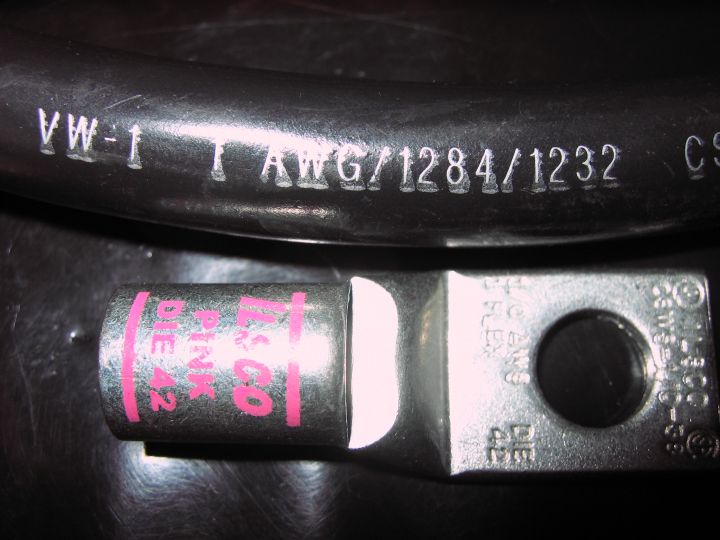
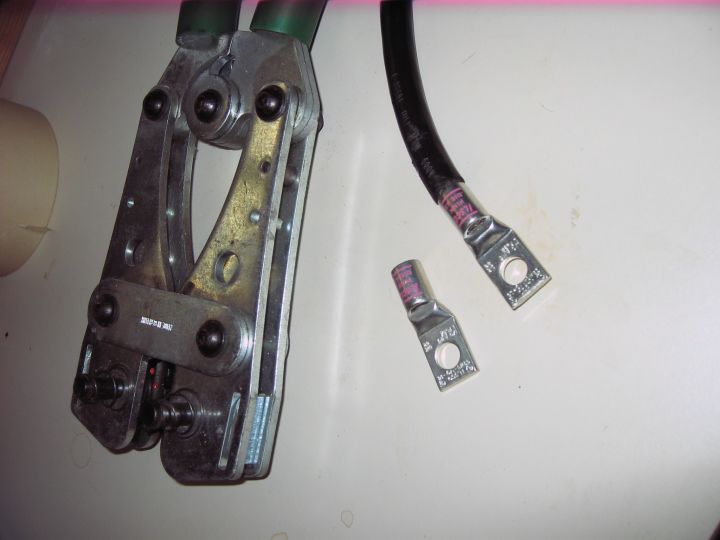
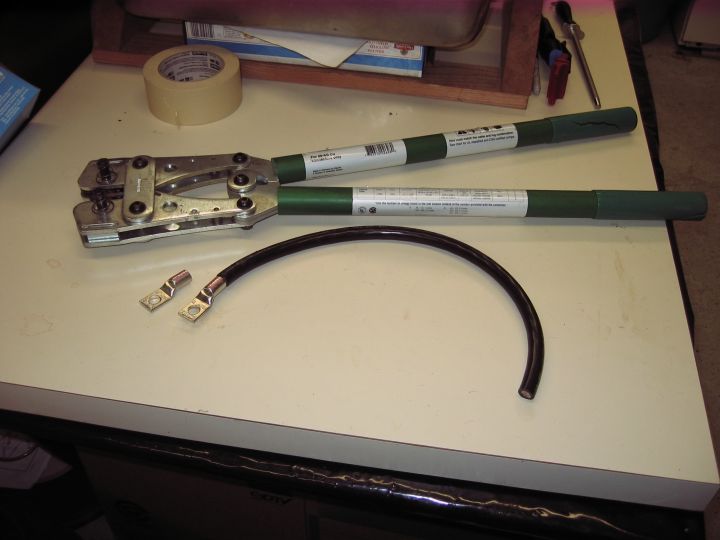

Wire repair: here's how I do it.

Rennlist Member

Joined: Jul 2009
Posts: 3,067
Likes: 436
From: Cleveland, MN

There are many good hand crimpers. The ratchet types are the best. The “hand squeeze” crimpers are marginal and should only be used in an act of desperation or on circuits that don’t really matter!
Even the ratchet type do not provide a “gas tight” crimp that is required by even some lowly commercial standards. That requires a “multi-ton” press.
Soldering, when properly done, is the best electrical connection but can have its problems as well. Flux, if improper, can actually corrode copper wire to the point of failure.
Also, a solder joint in the wrong application can cause a stress point that could quickly fail under extreme vibration.
The best solution, is to know, what to use, when, and were.
Even the ratchet type do not provide a “gas tight” crimp that is required by even some lowly commercial standards. That requires a “multi-ton” press.
Soldering, when properly done, is the best electrical connection but can have its problems as well. Flux, if improper, can actually corrode copper wire to the point of failure.
Also, a solder joint in the wrong application can cause a stress point that could quickly fail under extreme vibration.
The best solution, is to know, what to use, when, and were.
Last edited by depami; Sep 2, 2011 at 02:26 AM.
Thread Starter
Three Wheelin'
Joined: Apr 2010
Posts: 1,295
Likes: 1
From: Virginia Beach, VA
There are many good hand crimpers. The ratchet types are the best. The “hand squeeze” crimpers are marginal and should only be used in an act of desperation or on circuits that don’t really matter!
Even the ratchet type do not provide a “gas tight” crimp that is required by even some lowly commercial standards. That requires a “multi-ton” press.
Soldering, when properly done, is the best electrical connection but can have its problems as well. Flux, if improper, can actually corrode copper wire to the point of failure.
Also, a solder joint in the wrong application can cause a stress point that could quickly fail under extreme vibration.
The best solution is to know what to use when and were.
Even the ratchet type do not provide a “gas tight” crimp that is required by even some lowly commercial standards. That requires a “multi-ton” press.
Soldering, when properly done, is the best electrical connection but can have its problems as well. Flux, if improper, can actually corrode copper wire to the point of failure.
Also, a solder joint in the wrong application can cause a stress point that could quickly fail under extreme vibration.
The best solution is to know what to use when and were.
Thread Starter
Three Wheelin'
Joined: Apr 2010
Posts: 1,295
Likes: 1
From: Virginia Beach, VA
Thread Starter
Three Wheelin'
Joined: Apr 2010
Posts: 1,295
Likes: 1
From: Virginia Beach, VA
Now that is a serious crimper!
Rennlist Stories
The Best Porsche Posts for Porsche Enthusiasts

Every Era of 911 Owner Explained in One Sentence
Verdad Gallardo
Thinking of Buying a Porsche? Do These 10 Things First
Joe Kucinski
Pixar Pals Turned Into 1-of-1 Porsches!
Michael S. Palmer
Theon Goes Full Carbon Fiber With Stunning New Build
Verdad Gallardo
Genius Porsche-Themed Gifts That'll Make Any Dad or Grad Smile
Joe Kucinski
10 Used Porsches Are Selling for Way Too Cheap
Joe Kucinski
Tuner Is Converting Porsche 911s Into Shooting Brakes
Verdad Gallardo
This Coachbuilt Creation Is A Modern Take on the Legendary Porsche 917
Verdad Gallardo
Is This Convertible Cayenne A Steal, Or A Returnless Investment?
Verdad Gallardo
Rest in Peace
Rennlist Member
Rennlist Member
Joined: May 2006
Posts: 9,903
Likes: 2
From: Bird lover in Sharpsburg
I can tell you guys this much, I have replaced, cut out, cussed at thousands of crimped connections, Scotch locks, wire nuts, and tape over the last 40 years, but maybe only two to three properly done solder connections.
For what that is worth, and there is a reason that solder is not a good idea on aircraft, more than one actually.
It is all spelled out in AC 43-13 IIRC.
The absolute bottom line for doing a non solder connection, IE a crimp, is exactly like has been show above, a very high quality crimper.
Mine is not a ratchet type, but a custom tool made in Germany, sold by Wurth, based (Built?) on a fixed vise grip frame, but the idea is the same, get good compression.
(Got one of the big ones for doing battery cables if any one needs them crimped/soldered that is close enough to come to the shop.)
Use a good quality crimp barrel, none of this NAPA or Home Depot stuff, and of the right size for the wires.
I also like the potted type of heat shrink.
I have several different gas solder irons and flames/heat shrink tools that run on Butane and a catalyst.
Plus the usual electrical ones that never gets used.
One of the best accessories I have for this is a couple of the holding devices you get from Radio Shack that has two alligator clamps and a magnifying glass on them, and a wet sponge pad.
One other thing, if you do crimp, always do a pull test on the wires as soon as you do the crimp.
I am sure I am also going to be told how wrong I am, but I started using a 2% Silver, Rosin core solder for my Electrical work, as it seems to flow better and stick better.
Good thread BTW.
PS, If you really want to make your head hurt, just research which is the best Solder for what job.
For what that is worth, and there is a reason that solder is not a good idea on aircraft, more than one actually.
It is all spelled out in AC 43-13 IIRC.
The absolute bottom line for doing a non solder connection, IE a crimp, is exactly like has been show above, a very high quality crimper.
Mine is not a ratchet type, but a custom tool made in Germany, sold by Wurth, based (Built?) on a fixed vise grip frame, but the idea is the same, get good compression.
(Got one of the big ones for doing battery cables if any one needs them crimped/soldered that is close enough to come to the shop.)
Use a good quality crimp barrel, none of this NAPA or Home Depot stuff, and of the right size for the wires.
I also like the potted type of heat shrink.
I have several different gas solder irons and flames/heat shrink tools that run on Butane and a catalyst.
Plus the usual electrical ones that never gets used.
One of the best accessories I have for this is a couple of the holding devices you get from Radio Shack that has two alligator clamps and a magnifying glass on them, and a wet sponge pad.
One other thing, if you do crimp, always do a pull test on the wires as soon as you do the crimp.
I am sure I am also going to be told how wrong I am, but I started using a 2% Silver, Rosin core solder for my Electrical work, as it seems to flow better and stick better.
Good thread BTW.
PS, If you really want to make your head hurt, just research which is the best Solder for what job.
Nordschleife Master
Joined: Oct 2006
Posts: 8,575
Likes: 6
From: Orange, Cal
Too bad these have so few dies, 8 ton hydraulic crimp.
http://www.harborfreight.com/hydraul...ool-66150.html
HF also has an ok quality ratcheting crimper "like" the Paladin for $12.
http://www.harborfreight.com/hydraul...ool-66150.html
HF also has an ok quality ratcheting crimper "like" the Paladin for $12.
Rest in Peace
Rennlist Member
Rennlist Member
Joined: May 2006
Posts: 9,903
Likes: 2
From: Bird lover in Sharpsburg
Too bad these have so few dies, 8 ton hydraulic crimp.
http://www.harborfreight.com/hydraul...ool-66150.html
HF also has an ok quality ratcheting crimper "like" the Paladin for $12.
http://www.harborfreight.com/hydraul...ool-66150.html
HF also has an ok quality ratcheting crimper "like" the Paladin for $12.
Rennlist Member
Joined: Jul 2009
Posts: 3,067
Likes: 436
From: Cleveland, MN
I can tell you guys this much, I have replaced, cut out, cussed at thousands of crimped connections, Scotch locks, wire nuts, and tape over the last 40 years, but maybe only two to three properly done solder connections.
For what that is worth, and there is a reason that solder is not a good idea on aircraft, more than one actually.
It is all spelled out in AC 43-13 IIRC.
The absolute bottom line for doing a non solder connection, IE a crimp, is exactly like has been show above, a very high quality crimper.
Mine is not a ratchet type, but a custom tool made in Germany, sold by Wurth, based (Built?) on a fixed vise grip frame, but the idea is the same, get good compression.
(Got one of the big ones for doing battery cables if any one needs them crimped/soldered that is close enough to come to the shop.)
Use a good quality crimp barrel, none of this NAPA or Home Depot stuff, and of the right size for the wires.
I also like the potted type of heat shrink.
I have several different gas solder irons and flames/heat shrink tools that run on Butane and a catalyst.
Plus the usual electrical ones that never gets used.
One of the best accessories I have for this is a couple of the holding devices you get from Radio Shack that has two alligator clamps and a magnifying glass on them, and a wet sponge pad.
One other thing, if you do crimp, always do a pull test on the wires as soon as you do the crimp.
I am sure I am also going to be told how wrong I am, but I started using a 2% Silver, Rosin core solder for my Electrical work, as it seems to flow better and stick better.
Good thread BTW.
PS, If you really want to make your head hurt, just research which is the best Solder for what job.
For what that is worth, and there is a reason that solder is not a good idea on aircraft, more than one actually.
It is all spelled out in AC 43-13 IIRC.
The absolute bottom line for doing a non solder connection, IE a crimp, is exactly like has been show above, a very high quality crimper.
Mine is not a ratchet type, but a custom tool made in Germany, sold by Wurth, based (Built?) on a fixed vise grip frame, but the idea is the same, get good compression.
(Got one of the big ones for doing battery cables if any one needs them crimped/soldered that is close enough to come to the shop.)
Use a good quality crimp barrel, none of this NAPA or Home Depot stuff, and of the right size for the wires.
I also like the potted type of heat shrink.
I have several different gas solder irons and flames/heat shrink tools that run on Butane and a catalyst.
Plus the usual electrical ones that never gets used.
One of the best accessories I have for this is a couple of the holding devices you get from Radio Shack that has two alligator clamps and a magnifying glass on them, and a wet sponge pad.
One other thing, if you do crimp, always do a pull test on the wires as soon as you do the crimp.
I am sure I am also going to be told how wrong I am, but I started using a 2% Silver, Rosin core solder for my Electrical work, as it seems to flow better and stick better.
Good thread BTW.
PS, If you really want to make your head hurt, just research which is the best Solder for what job.

Thread Starter
Three Wheelin'
Joined: Apr 2010
Posts: 1,295
Likes: 1
From: Virginia Beach, VA
Rennlist Member
Joined: Jul 2009
Posts: 3,067
Likes: 436
From: Cleveland, MN
Connetions
Connections!!!
You are bored and so am I!
R'nt wi tokon bout de saim ting?
You are bored and so am I!
Last edited by depami; Sep 2, 2011 at 01:59 AM.