


intake refresh and Hall sensor


Addict
Rennlist Member
Rennlist Member

Joined: Jul 2001
Posts: 7,333
Likes: 117
From: Shawnee, KS, USA

California, of course, which is one possible reason why it sucks. 

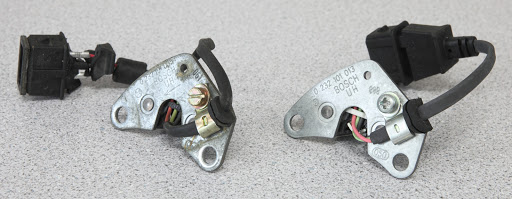
rgs944, regarding the hall sensor... don't be surprised if the replacement hall sensor you get has a shorter cable than the original one. IIRC, when I replaced mine, the shorter cable on the new one was short enough that I couldn't get the connectors fastened on the bracket in the same orientation that they were originally; I had to flip them 180 degrees (hall sensor connector on bottom, I think). Unfortunately, I didn't get a "before/after" photo of the connections, but you can probably see the difference in the cable length here:
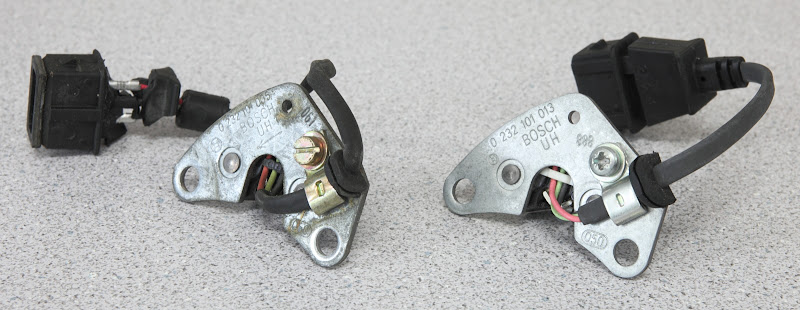
rgs944, regarding the hall sensor... don't be surprised if the replacement hall sensor you get has a shorter cable than the original one. IIRC, when I replaced mine, the shorter cable on the new one was short enough that I couldn't get the connectors fastened on the bracket in the same orientation that they were originally; I had to flip them 180 degrees (hall sensor connector on bottom, I think). Unfortunately, I didn't get a "before/after" photo of the connections, but you can probably see the difference in the cable length here:

Drifting
Joined: Dec 2003
Posts: 2,739
Likes: 276
From: Oklahoma
Hmmm. Wish I had taken pics of mine when we had it off. My car has option code C03 - California emissions, whereas most U.S. models have code C02. I've always wondered what the difference was, perhaps this is part of it.


Addict
Rennlist Member
Rennlist Member
Joined: Oct 2003
Posts: 17,260
Likes: 2,143
From: Gone. On the Open Road
By '88 (probably mid-87) there's only one port and it gets hooked up to the air pump diverter valve.
Thread Starter
Drifting

Joined: Jan 2010
Posts: 3,334
Likes: 8
From: Nebraska
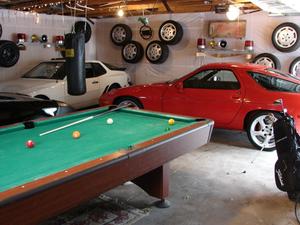
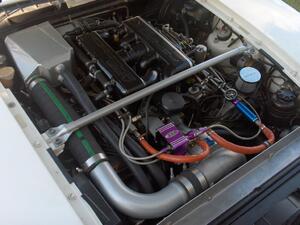
I will spend most of my free time this week cleaning and inspecting while I wait for parts. Here is a pic of the intake cleaned up. I did touch up the lettering but otherwise I wanted to keep it mostly original. Thank you for the tip on the new sensor length. On the knock sensors one looked good but the other was freyed badly. Most likely they were not working.
Last edited by rgs944; Jan 30, 2011 at 08:22 PM.
Addict
Rennlist Member
Rennlist Member
Joined: Oct 2003
Posts: 17,260
Likes: 2,143
From: Gone. On the Open Road
It is possible. The trick is: loosen the screw and get as much slack on the cable as you can. Then insert the connector in the bracket and last, wind the guts of the sensor into the cover plate. It just barely works.
Rennlist Member
Joined: Oct 2004
Posts: 10,717
Likes: 58
From: Southern Alberta, Canada
Dave...........from what I've read only one of the 2 underside ports are used the other is plugged.
Given the position of the throttle plate and its opening the difference between the ports is perhaps timing of vacuum to the diverter.
Given the position of the throttle plate and its opening the difference between the ports is perhaps timing of vacuum to the diverter.
Addict
Rennlist Member
Rennlist Member
Joined: Sep 2010
Posts: 13,583
Likes: 1,044
From: Boulder Creek, CA
I will spend most of my free time this week cleaning and inspecting while I wait for parts. Here is a pic of the intake cleaned up. I did touch up the lettering but otherwise I wanted to keep it mostly original. Thank you for the tip on the new sensor length. On the knock sensors one looked good but the other was freyed badly. Most likely they were not working.
So you only replaced one knock sensor?
Addict
Rennlist Member
Rennlist Member
Joined: Oct 2003
Posts: 17,260
Likes: 2,143
From: Gone. On the Open Road
Given the position of the throttle plate and its opening the difference between the ports is perhaps timing of vacuum to the diverter.
Rennlist Member
Joined: Mar 2002
Posts: 6,112
Likes: 344
From: Texas
John Leidel, your car is going to be a beast when you get back all that HP you've been losing to various things!
Three Wheelin'
Joined: Sep 2007
Posts: 1,363
Likes: 171
From: Oregon
I almost have the intake removed. I have been following Dwayne's great write up. One question I have is about the Hall sensor. From reading different post's it sounds like a good idea to replace the Hall while you are into the engine this far. Is that right. This is an 87 with 110K on it. Knock sensors will be ordered but should I remove the cam cover and replace the Hall at this time too. I think I should but I am a little confused on why Dwayne did not include this in his writeup.
Just read your post....sorry for the confusion about the Hall sensor. As Rob posted, I discuss the Hall Sensor in post #80 of the Intake Thread. I considered replacing it just to make sure I wouldn't have any problems with it in the future. However, the car only had 32K miles on it and the connector was in great shape - as can be seen from the pictures. I was told the sensor itself rarely fails and it's more likely that the connector fails resulting in engine timing retardation. Since the connector looked good, I decided to leave it in place. For peace of mind, one may wish to replace the sensor regardless. For me, I enjoy working on these cars and don't mind going in again when the sensor or connector finally does fail. Hope this helps....
Thread Starter
Drifting
Joined: Jan 2010
Posts: 3,334
Likes: 8
From: Nebraska
Thank you Dwayne, That helps me a lot. I missed the reference in post #80 and will look again. Without your documentation this job would be much much harder. I am very appreciative of all your excellent work.

Drifting
Joined: Jun 2006
Posts: 2,708
Likes: 77
From: Indianapolis Area
All I say is if you are not planning on replacing the Hall sensor, don't touch the connector... they have a tendency to crumble. The pictures in post #17 are mild compared to others I’ve seen.
