


Update 2V Stroker headwork technical

Thread Starter
Addict
Rennlist Member
Rennlist Member

Joined: Jun 2002
Posts: 3,322
Likes: 32
 Update 2V Stroker headwork technical
Just got my head flow figures from the shop that did my heads. I had
six valve samples made of differing angles that way I could test what
angle suits the heads the best when they have been ported and
polished. I then had the valve with the best suited angle made.
However the size of valve I had made was too big for maximum flow so
we cut that valve down to 52 mm, remember that the standard S valve
is 45 mm, in sq. area this is quite a big difference around 30%+ from
memory. We of course flowed the standard valves to get a baseline and
worked from there.
We used 0.500" as the max lift as that is all my cam can achieve in
this particular engine, I do have a solid lifter cam that has 0.550"
lift but that is another story. We increased the port size as I have
also made a new manifold for this engine using a internal diameter of
44.50 mm. What you need to consider is this engine is almost 5.4
liters as it has a 104 mm bore and standard stroke. (These were the customs pistons I was offering to the list to get made about a year ago)
The flow may have increased a bit too much for this engine, we
currently have the engine redilne set a 6720 rpm, we are currently
running some numbers to check that the heads don't flow too much. By
that I mean I don't want max power at 7000 rpm, I would much prefer
it at 6,500 to 6700 rpm we will see soon enough.
So the flow figures are standard head at 0.500" 211 cfm and 267 cfm
for the modified head. This equates to approximately a theorectical
max hp from the standard head of 435 hp versus 550 hp now. Given the
engine is only 5.4 liters this may be too much but the ports are not
big as such the velocity should still be good. More on the velocity later as it is a fasicinating subject in itself.
The previous engine built which is a 5.0 liter produces around 420 hp and has heads that flowed 480 theorectical hp. Ports were small and with modified standard manifolds, you would need to be an early model expert to spot the changes.
Work will start on the heads for the high rpm stroker this year,
(anticpated rpm being max power at 7500 and redline at 8000 rpm) if
I can achieve flow in the range of excess of 300 cfm at 0.550" lift that will
make that a great engine, so far we are at 285 cfm and now we know
what these heads respond to, e.g we made one change and picked up 40
cfm while we can't say we are confident we think we have a good
chance to achieve it.
To compare to the LS7 Chevy heads, they flow at 0.500" 315 cfm and at
0.600" they are at 348 cfm, we are at 274 cfm and 298 cfm
respectively before we make a change that resulted in the previous 40
cfm improvement. If this is achieved it is a very long way from the
211 cfm at 0.500" as standard.
BTW I believe custom made 0.600" lift cams are about the max you can
run, I decided on 0.550" as the spring tensions will be about the
same as stock due to much lighter componants. It's been a very long
journey. Below is from my head guru.
"Where to start,
VE, I assumed 105% because that is what your heads flow. if you can increase the VE the port will have to be bigger. One way to increase VE is have a faster port, ie ports that reach 650ft/sec may achieve VE of 124% max, a port that has 550ft/sec can only reach a VE of 110% etc
I added
"620-600ft/sec for a downdraught style port with a straight manifold runner"
if your runner is not straight, like the factory runner, you can not run these speeds and you will have to make the port and runner bigger so the air doesn't choke in the runner. So for your heads we are doing now they have to be bigger because the manifold has a few bends in it.
Your big engine can utilise 325cfm but your heads are way behind so you may have to sacrifice velocity for flow by making the ports bigger
"Your 5.35L will only use 211-223 cfm for 105VE at 6700rpm
110VE 225-240cfm
Depending on how good you can get the VE it will need more
eg Your 5.3 will only utilise 500hp flow from your heads if your VE is 110%
even if your heads flow 550hp it will only use 500hp flow. Rev the engine 500rpm higher and the engine will utilise 550hp flow of your 550hp flow heads"
I am reluctant to rev past 6720 and there may not be any point, despite the heads being able to flow more my other engine, the 5.0 only makes around 420 hp, maybe it is the tuning, it is pretty stock but John Speake has generously lent a hand.
"If your manifold is straight in the big engine you may be able to run very small ports. The faster you can run the port without the port choking the better it will be. If you make the port eg 50mm and put a throttle at the manifold face it would shrink the area down to maybe a 44mm port, there are a few combos to work on. You have to work out throttle position and size, how straight the manifold will be before you can hit a diameter to use"
I have since designed a near straight taperered runner unflow tested at this moment but it is straight! I will use two throttle bodies much like the Carrera GT, looking to sort out the air cleaner situation. What is happening with the 928 Specialist BlackBird system? Couldn't see it on their site. I may need to make my own conical air cleaner system due to space constrants. Anyway below Stan continues.
"Looking at the flow figures of 275cfm@0.540" lift
But with your bigger port you have 285 cfm and less velocity
At 105VE you need IN 269-284 cfm for 580-600hp
EX 179-203 cfm , you have 190cfm
Smallest rec port area 42mm 600ft/sec
43.1mm for 570ft/sec
45.3mm for 520ft/sec
620-600ft/sec for a downdraught style port with a straight manifold runner
Manifold
OEM Street Sprint 424mm valve to trumpet
Pro Stock 296mm
Trumpet dia 48.4mm for street
52mm race
57mm max
Your 5.35L will only use 211-223 cfm for 105VE at 6700rpm
110VE 225-240cfm
Depending on how good you can get the VE it will need more"
Anyway if we get around 350 rwhp on a Dyno Dynamics dyno or or about 450 flywheel hp, these dyno read much much lower than Dyno Jets or Mustangs. The last engine these guys did that were similar were in the range of 384 and 396 rwhp of DD dynos, but these cars were manuals and stroker 302 Fords which are 347 ci, I think my engine in ci is about 327.
I have also successfully made my solid lifter valve train, very light at around 60 grams per lifter this will and hopefully able to take the high rpm punishment it will get.I was going to get these DLC coated but I have been thinking that the spring pressures are so light that there wont be much friction any way? Despite relatively high lift cams.
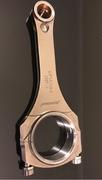
I am also considering changing the rods to forced pin oiled type due to dry sumping? Any thoughts. My guys think that if the vacuum is kept down it wont be a problem. Also I am hoping that the piston squirters will help oil the piston pin, maybe I should get these coated instead as drilled rods are expensive and my money is tight at the moment.
I will use the 1 3/4" header stepped and maybe in a tri-y design, what I do know is that the 4V stroker is a much simpler proposition for power and less develpment time.
Greg
six valve samples made of differing angles that way I could test what
angle suits the heads the best when they have been ported and
polished. I then had the valve with the best suited angle made.
However the size of valve I had made was too big for maximum flow so
we cut that valve down to 52 mm, remember that the standard S valve
is 45 mm, in sq. area this is quite a big difference around 30%+ from
memory. We of course flowed the standard valves to get a baseline and
worked from there.
We used 0.500" as the max lift as that is all my cam can achieve in
this particular engine, I do have a solid lifter cam that has 0.550"
lift but that is another story. We increased the port size as I have
also made a new manifold for this engine using a internal diameter of
44.50 mm. What you need to consider is this engine is almost 5.4
liters as it has a 104 mm bore and standard stroke. (These were the customs pistons I was offering to the list to get made about a year ago)
The flow may have increased a bit too much for this engine, we
currently have the engine redilne set a 6720 rpm, we are currently
running some numbers to check that the heads don't flow too much. By
that I mean I don't want max power at 7000 rpm, I would much prefer
it at 6,500 to 6700 rpm we will see soon enough.
So the flow figures are standard head at 0.500" 211 cfm and 267 cfm
for the modified head. This equates to approximately a theorectical
max hp from the standard head of 435 hp versus 550 hp now. Given the
engine is only 5.4 liters this may be too much but the ports are not
big as such the velocity should still be good. More on the velocity later as it is a fasicinating subject in itself.
The previous engine built which is a 5.0 liter produces around 420 hp and has heads that flowed 480 theorectical hp. Ports were small and with modified standard manifolds, you would need to be an early model expert to spot the changes.
Work will start on the heads for the high rpm stroker this year,
(anticpated rpm being max power at 7500 and redline at 8000 rpm) if
I can achieve flow in the range of excess of 300 cfm at 0.550" lift that will
make that a great engine, so far we are at 285 cfm and now we know
what these heads respond to, e.g we made one change and picked up 40
cfm while we can't say we are confident we think we have a good
chance to achieve it.
To compare to the LS7 Chevy heads, they flow at 0.500" 315 cfm and at
0.600" they are at 348 cfm, we are at 274 cfm and 298 cfm
respectively before we make a change that resulted in the previous 40
cfm improvement. If this is achieved it is a very long way from the
211 cfm at 0.500" as standard.
BTW I believe custom made 0.600" lift cams are about the max you can
run, I decided on 0.550" as the spring tensions will be about the
same as stock due to much lighter componants. It's been a very long
journey. Below is from my head guru.
"Where to start,
VE, I assumed 105% because that is what your heads flow. if you can increase the VE the port will have to be bigger. One way to increase VE is have a faster port, ie ports that reach 650ft/sec may achieve VE of 124% max, a port that has 550ft/sec can only reach a VE of 110% etc
I added
"620-600ft/sec for a downdraught style port with a straight manifold runner"
if your runner is not straight, like the factory runner, you can not run these speeds and you will have to make the port and runner bigger so the air doesn't choke in the runner. So for your heads we are doing now they have to be bigger because the manifold has a few bends in it.
Your big engine can utilise 325cfm but your heads are way behind so you may have to sacrifice velocity for flow by making the ports bigger
"Your 5.35L will only use 211-223 cfm for 105VE at 6700rpm
110VE 225-240cfm
Depending on how good you can get the VE it will need more
eg Your 5.3 will only utilise 500hp flow from your heads if your VE is 110%
even if your heads flow 550hp it will only use 500hp flow. Rev the engine 500rpm higher and the engine will utilise 550hp flow of your 550hp flow heads"
I am reluctant to rev past 6720 and there may not be any point, despite the heads being able to flow more my other engine, the 5.0 only makes around 420 hp, maybe it is the tuning, it is pretty stock but John Speake has generously lent a hand.
"If your manifold is straight in the big engine you may be able to run very small ports. The faster you can run the port without the port choking the better it will be. If you make the port eg 50mm and put a throttle at the manifold face it would shrink the area down to maybe a 44mm port, there are a few combos to work on. You have to work out throttle position and size, how straight the manifold will be before you can hit a diameter to use"
I have since designed a near straight taperered runner unflow tested at this moment but it is straight! I will use two throttle bodies much like the Carrera GT, looking to sort out the air cleaner situation. What is happening with the 928 Specialist BlackBird system? Couldn't see it on their site. I may need to make my own conical air cleaner system due to space constrants. Anyway below Stan continues.
"Looking at the flow figures of 275cfm@0.540" lift
But with your bigger port you have 285 cfm and less velocity
At 105VE you need IN 269-284 cfm for 580-600hp
EX 179-203 cfm , you have 190cfm
Smallest rec port area 42mm 600ft/sec
43.1mm for 570ft/sec
45.3mm for 520ft/sec
620-600ft/sec for a downdraught style port with a straight manifold runner
Manifold
OEM Street Sprint 424mm valve to trumpet
Pro Stock 296mm
Trumpet dia 48.4mm for street
52mm race
57mm max
Your 5.35L will only use 211-223 cfm for 105VE at 6700rpm
110VE 225-240cfm
Depending on how good you can get the VE it will need more"
Anyway if we get around 350 rwhp on a Dyno Dynamics dyno or or about 450 flywheel hp, these dyno read much much lower than Dyno Jets or Mustangs. The last engine these guys did that were similar were in the range of 384 and 396 rwhp of DD dynos, but these cars were manuals and stroker 302 Fords which are 347 ci, I think my engine in ci is about 327.
I have also successfully made my solid lifter valve train, very light at around 60 grams per lifter this will and hopefully able to take the high rpm punishment it will get.I was going to get these DLC coated but I have been thinking that the spring pressures are so light that there wont be much friction any way? Despite relatively high lift cams.
I am also considering changing the rods to forced pin oiled type due to dry sumping? Any thoughts. My guys think that if the vacuum is kept down it wont be a problem. Also I am hoping that the piston squirters will help oil the piston pin, maybe I should get these coated instead as drilled rods are expensive and my money is tight at the moment.
I will use the 1 3/4" header stepped and maybe in a tri-y design, what I do know is that the 4V stroker is a much simpler proposition for power and less develpment time.
Greg

Rennlist Member
Joined: Dec 2001
Posts: 25,186
Likes: 105
This is great Greg. Its an interesting proposition to build a 2V engine for racing, as there are "supposedly" lower inherent build costs. As you may know, there are some PCA rule changes that make it beneficial to make the engine a 2V and try and get the power WAY up and the weight WAY down. Then and only then would the 928 be really competitive in those GT classes (GT2, GT3, GT4)
Drifting
Joined: May 2002
Posts: 2,777
Likes: 2
From: New Zealand
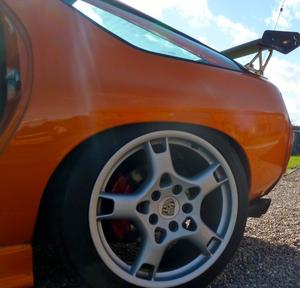
greg, thats some fully technical sh*t!! it makes interesting reading for numptys like me to show just how much an engine is more than simply the sum of its parts. what are you going to do for the intake? im waiting to get the orange car back from the shop (allways it is in some shop or other..) with new cams and headers and hopefully more than 400 bhp at the crank, i might stop there after sharktuning and put the blower on to the old 79 instead - youve made me paranoid about my GTS rods!
Thread Starter
Addict
Rennlist Member
Rennlist Member
Joined: Jun 2002
Posts: 3,322
Likes: 32
Hi to all, if you saw the car you would realise it is not the car you would want to rearrange the body work, still not a single ding in 7 years since I painted it.
Last edited by slate blue; May 19, 2012 at 10:21 AM.