






How to recognize perfect block for stroker?
Thread Starter
Addict
Rennlist Member
Rennlist Member

Joined: Jun 2003
Posts: 9,386
Likes: 72
From: Helsinki, Finland
 How to recognize perfect block for stroker?
There is some talk in archives about cylinder wall thickness. So far I have measured three different 100mm bore blocks ('88 & '89 S4 and '92 GTS) and none of them has more than 7mm thick walls on thinnest area. Seems cylinder tower outside diameter is about 115mm on all of them meaning there really cant be much more than 7mm. My home made measuring device isn't very accurate but it should be able to tell difference between 7mm and 10mm thick walls. Taking 2mm away from 7mm do not leave much room and is probably too little to work even in NA application using 968 pistons.
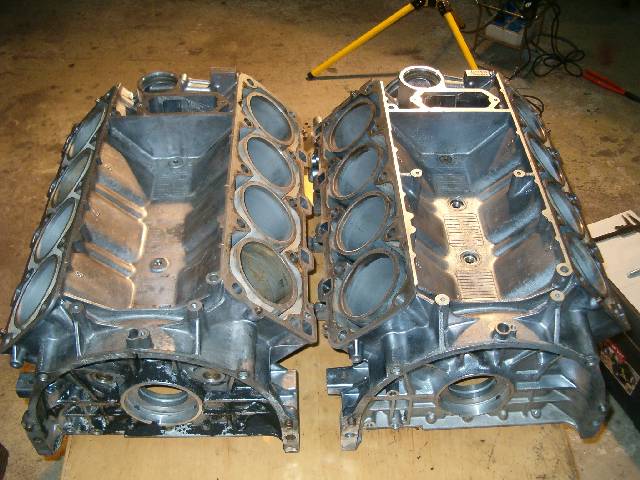
Is '85-86 32V block only safe option for stroker then? How much is cylinder outside diameter in them? Did early ROW S4 also use these blocks? Tried to search archives for '87 model year S4 engine number cut of before which it would be safe to assume block is this older thick walled version. How can it be recognized without removing heads? I have '83 S block where there is two mounting point in top V that are not present in '92 GTS.
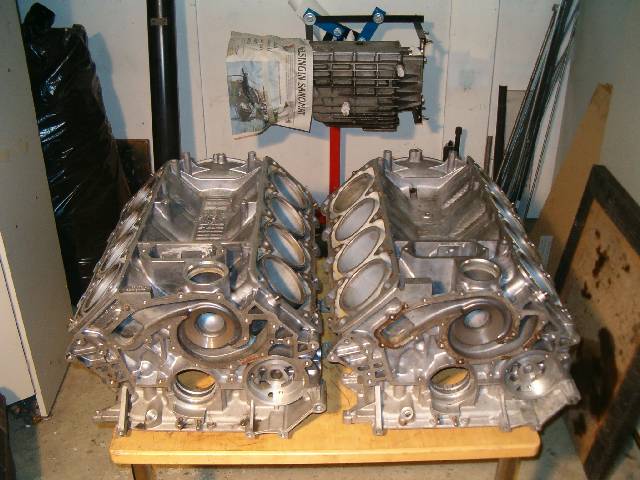
'83 S with two mounting points on top center of V
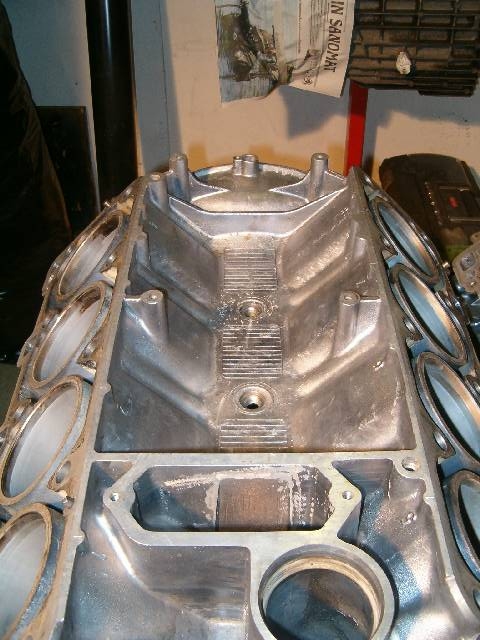
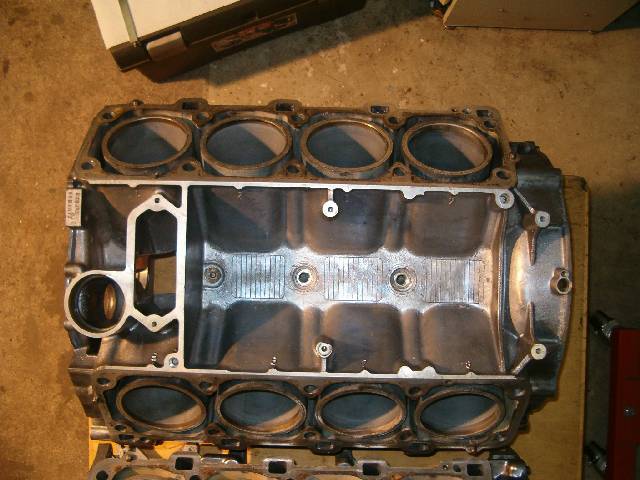
'92 GTS without those and several other changes as well.
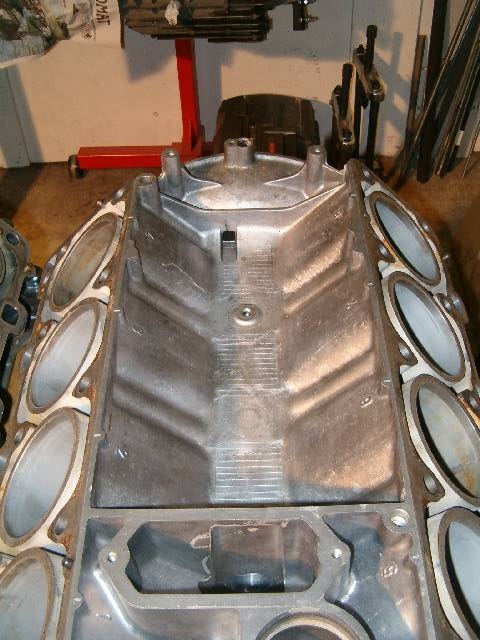
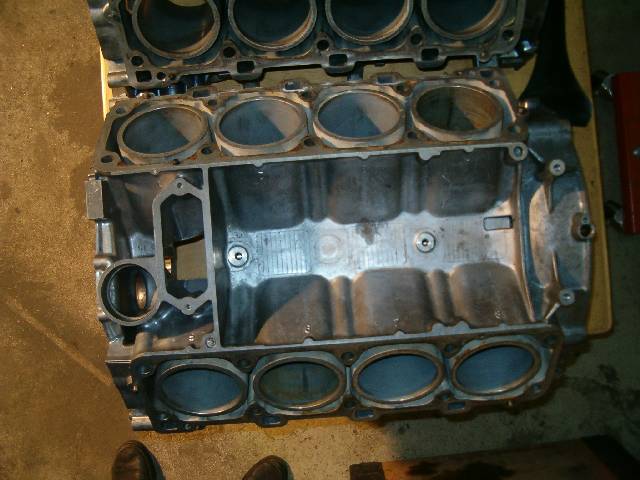
Did '85-86 32V have these same mounting points or is it somehow different also?
Awfully many questions but how to know just by looking complete engine if early S4 block has thick walls or not is most important one. Hope someone can give easy answer to it.
Is '85-86 32V block only safe option for stroker then? How much is cylinder outside diameter in them? Did early ROW S4 also use these blocks? Tried to search archives for '87 model year S4 engine number cut of before which it would be safe to assume block is this older thick walled version. How can it be recognized without removing heads? I have '83 S block where there is two mounting point in top V that are not present in '92 GTS.
'83 S with two mounting points on top center of V
'92 GTS without those and several other changes as well.
Did '85-86 32V have these same mounting points or is it somehow different also?
Awfully many questions but how to know just by looking complete engine if early S4 block has thick walls or not is most important one. Hope someone can give easy answer to it.
Rennlist Member
Joined: May 2001
Posts: 4,871
Likes: 41
From: Puyallup, WA

Reynolds has a minimum tolerance of .250" (6.35mm) for wall thickness. I think there are some strokers out there running .220"(5.59mm) thickness without issues. The one I'm building has two thin walls right around the 5mm mark. Now the thin walls are on two separate cylinders, and are only at one of the compass points, with the remaining cylinder wall being in the .220" range or greater. I'm going to run it, we'll see if she holds together.
A local owner rebuilt his 85 and it had some mighty thick cylinder walls. I'd say the '85/'86 blocks would be great candidates, you'lljust have to mill out the mounts in the "V".
Was that a typo where you wrote that you have an "'83 S block"? Did you mean to say '85? I didn't think the 4.7L motors had enough wall thickness to be bored to 104mm. You would be working with the 16v heads also, which may not be optimum with the larger displacement.
A local owner rebuilt his 85 and it had some mighty thick cylinder walls. I'd say the '85/'86 blocks would be great candidates, you'lljust have to mill out the mounts in the "V".
Was that a typo where you wrote that you have an "'83 S block"? Did you mean to say '85? I didn't think the 4.7L motors had enough wall thickness to be bored to 104mm. You would be working with the 16v heads also, which may not be optimum with the larger displacement.

928 Collector
Rennlist Member
Rennlist Member
Joined: Jan 2003
Posts: 17,270
Likes: 5
From: Seattle
I wasn't able to measure more than just the top faces of my spare '85 block's cylinder walls, but they range between 8mm and 7mm. The inner two cylinders on either side have thinner walls (ie 7mm at their thinnest point). Again I know this is very rough, I don't have a caliper handy.
Thread Starter
Addict
Rennlist Member
Rennlist Member
Joined: Jun 2003
Posts: 9,386
Likes: 72
From: Helsinki, Finland
Originally Posted by Dave Howerdel
I can tell you that my US85 has the holes.
Need them for the throttle body.
Need them for the throttle body.
Thread Starter
Addict
Rennlist Member
Rennlist Member
Joined: Jun 2003
Posts: 9,386
Likes: 72
From: Helsinki, Finland
Originally Posted by atb
Was that a typo where you wrote that you have an "'83 S block"? Did you mean to say '85? I didn't think the 4.7L motors had enough wall thickness to be bored to 104mm. You would be working with the 16v heads also, which may not be optimum with the larger displacement.
Thread Starter
Addict
Rennlist Member
Rennlist Member
Joined: Jun 2003
Posts: 9,386
Likes: 72
From: Helsinki, Finland
Originally Posted by heinrich
I wasn't able to measure more than just the top faces of my spare '85 block's cylinder walls, but they range between 8mm and 7mm. The inner two cylinders on either side have thinner walls (ie 7mm at their thinnest point). Again I know this is very rough, I don't have a caliper handy.
 Is there no holy grail to hunt for?
Anyway, thanks for the information to everyone. Keep it coming.
Trending Topics
Rennlist Stories
The Best Porsche Posts for Porsche Enthusiasts
9 Features and Characteristics That Only Porsche People Understand
Verdad Gallardo
I've Written 500 Rennlist Articles: Here's How Porsche Has Changed Along the Way
Joe Kucinski
10 Most Unnecessary Porsches Ever Built (And Why We Love Them)
Verdad Gallardo
Porsche 911 GT3 S/C vs 718 Spyder RS: 10 Categories, One Winner
Joe Kucinski
This Builder Is Turning Heads With Its Slantnose 911 Creation
Verdad Gallardo
Porsche 911 GT3 Artisan Edition Pays Homage to Japanese Culture
Verdad Gallardo
Porsche Reveals Coupe Variant of the Electric Cayenne With a Fresh Look
Verdad Gallardo
10 Porsche Colors That Have More Personality Than Most People
Verdad Gallardo
Guntherwerks' Final Speedster Creation Is the Ultimate Porsche Restomod
Verdad Gallardo
Rennlist Member
Joined: May 2001
Posts: 4,871
Likes: 41
From: Puyallup, WA
Errka wrote:
>>>Damn, I would have expected them all to be few mm's more meaning block would have 7mm left after 4mm overbore.
Erkka,
Are you taking into account that a 4mm overbore would only reduce the wall thickness by 2mm?
If Renyolds says .250" (6.35mm) for minimum wall thickness, that means that you need to start at .330" (8.35mm) wall thickness for the 4mm overbore. I've seen varying cylinder thicknesses in bare blocks. Maybe Thurston can chime in here, but I think when I took a caliper to his '85 block there were all in this range. They are out there, just got to keep looking.
>>>Damn, I would have expected them all to be few mm's more meaning block would have 7mm left after 4mm overbore.
Erkka,
Are you taking into account that a 4mm overbore would only reduce the wall thickness by 2mm?
If Renyolds says .250" (6.35mm) for minimum wall thickness, that means that you need to start at .330" (8.35mm) wall thickness for the 4mm overbore. I've seen varying cylinder thicknesses in bare blocks. Maybe Thurston can chime in here, but I think when I took a caliper to his '85 block there were all in this range. They are out there, just got to keep looking.
Thread Starter
Addict
Rennlist Member
Rennlist Member
Joined: Jun 2003
Posts: 9,386
Likes: 72
From: Helsinki, Finland
Originally Posted by atb
Are you taking into account that a 4mm overbore would only reduce the wall thickness by 2mm?

Thread Starter
Addict
Rennlist Member
Rennlist Member
Joined: Jun 2003
Posts: 9,386
Likes: 72
From: Helsinki, Finland
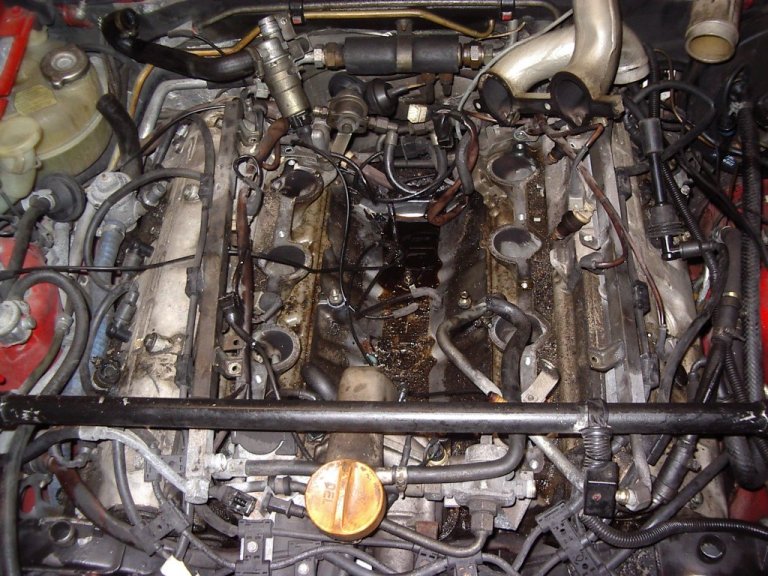
Originally Posted by Dave Howerdel
Here is a shot of the 85 sans intake. (Pardon the mess)

Banned
Joined: Feb 2002
Posts: 5,248
Likes: 5
From: Ft. Lauderdale FLORIDA
OK I got all pissed off at DEVEK about two years ago because it seemed like I had to pull their teeth to find out that blocks prior to 1987 had different wall thicknesses! You cannot reliably bore a pre-S4 block to 104 mm. What I learned is than when Porsche cast the earlier blocks, they didn't pay enough attention to where the sand casting sat and some water jackets wound up excessively close to the cylinder. This isn't true with S4 and later blocks. The earlier stuff....If it's bored out...it will bore out fine, but very quickly under use you will crack your cylinder wall. At least on SOME pre S4 blocks....
The later stuff is a completely different story. And then again, steel sleeves are out there too.
N!
The later stuff is a completely different story. And then again, steel sleeves are out there too.
N!