Topic 1: Plan to Use an AMG E55 Supercharger
I currently have two supercharged Porsche 928 S4 cars running the 928 Motorsports kits. One of them is on the road and I’ve driven about 3,000 km in the past couple of months—it’s an absolute blast.That said, while the kits are fun, they hurt fuel economy quite a bit and don’t sound as good as I’d like. I’m a big fan of twin-screw superchargers for both the sound and the way they deliver power.
I started looking into alternatives and found that the Mercedes-Benz E55 AMG (W211) uses a Lysholm-style twin-screw supercharger with a clutch system. This allows the supercharger to disengage, and combined with a bypass valve, it should create very little drag when not in use. Yes, it adds complexity, but I think it’s a really cool solution.
With stock pulleys, the AMG unit can produce around 12 psi, and there’s room to increase boost further with smaller pulleys. My plan is to install this on a 1987 S4 (9.5:1 compression), though I may lower compression later.
The setup will require a fair amount of custom work, but I have access to machining through friends, so costs should mainly be materials and favors. I’m designing everything myself and plan to run a large water-to-air intercooler in the valley, along with a full standalone ECU to manage the system.
From driving my current supercharged cars, I’ll admit the power is unnecessary—but also incredibly fun. The goal here is to have something that can switch between ~320 hp and closer to 600 hp at the flip of a switch.
Also worth mentioning: I picked up the supercharger for about $400, which makes this project too good not to try. An added bonus is a much cleaner engine bay, as this setup will replace the current intake and boost piping.


Here it is placed on a spare engine I have, none of the ports line up but those will get machined off, I will also be making a custom crank and moving the AC compressor and the power steering pump will get a new pulley
Topic 2: Safe Boost Levels & Lower Compression Options
I’ve spent a lot of time researching safe limits for the S4 engine, but solid information is hard to find.Some reference points I’ve come across:
- A twin-turbo setup running ~12 psi and getting 500 ish hp (super charger uses some power so this one gets more)
- An M28/21 engine (10.5:1 compression) running 12 psi and making ~450 hp at the crank
- Another S4 running a twin-screw setup making ~448 hp at the wheels with 12psi
I’m trying to understand:
- What boost levels are generally considered safe on these engines
- What supporting mods are required to reliably reach ~600 hp crank

That sounds like an interesting project. What ECU are you planning to use? Are you switching to speed density?
With respect to safe boost levels, that's something that I put a lot of thought and research into for my own project. Surprisingly, there are many examples of 928s running 15+ psi for many years with no boost related failures. On my own 1987 928 S4, I have S3 cams, and a mid-mount turbo at ~14 psi. I built the system in 2020 and have had absolutely zero issues with it other than what's normal for one-off projects.
Personally, I would consider 15 psi the safe ceiling for boost. You can certainly do more than that, and some people have, but that's what I personally feel the existing examples have shown to be safe. Assuming the engine is in good repair otherwise.
You asked what support mods are required to reliably reach ~600hp ad the crank. In my opinion, aside from boost, you'll need a good intercooler and heat exchanger (which you're already planning), an excellent knock monitoring and response system, larger injectors, and good closed loop fueling management. And, of course, all of the details and components that go with those pieces.
The other aspect to consider is everything after the flywheel. Is your car an automatic or a manual? Do you have limited slip? What are your plans for the wheels and tires?
With respect to safe boost levels, that's something that I put a lot of thought and research into for my own project. Surprisingly, there are many examples of 928s running 15+ psi for many years with no boost related failures. On my own 1987 928 S4, I have S3 cams, and a mid-mount turbo at ~14 psi. I built the system in 2020 and have had absolutely zero issues with it other than what's normal for one-off projects.
Personally, I would consider 15 psi the safe ceiling for boost. You can certainly do more than that, and some people have, but that's what I personally feel the existing examples have shown to be safe. Assuming the engine is in good repair otherwise.
You asked what support mods are required to reliably reach ~600hp ad the crank. In my opinion, aside from boost, you'll need a good intercooler and heat exchanger (which you're already planning), an excellent knock monitoring and response system, larger injectors, and good closed loop fueling management. And, of course, all of the details and components that go with those pieces.
The other aspect to consider is everything after the flywheel. Is your car an automatic or a manual? Do you have limited slip? What are your plans for the wheels and tires?
Quote:
With respect to safe boost levels, that's something that I put a lot of thought and research into for my own project. Surprisingly, there are many examples of 928s running 15+ psi for many years with no boost related failures. On my own 1987 928 S4, I have S3 cams, and a mid-mount turbo at ~14 psi. I built the system in 2020 and have had absolutely zero issues with it other than what's normal for one-off projects.
Personally, I would consider 15 psi the safe ceiling for boost. You can certainly do more than that, and some people have, but that's what I personally feel the existing examples have shown to be safe. Assuming the engine is in good repair otherwise.
You asked what support mods are required to reliably reach ~600hp ad the crank. In my opinion, aside from boost, you'll need a good intercooler and heat exchanger (which you're already planning), an excellent knock monitoring and response system, larger injectors, and good closed loop fueling management. And, of course, all of the details and components that go with those pieces.
The other aspect to consider is everything after the flywheel. Is your car an automatic or a manual? Do you have limited slip? What are your plans for the wheels and tires?
Originally Posted by Bulvot
That sounds like an interesting project. What ECU are you planning to use? Are you switching to speed density?With respect to safe boost levels, that's something that I put a lot of thought and research into for my own project. Surprisingly, there are many examples of 928s running 15+ psi for many years with no boost related failures. On my own 1987 928 S4, I have S3 cams, and a mid-mount turbo at ~14 psi. I built the system in 2020 and have had absolutely zero issues with it other than what's normal for one-off projects.
Personally, I would consider 15 psi the safe ceiling for boost. You can certainly do more than that, and some people have, but that's what I personally feel the existing examples have shown to be safe. Assuming the engine is in good repair otherwise.
You asked what support mods are required to reliably reach ~600hp ad the crank. In my opinion, aside from boost, you'll need a good intercooler and heat exchanger (which you're already planning), an excellent knock monitoring and response system, larger injectors, and good closed loop fueling management. And, of course, all of the details and components that go with those pieces.
The other aspect to consider is everything after the flywheel. Is your car an automatic or a manual? Do you have limited slip? What are your plans for the wheels and tires?
Thank you for this info, it helps to see what other people have done. I will be running a kraken 8 ecu so dont need to use a MAF or any of that old stuff, will also have knock sensors and dual lambda with a bunch of other sensors all over the engine to make it more modern.
I am also thinking about running the s3 cams but not sure how much they will help with the boosted system. I am currently taking car back to NA so I can see how happy the engine is then will decide how much boost to push. End goal is to rebuild engine, put some sleeves in it, lower compression to 9-1 and check everything inside it.
Currently my car is an auto but I do have a manual gearbox from a 928 s4 with a factory limited slip diff. Obviously I would like to put the manual box in but not sure if im going to blow it up instantly haha. And I will be running some 17 inch cup 1 rims with the widest tires I can find, unfortunately as I live in South Africa we lack some of the tire sizes you get overseas but im not really planning on using the HP much, more of a show car thing with a cool switch haha, but will get some nice tires anyways
Petza914
RL Community Team
Rennlist Member
Rennlist Member
close

Yesterday
- Join DateOct 2007
- LocationClemson, SC
- Posts:28,695
-
Likes:1,532
-
Liked:8,457 Times in 5,334 Posts
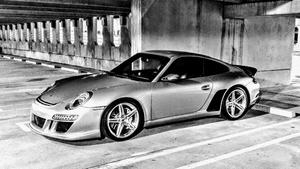
Cool project. Looking forward to following along. My 16v 928 Spyder has a 928MS intercooled supercharger setup in it, and yeah, it's a lot of fun. It just occurred to me that I have more supercharged cars than anything else now with 5 of my 9 cars being supercharged - the 2 kids Audi SQ5s, the 928 Spyder, the RUF 997, and my Roush F150 
The RUF supercharger setup in my 997 works with centrifugal clutches to disengage under low rpm or low demand issues. Sounds like that's the same type of setup you're going for. Mine works essentially like a go-cart clutch where the center can free spin without turning the supercharger. When the centrifugal clutches engage it turns the supercharger and adds boost. No parasitic drag when you don't need the boost and instantly there when you want it. That car averages around 20 mpg with 475 HP.
Here's a quick video
The RUF supercharger setup in my 997 works with centrifugal clutches to disengage under low rpm or low demand issues. Sounds like that's the same type of setup you're going for. Mine works essentially like a go-cart clutch where the center can free spin without turning the supercharger. When the centrifugal clutches engage it turns the supercharger and adds boost. No parasitic drag when you don't need the boost and instantly there when you want it. That car averages around 20 mpg with 475 HP.
Here's a quick video