When you click on links to various merchants on this site and make a purchase, this can result in this site earning a commission. Affiliate programs and affiliations include, but are not limited to, the eBay Partner Network.
I decided to try and chase down a HVAC issue I've had for some time. The issue is that on AC I only get cold air when the temperature slider is full cold and I only get heat when it's set at full hot. I don't get any variation between the two extremes.
I've read a few posts on this and it seems the common issue is having an open circuit in the temperature sensor string. That's not what I'm seeing. I've disconnected plug 2 from the setting motor and measured resistance between pins 4 and 12. I'm seeing 4.2K ohms with the temperature slider full low and 5.2K ohms at full high temp. Could being 500 ohms high across the adjustment range cause the setting motor not to work properly? I'm thinking my setting motor at least partially works since I'm getting heat and cold at the max settings.
I decided to try and chase down a HVAC issue I've had for some time. The issue is that on AC I only get cold air when the temperature slider is full cold and I only get heat when it's set at full hot. I don't get any variation between the two extremes.
I've read a few posts on this and it seems the common issue is having an open circuit in the temperature sensor string. That's not what I'm seeing. I've disconnected plug 2 from the setting motor and measured resistance between pins 4 and 12. I'm seeing 4.2K ohms with the temperature slider full low and 5.2K ohms at full high temp. Could being 500 ohms high across the adjustment range cause the setting motor not to work properly? I'm thinking my setting motor at least partially works since I'm getting heat and cold at the max settings.
I dont recall the FULL procedure, but do you know if your ambient temperature sensor exists and is working in the system as well?
I dont recall the FULL procedure, but do you know if your ambient temperature sensor exists and is working in the system as well?
That sounds like a good place to start. I know the ambient sensor exists and the circuit containing both it and the interior sensor isn't open. That doesn't mean either of them are actually working properly though.
[QUOTE=snoz;19261113]I decided to try and chase down a HVAC issue I've had for some time. The issue is that on AC I only get cold air when the temperature slider is full cold and I only get heat when it's set at full hot. I don't get any variation between the two extremes.
I've read a few posts on this and it seems the common issue is having an open circuit in the temperature sensor string. That's not what I'm seeing. I've disconnected plug 2 from the setting motor and measured resistance between pins 4 and 12. I'm seeing 4.2K ohms with the temperature slider full low and 5.2K ohms at full high temp. Could being 500 ohms high across the adjustment range cause the setting motor not to work properly? I'm thinking my setting motor at least partially works since I'm getting heat and cold at the max settings.[/QUOTE
The max settings operate override switches so are not a complete test of the setting motor. Actually your resistance readings look ok as the WSM has range 3.7K-4.2K at 20C and if you are where your profile indicates right now it’s much colder in MO!
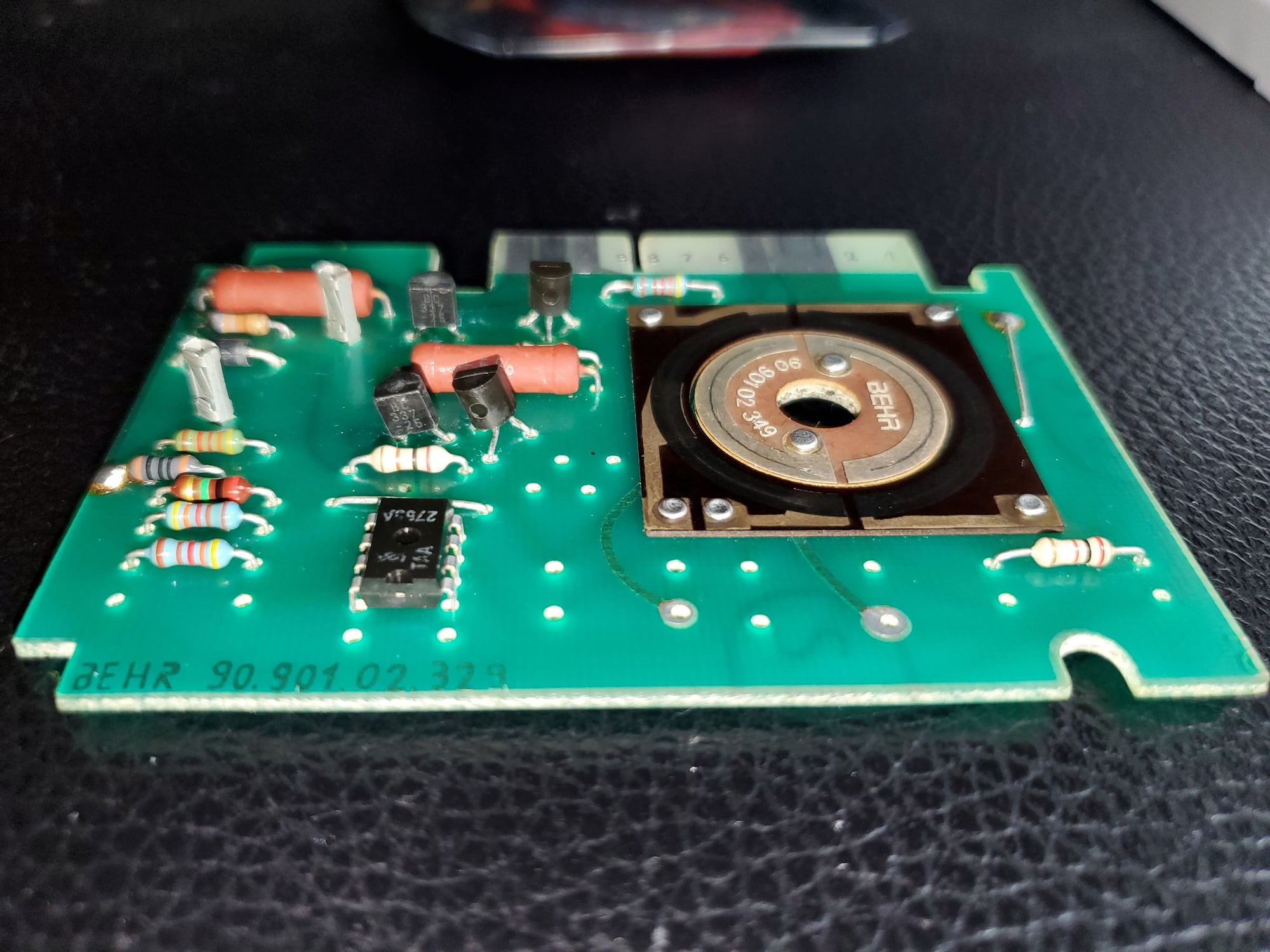
Could be the comparator circuit in the setting motor has failed. Easily fixed with a few new transistors but you could just open up the motor and test them first. All the ones in the board are NPN.
At an ambient temperature of 20 degrees C, you should see about 3,7k Ohm with the temp slider at cold. Moving it slowly to the full warm position, should show an uninterrupted increase to 4,7k Ohm. This is what mine showed back then when my temperature control motor quit on me (transistor failure).
first fail point IMHO is the connector for the external temp sensor in the LF fenderwell.
I suggest just cut it out and solder the wires together then heatshrink them.
NOTE test the sensor first to see if it reading properly
The max settings operate override switches so are not a complete test of the setting motor. Actually your resistance readings look ok as the WSM has range 3.7K-4.2K at 20C and if you are where your profile indicates right now it’s much colder in MO!
Could be the comparator circuit in the setting motor has failed. Easily fixed with a few new transistors but you could just open up the motor and test them first. All the ones in the board are NPN.
Thanks StratfordShark. It was probably between 50 to 60 degrees F in my garage when I was measuring the resistance. I suppose the cool temperature in my garage could account for the higher than expected resistance values.
Originally Posted by Schocki
At an ambient temperature of 20 degrees C, you should see about 3,7k Ohm with the temp slider at cold. Moving it slowly to the full warm position, should show an uninterrupted increase to 4,7k Ohm. This is what mine showed back then when my temperature control motor quit on me (transistor failure).
Thanks Schoki. Are you saying that the resistance you measured was higher than expected when your setting motor failed?
Originally Posted by Mrmerlin
first fail point IMHO is the connector for the external temp sensor in the LF fenderwell.
I suggest just cut it out and solder the wires together then heatshrink them.
NOTE test the sensor first to see if it reading properly
Thanks Stan. I'm going to test the external and internal sensors separately to make sure they are working and in spec. Soldering the external sensor in sounds like a good idea with how problem prone that connection is. I'll do that as well if it tests as good.
I also plan to pull the setting motor as well and check those transistors.
Thanks Schocki. Are you saying that the resistance you measured was higher than expected when your setting motor failed?
No, as soon as the plugs are disconnected for checking there is no influence.
My setting motor failed due to transistor failure.
Best to check the circuit with an analog multimeter, this way you can see any interruptions in resistance.
Replacing the transistors seems to have fixed it. While none of the transistors tested as absolutely dead, one (maybe two) had a significant difference in resistance when testing between emitter to base and collector to base. One tested at around 25 MOhms on one side and 2 MOhms on the other.
Now I can see the setting motor gradually move as I move the slider up from full cold. I believe it's at about full hot once I get the slider much above the temperature in my garage. I reinstalled it and drove around. It seems to modulate the temperature in the car so I think I'm calling it good.
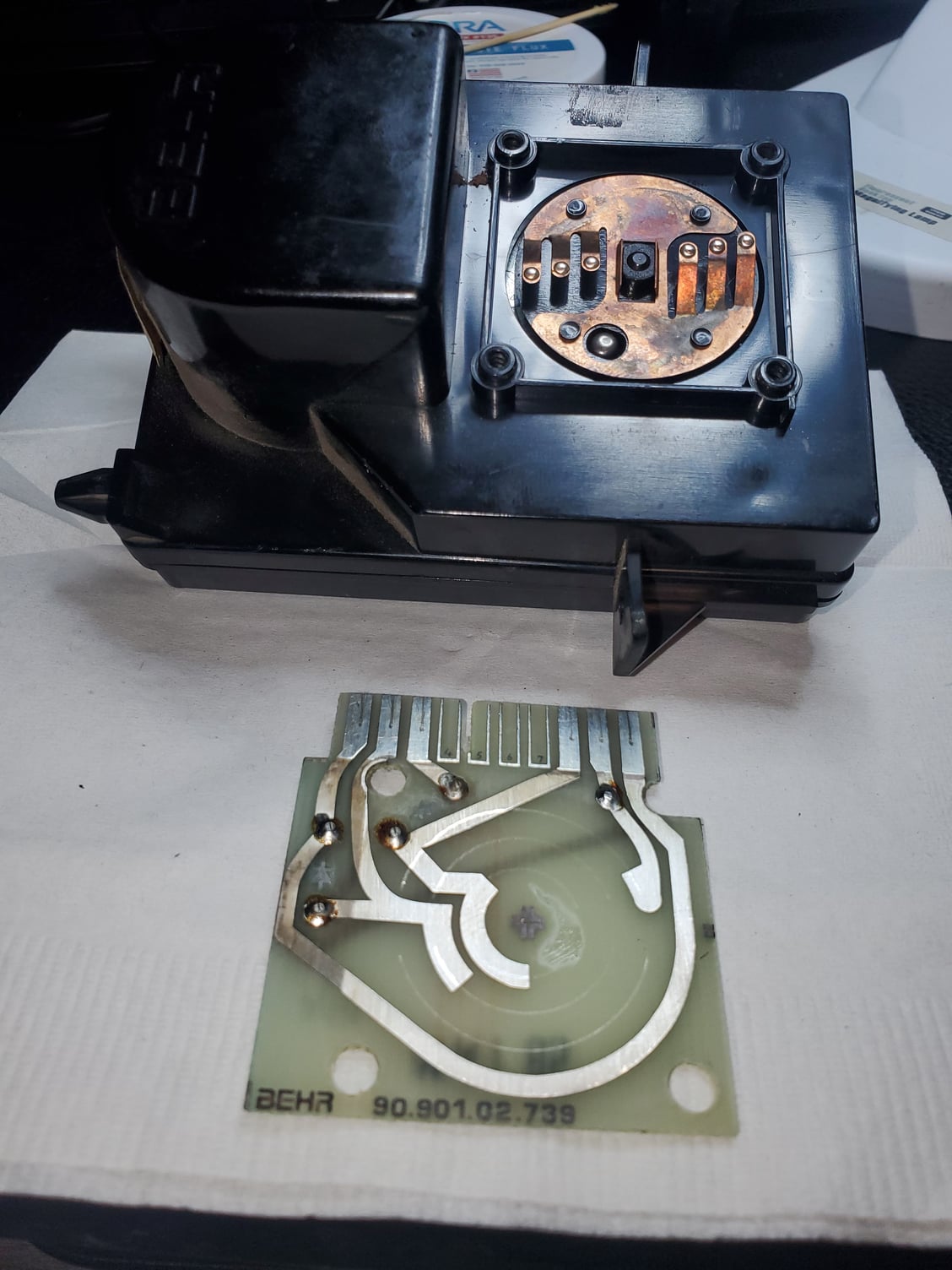
For future reference, I replaced four transistors. Two of them were BC327-25 PNP the other two were BC337-25 NPN. I cleaned what I believe is a potentiometer (square labeled Behr in the first picture) that helps the circuit control the position of the motor and a rotary switch on the other side of the motor.
Had exactly the same issue with my temperature motor. Four new transistors and all is well since. Mine went to the full hot position in the middle of a hot summer in Spain.
The motor controls the heater valve too.
Easy fix to stay cool is to remove the motor assembly and bridge the heater valve, this way it's airways closed. Insert a cable between Pin 2 (red) and Pin 3 (black/red) into the smaller of the two connectors.
The flappy inside the HVAC box defaults to fill cold after the setting motor has been removed and the linkage was disconnected.
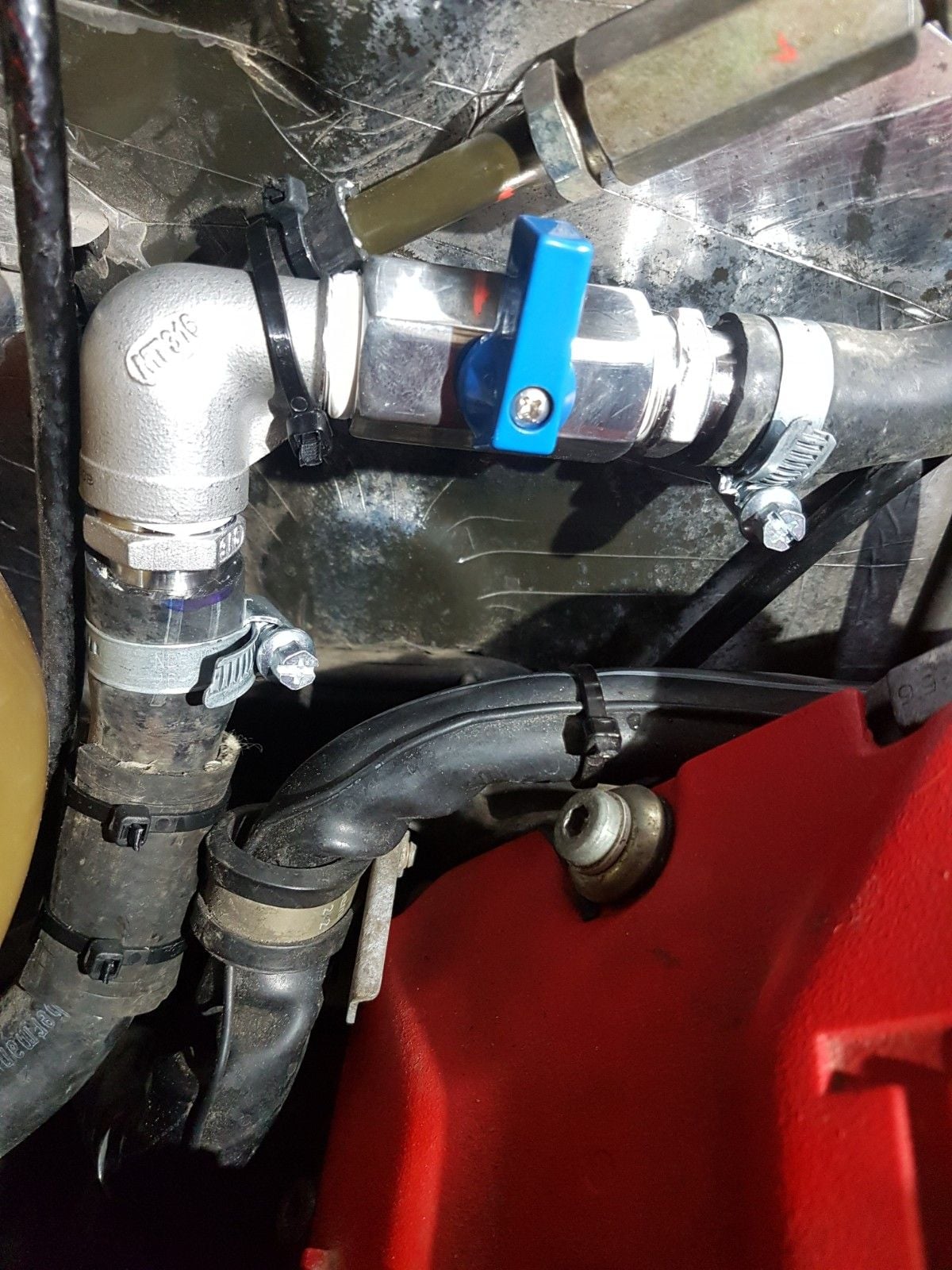
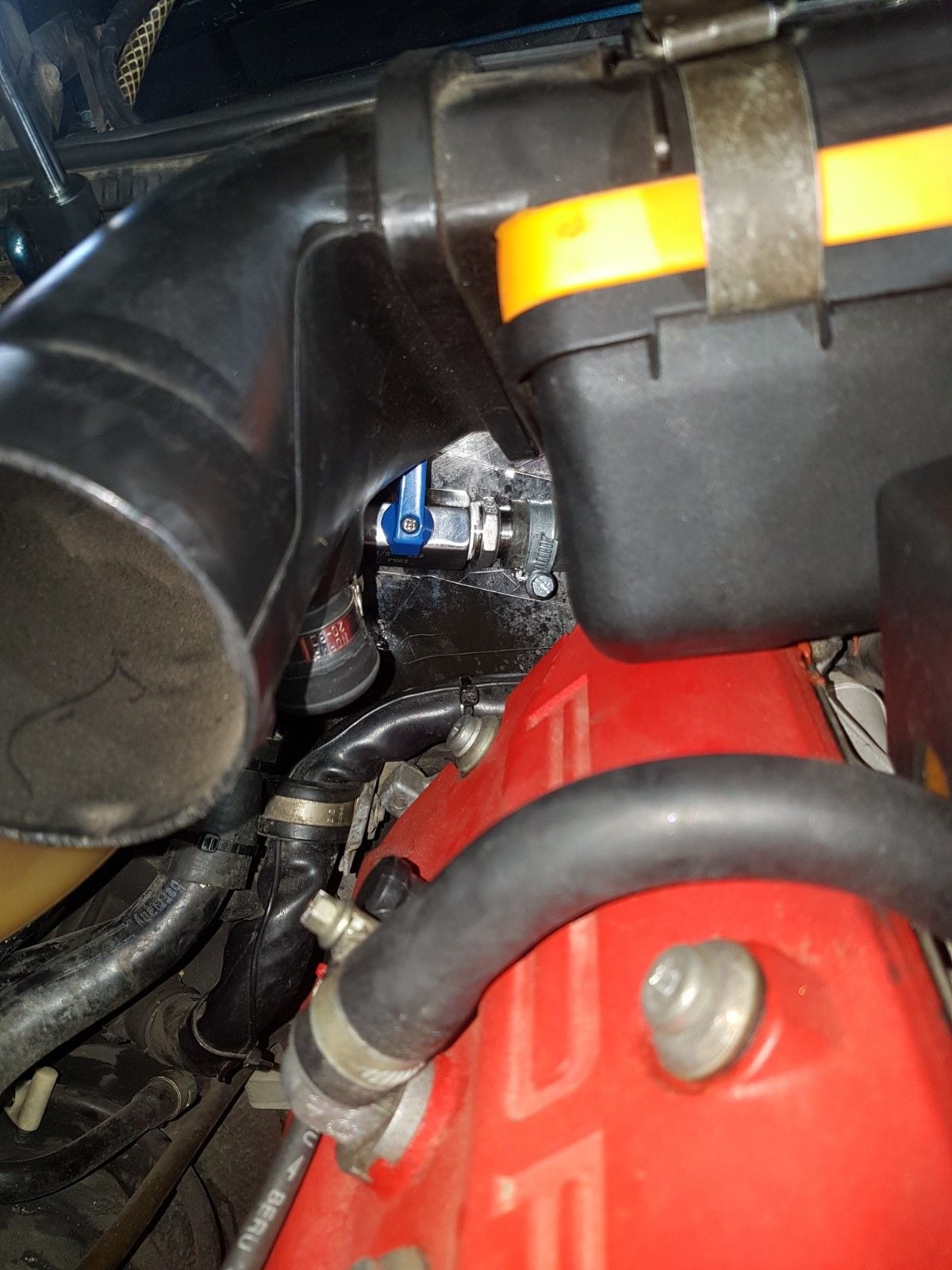
During summer in Spain I completely stop coolant flow to the heat exchanger. For this I installed a shutoff valve into the return line from the heater exchanger. Works great and turning the valve to "summer " can be done in seconds. Installed Hidden under the air filter box, but still accessible.
Talos Takes Your 991 Porsche 911 GT3 to the Next Level for a Cool $1.13 Million
Slideshow: Talos Vehicles has transformed the Porsche 911 GT3 RS into a carbon-bodied, race-inspired machine that costs well over $1 million before the donor car is even included.
9 Vehicles Porsche Helped Engineer that Aren't Porsches
Slideshow: Long before engineering consulting became trendy, Porsche was quietly helping other automakers build everything from supercars to economy hatchbacks.
9 Features and Characteristics That Only Porsche People Understand
Slideshow: Some brands build cars. Porsche builds traditions, obsessions, and a few habits that stopped making sense decades ago but somehow became part of the charm.
This Builder Is Turning Heads With Its Slantnose 911 Creation
Slideshow: A small Polish tuner has reimagined the Porsche 911 Slantnose for the modern era, blending 1980s nostalgia with widebody tuning culture and serious performance upgrades.
Porsche 911 GT3 Artisan Edition Pays Homage to Japanese Culture
Slideshow: Porsche has created a Japan-only 911 GT3 Artisan Edition that blends track-ready hardware with design cues inspired by traditional Japanese craftsmanship.
Porsche Reveals Coupe Variant of the Electric Cayenne With a Fresh Look
Slideshow: Porsche's latest electric Cayenne Coupe blends dramatic styling with supercar acceleration, turning the brand's midsize SUV into a 1,139-horsepower flagship.







 HVAC temperature control issue