When you click on links to various merchants on this site and make a purchase, this can result in this site earning a commission. Affiliate programs and affiliations include, but are not limited to, the eBay Partner Network.
I know this topic has been posted this week,but I needed clarification. I just had new shocks front and rear as well as front Lca installed.Ride in front is about 190.5 mm rear 180. This is after driving about 60 miles. My question is about loosening front Lca bolts(the rear ones). Do I loosen so that 2 threads show and then re torque,or can I drive like that for a while and then torque?
I’m actually planning on installing my front suspension tomorrow (new shocks, new adjustable hardware for my 83 and rebuilt uppers and lowers), and I intend to leave the bolts loose as designated by the WSM at initial install and will not tighten them until the front is fully settled from driving. And of course no lifting the car until bolts are tightened.
There was also a recent thread on doing something similar with the rebuilt uppers - basically getting them in the correct position and only then tightening the bushing nuts.
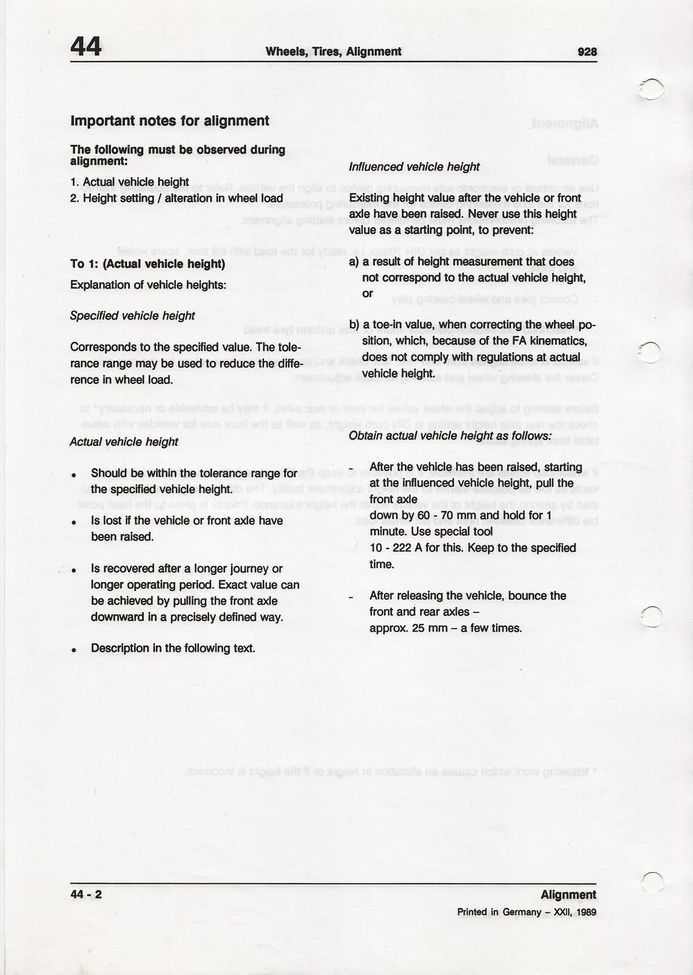
The WSM states "Screw in until only 2 threads are visible. Do not tighten to 120 Nm (88 ftlb) until assembly is completed and springs have settled."
Explain that
...I’m at that point right now, I don’t get this whole “2 threads “thing. Do you tighten it up then back it out so that two threads are visible at the bottom...or are they in the gap between the upper an lower....??.
im leaving about 1/4..1/8 inch in the gap between the Lower and upper at this point...lowering the car..driving it around the block then letting it compress as I hit the slope on the drive way...then up on the ramps and doing the final torque.
what’s the methodology on the uppers. ???
If you installed them and torque to spec , odds are they won’t be in a neutral unloaded position. I snugged them so the washers are tight and the arm doesnt show any movement. At this point I will drive it around a bit, nothing harsh., then figure a good way to torque them in there “resting “ position.
Yes I saw that, but should I drive like that till desired ride height is reached?
The weight of the car will keep the rubber bushing in its upper housing ...that’s my guess. I would not go around on a bunch of twisties and negative G woopdee doos to get it to settle though
In order to get a final torque on the upper you will have to have the wheel off. ..hmmm
I just drove around today..new lowers...uppers...no crazy twistys , but I have a few roads around here that I know will run the suspension through a good range of travel.
i just snugged the uppers so the washers dont spin and display no play ..and left the aft lowers with about 1/4 gap..front bolts per the manual also.
with all new rubber ..shocks etc. I could actually get a wrench in the front wheel well and was able to easily bear down on those upper A arm link pin nuts when I got back. Torqued to spec, no...but they are tight now to drive around with for a while and to get the new shocks to settle in.( front ride height will have to be adjusted with the collars I think. I set the new collars at exactly the same thread count as the old ones...but with about 50 miles on it all, it still looks high in the front)
my plan now is to drive a few hundred miles with everything as it is..,then go back and loosen it all and drive again.....then tighten it all up again.
in can’t believe the difference in the way my car feels.
New front uppers...lowers...lower ball joints..and new front bilsteins...and relubed my front sway bar bushings.
in the back..new bushings everywhere except the weisach link ...a good used rear arm from Mark (bent blade) ..plus new bilsteins
i engraved/marked all , my previous alignment settings on the various eccentrics and to my delight the car tracks straight. I do need a Rocky alignment at Greg’s though for sure. I’ve heard nothing but great stuff about Greg’s alignment machine and the man that runs it.
As far as the suspension...i feel like I have 928 that is tighter than it was on the show room floor. Now just needs to be “tuned and set”
its as a daunting task but there are so many good threads on here that allow you to do all this stuff DIY .
When I had my front suspension out for inspection and replacement of the upper arm bushes, upon assembly I left the upper arm tensioning bolts slack and same for the lower arm rear most bolts. The lower arms are not handed and the front carrier should sit at 90 degrees to the rotational axis- presumably thus why both sides have the same part number suggesting that give or take a little the arms are intended to sit parallel to the road surface when set correctly and fully settled. For the rear most bolts on the lower arm I set them to a point where the slack was taken out and they were just starting to pinch.
The nuts on the upper arm are accessible by simply changing steering lock from full right to full left. As I recall it is not possible to get a socket on those bolts to torque wrench check them. Maybe a crowsfoot tool would permit such?
Changing the dampers and replacing the arms at the same time must be a little tricky as there is no obvious starting point for the ride height adjustment other than leaving the adjusters where they were to start with which again is probably a crap shoot. Thus presumably why Porsche introduced the "tie down procedure" to take the guess work and tedious recycle effort to get ride height sorted correctly.
I reckon this procedure is a lot more complex and critical to performance handling than most appear to realise and thus the corner balance method is probably the best way to have a meaningful check. Mine is not perfect but not too shabby either. Would very much like to have a set of corner balance scales or access to such.
"springs settling" is just putting the car on the ground.
No it isn't.
The WSM has very clear instructions and a factory tool used to settle the suspension. It's clearly documented in the WSM.
This is auto-mechanics 101. Rubber mounted suspension pieces should be the closest to neutral position as possible before being torqued to spec. The WSM doesn't indicate this for every single fastener because......it's something trained mechanics already know.
The WSM has specific instructions related to the front LCA rear bushing because it's a very unique design. The suspension should be close to settled when dropped with these bolts lose, but no guarantee it's all the way. Especially with everything refreshed up front.
If someone were to torque these bolts with the LCA fully drooped, it's going to be WAY off.....
Less we forget the WSM is not written for the lay person as a step by step how to build a 928 guide. A shop working on a 928 with all the proper equipment is going to read this and understand what the big picture is.
Now, a home mechanic without all the proper tools & equipment, yes we have to make some exceptions and do the best we can by lowering the car, bouncing the nose a few times hoping it drops a bit more, torque the fasteners, drive it a while, loosen, bounce the nose, re-torque etc....
My local shop has the proper equipment, when doing such work we pull the nose down as instructed in the manual, set / measure / verify ride height and then torque the bolts. I'm currently rigging up my own device to pull down the nose of a 928 on my 4-post lift.
It's one thing to accept the fact that most at home do not have the full capability as expected in the WSM and exceptions have to be made. However, when deciphering the manual, it's assumed the reader has all the proper equipment.




 Another question about ride height