When you click on links to various merchants on this site and make a purchase, this can result in this site earning a commission. Affiliate programs and affiliations include, but are not limited to, the eBay Partner Network.
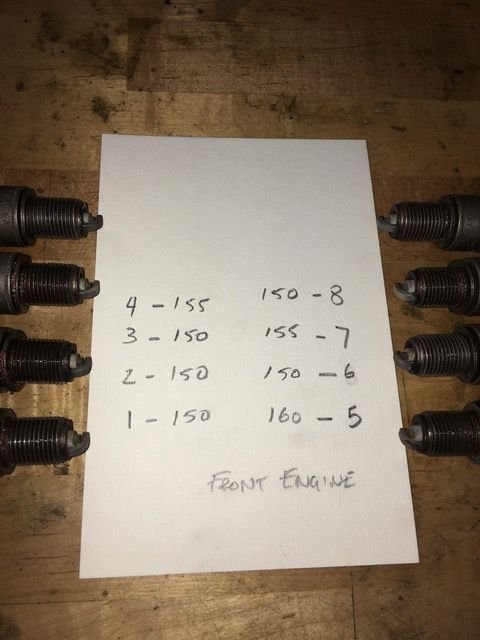
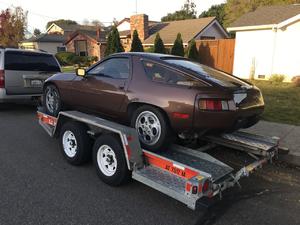
Bought this really nice 1978 from original owner. The owner parked the car 6 years ago after being told it had a possible (but unconfirmed) head gasket leak. I towed the car home. First Job was to drain the water. All looked good, no rust color and no oil. I dipped the oil and it appeared almost brand new, real clean and no sign of water, sludge etc. Next I performed a cold compression test. All numbers were between 158 and 170 (though I did forget to have the throttle full open). Next up was to remove the old fuel, I dropped the tank and cleaned everything out. Fuel did not look bad at all and the bottom of the tank and in-tank filter were all pretty darn clean. Last weekend I put everything back together and decided to try and fire it up. She started up no problem at all. I then took it out for a test drive. I couldn't believe how well it drove for a 40 year old car that had not even been turned over in 6 years. I did notice though that that there was a definite hesitation/misfire until I gave it full throttle. On full throttle it seemed to pull really well. When I got back I performed a second (Hot) compression test with open throttle. Again all numbers seemed fine. I have attached a photo with the numbers and the corresponding plugs which all seems pretty clean.
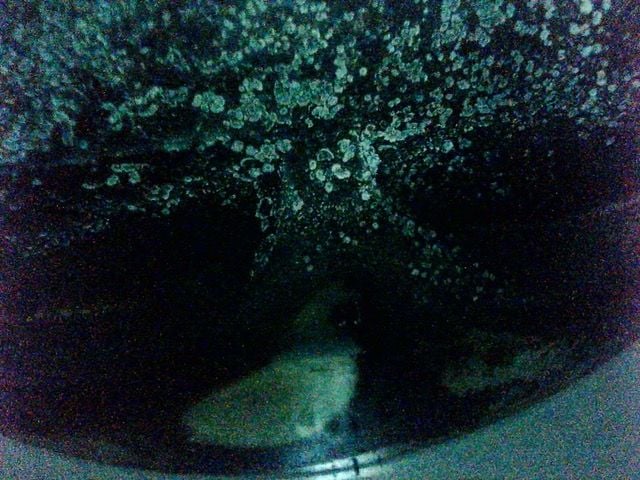
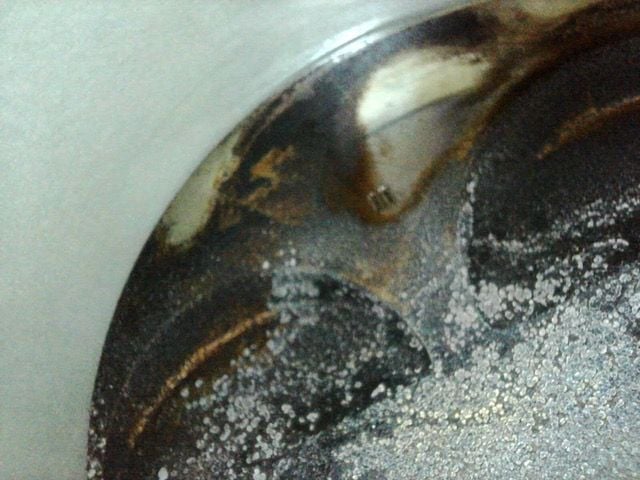
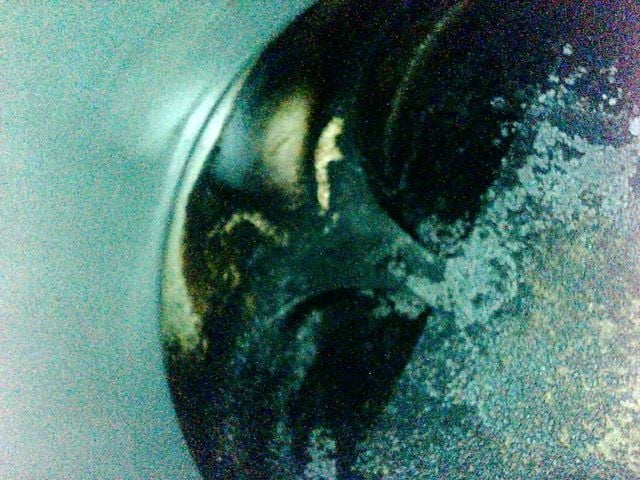
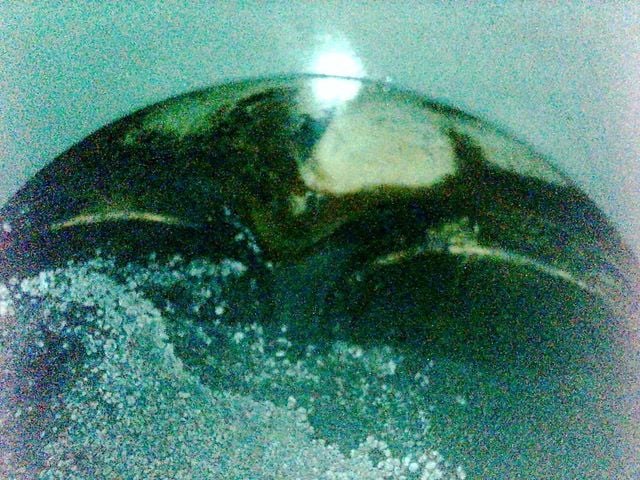
At this point im not sure what to test next. Im really not convinced I have a head gasket problem but the car is defiantly not running as it should. Idle seem ok - maybe a little high. I bought one of those $65 boro scopes (that actually work very well) and have attached photos of some of the pistons which again all appear to be pretty much the same with no evidence of water (that I could see). Though Im not sure what the white looking pit marks are on top. Im thinking maybe pre detonation (bad timing) but please let me know if you see something else.
Have you gotten yourself a cis pressure gauges to test the cold and hot pressures system/control pressures? Hesitation during low rpms and Fine when full throttle? Could it be an air/fuel mixture ratio problem? How about the fuel pumps (two of them if early ‘78).
Did not check the CIS yet. I was thinking that would be the next item to check. I need to order the kit from Roger. I can hear humming from both pumps, so im assuming they are both working.
Those marks look like dried corrosion. If the compression tests are fine, just put some berrymans chemtool and run it good. Dan is right, may be a clogged fuel system that’s overcome by increasing the air plate-fuel flow?
I had nearly the exact same issue with Blumaxx (a 78 also). I replaced the green wire, the coil, the rotor, plugs and wires, as well as a top end refresh, including a full cleaning of the fuel distributor and the little screens, but the hesitation at WOT or just under WOT was still there. Finally took it to my indy guru, and he did the pressure tests and tweaks, and the car has never run better. With CIS, they do not like to sit, and they are sensitive to the air fuel mixtures that the proper settings give you. Regardless, all of these things need to be done at some point, especially if there is no history in the file. What color is the green wire? Is it almost brown? If so, replace. How's the fuel filter? If not new, replace. Plug wires, rotor, plugs, coil. Replace them all - time for a full tune-up. Not expensive and easy to do.
Lastly, that crystal formation on the pistons could be coolant related. I'd get the car out and give a few good strong runs, then re-check to see if the stuff on the pistons has burned off. Carefully check coolant levels and oil before and after each run to make sure that you do not have a serious head gasket problem. However, as I read Greg Brown's advice in other threads, no matter how well these old buggers have been serviced over the years, they are at the age where the head gaskets will need attention.
As Ed says above, replace all that stuff. My 83 CIS ran poorly when I got it, but as I worked through all the small things, it just ran better and better. Before worrying about CIS pressures, check that the fuel delivery rate is up to spec - ~1350cc/30 secs IIRC. If not, replace the filter asap and recheck. I also improved things by loading the tank with Marvel Mystery, or Berryman's, and jumpering the fuel pump relay, let it run for as long as you can stay with it, to hopefully wash some deposits out of the lines - do this before changing the filter maybe. Also check the distributor cap for arcing inside. As said earlier CIS doesnt like to be left sitting.
jp 83 Euro S AT 57k
I had nearly the exact same issue with Blumaxx (a 78 also). I replaced the green wire, the coil, the rotor, plugs and wires, as well as a top end refresh, including a full cleaning of the fuel distributor and the little screens, but the hesitation at WOT or just under WOT was still there. Finally took it to my indy guru, and he did the pressure tests and tweaks, and the car has never run better. With CIS, they do not like to sit, and they are sensitive to the air fuel mixtures that the proper settings give you. Regardless, all of these things need to be done at some point, especially if there is no history in the file. What color is the green wire? Is it almost brown? If so, replace. How's the fuel filter? If not new, replace. Plug wires, rotor, plugs, coil. Replace them all - time for a full tune-up. Not expensive and easy to do.
Lastly, that crystal formation on the pistons could be coolant related. I'd get the car out and give a few good strong runs, then re-check to see if the stuff on the pistons has burned off. Carefully check coolant levels and oil before and after each run to make sure that you do not have a serious head gasket problem. However, as I read Greg Brown's advice in other threads, no matter how well these old buggers have been serviced over the years, they are at the age where the head gaskets will need attention.
The Green wire looks pretty new and definitely green. Rotor, Cap, Coil, and wires all look old. Wires may even be original. I have just gone through and cleaned the fuel tank, screen and both pumps. Also installed a new fuel Filter.
Whilst looking over the car last night I also noticed that the distributor appears to be maxed out on its adjustment. This does not look right to me. Do you think its possible the timing may be off by 1 tooth and someone has tried to compensate with the distributor. ? Anyone have any experience with this ? I will pull the covers and check the timing tonight.
Also gonna order up the new Wires, Cap, Rotor as well as a CIS test kit. Will report back once installed.
Bought this really nice 1978 from original owner. The owner parked the car 6 years ago after being told it had a possible (but unconfirmed) head gasket leak. I towed the car home. First Job was to drain the water. All looked good, no rust color and no oil. I dipped the oil and it appeared almost brand new, real clean and no sign of water, sludge etc. Next I performed a cold compression test. All numbers were between 158 and 170 (though I did forget to have the throttle full open). Next up was to remove the old fuel, I dropped the tank and cleaned everything out. Fuel did not look bad at all and the bottom of the tank and in-tank filter were all pretty darn clean. Last weekend I put everything back together and decided to try and fire it up. She started up no problem at all. I then took it out for a test drive. I couldn't believe how well it drove for a 40 year old car that had not even been turned over in 6 years. I did notice though that that there was a definite hesitation/misfire until I gave it full throttle. On full throttle it seemed to pull really well. When I got back I performed a second (Hot) compression test with open throttle. Again all numbers seemed fine. I have attached a photo with the numbers and the corresponding plugs which all seems pretty clean.
At this point im not sure what to test next. Im really not convinced I have a head gasket problem but the car is defiantly not running as it should. Idle seem ok - maybe a little high. I bought one of those $65 boro scopes (that actually work very well) and have attached photos of some of the pistons which again all appear to be pretty much the same with no evidence of water (that I could see). Though Im not sure what the white looking pit marks are on top. Im thinking maybe pre detonation (bad timing) but please let me know if you see something else.
As always -
any and all advice much appreciated
That is normal carbon deposits on the pistons you've taken pictures of. Nothing to be concerned about.
There's a fool proof way to check the CIS system for function. (You will still need a pressure gauge to check the warm-up regulator pressures and the system pressure.)
Remove all 8 injectors from the manifolds. Once removed, re-install them on the fuel lines. Cut 8 of the same brand plastic bottles in half. Arrange the cut water bottles so that the injectors can spray into them, so that you can observe the spray pattern and volume. Jumper the fuel pump. No smoking or sparks in the engine compartment, during this test!!! Push down gently on the sensor plate and observe the injectors. They should all spray the exact same cone shaped pattern. They should not drip when the sensor plate is returned. They should all spray the same volume. Push the sensor plate to different levels. The injectors should all spray the same and deliver the same volume. Correct as needed.
something else you can check,
pull the small blue check valve off the port at the booster, plug in the vacuum gauge start the engine and observe the reading .
then do the same for the distributor port,
they should be close about 18 to 20 in.with the booster being slightly higher due to the venturi feeding with the intake.
I found my booster on my 79 will only pull 4.5 in ,
I unplugged the booster check valve from the booster plugged it and now the check valve port shows 20 in.
the idle immediately went down to almost a stall, time for a new booster and master cylinder
That is normal carbon deposits on the pistons you've taken pictures of. Nothing to be concerned about.
There's a fool proof way to check the CIS system for function. (You will still need a pressure gauge to check the warm-up regulator pressures and the system pressure.)
Remove all 8 injectors from the manifolds. Once removed, re-install them on the fuel lines. Cut 8 of the same brand plastic bottles in half. Arrange the cut water bottles so that the injectors can spray into them, so that you can observe the spray pattern and volume. Jumper the fuel pump. No smoking or sparks in the engine compartment, during this test!!! Push down gently on the sensor plate and observe the injectors. They should all spray the exact same cone shaped pattern. They should not drip when the sensor plate is returned. They should all spray the same volume. Push the sensor plate to different levels. The injectors should all spray the same and deliver the same volume. Correct as needed.
Excellent - Thanks Greg - will try this at the weekend and report back.
something else you can check,
pull the small blue check valve off the port at the booster, plug in the vacuum gauge start the engine and observe the reading .
then do the same for the distributor port,
they should be close about 18 to 20 in.with the booster being slightly higher due to the venturi feeding with the intake.
I found my booster on my 79 will only pull 4.5 in ,
I unplugged the booster check valve from the booster plugged it and now the check valve port shows 20 in.
the idle immediately went down to almost a stall, time for a new booster and master cylinder
Thanks for the help Stan - But just to clarify - Are you saying that if the brake booster is bad the car will not run well ?
Something else I did notice on the drive was that the brake pedal felt very hard and starts working right at the top. I figured there was something wrong with the booster but thought I would get to that once the car was running well.
this testing info will allow you to rule out an additional vacuum leak ,
you probably need a booster as well ,
but you need to know what your vacuum situation is first
this testing info will allow you to rule out an additional vacuum leak ,
you probably need a booster as well ,
but you need to know what your vacuum situation is first





 Another 1978 Hesitation Thread