When you click on links to various merchants on this site and make a purchase, this can result in this site earning a commission. Affiliate programs and affiliations include, but are not limited to, the eBay Partner Network.
This whole thread is redundant. The entire 928 technical forum is more or less what the title of the thread is. What is the point here?
Good question.. its a repository for any discussion that gets off track into a specific technical discussion. This came up on the racing thread, but was about a specific brake problem.... one idea was the extra weight... that's something we can discuss here and not over burden the thread with technical information and equations.
this stuff is really simple and im frustrated and curious as to why its not resonating with you.... Just for me, let me know why you disagree.
Im having dinner with my PHD'ed physics friend this weekend. Ill let him review and see if ive missed anything or made any errors in the presentation of the example/simulation.
Originally Posted by James Bailey
But Rennlist rules require that there is 30 seconds between posts... with a delta of 7,651 posts that is 3,825.5 minutes or 63 hours 45 minutes. Holy crap how many minutes are involved in making 23,881 posts ?? OK if you do not read the whole thread that saves lots of time. If you simply post as a stream of consciousness needs no reflection or editing. Just throw out threads with out doing any searches....because if it is new to you it is clearly new to everyone else.
Oh well time to go trim the dogs toenails.....
Originally Posted by mark kibort
The reason is simple.... if the lighter car is at the max capacity, then the heavier car will always be at less than capacity and cant use all the capacity as it is limited by the same decel forces for both heavy and light car. (but different decel rates)
its the rate of deceleration that determines the HP/sec, not the total dissipation of KE from top speed to final turn in speed.
that's the best way i can explain it, in as little wording as possible.
do you have a Scenario that can contradicts this? just give me the values and ill plug it in and show the answer.
Jim, you went through these calculations pretty quickly in calculating posts/time to get to that delta level. .. its the same kind of math for this problem.... just give it one more try to find a problem with the conclusion.
that is, if you are done clipping the dog toe-nails!
Mk
Originally Posted by James Bailey
But Rennlist rules require that there is 30 seconds between posts... with a delta of 7,651 posts that is 3,825.5 minutes or 63 hours 45 minutes. Holy crap how many minutes are involved in making 23,881 posts ?? OK if you do not read the whole thread that saves lots of time. If you simply post as a stream of consciousness needs no reflection or editing. Just throw out threads with out doing any searches....because if it is new to you it is clearly new to everyone else.
Oh well time to go trim the dogs toenails.....
Originally Posted by mark kibort
Ok, this is a pretty simple problem. Here is the answer:
Two cars , CAR A (light car at 3000lbs) vs Car B (heavy car 500lbs heavier at 3500lbs). we already got too the point that at the exact same braking point, the two cars with the same HP are running:
car A 120mph (53.64 m/s)
car B 114mph (50.9 m/s)
the simple part of this example is that we can just plug in the numbers if we agree that the heavy car will slow at 15% less deceleration rate. we will call this 1g vs .85g respectively
This means in 4 seconds the light car slows to 33mph (15m/s)
this also means in 4.3 seconds, the HEAVY car slows to the same speed
keeping it reallly simple. the KE at the start is:
1,991956 J Light
2,085,914 J Heavy
the KE at the end at the final same exact speed is:
153,405 J
178,977 J
this ends up with the lighter car disipating a total of 1,838,551 for the light car
and 1,906,937 J for the Heavy car. heavy car dissipates more energy by 3.7%
BUT
Because the lighter car slows to the same speed in 4 seconds and the heavy car slows to this same speed in 4.3 seconds, the RATE OF KE DISSIPATION is HIGHER for the ligher car by about 3.7%
616HP/sec for the light car ( example : 1,838,551 J /4 sec /746watt =hp/sec)
594HP/sec for the heavy car ( example : 1,906,937 J /4.3 sec /746watt =hp/sec)
the rate of heat dissipation for the light car is HIGHER than the heavy car for its decel rate and its higher speed at the moment of braking (at the same spot on the track)
Therefore, this shows that adding weight, under these normal conditions, actually lessens the burden on the braking system.
The attached charts are from a great simulator that has many factors i set up to match the 928 and shows top speeds at the same spot on the track. As a note......even if you make the heavier car slow to a slower speed, the rate of decel would stay the same but the time would go from 4.3 to 4.5 seconds if you change the turn in speed by 10% slower) This makes the heavier car even less power hungry during its decel
acceleration calculator: http://www.smartconversion.com/unit_...alculator.aspx
.
Last edited by mark kibort; Dec 7, 2015 at 06:30 PM.
The only thing I can think of that can change the KE load on the heavier car to be greater during a decel if the actual braking force can go up with the heavier car. Ive seen calculations both ways. more weight on the tires, more force created by the tires (if they are not at their physical limit).
that would then change things a bit... but not as much as it would intuitively change.
I set up a very reasonable scenario of a car slowing at its limit and then adding the weight and doing the calculations again with the extra weight. interestingly , the speeds and distances are very close to reality based on what I have seen for the HP and weight discussed.
even the decel distances calculated by the g values, end up within 10 feet of each other before the same turn in spot.
Jim, you made a statement and pretty quickly dismissed the concepts, and results even when i proved it with a very simple simulation of a heavy vs light car of the same HP. And after making the comment, i answer you and now have no comeback. Do you understand now, or do you have another take on the conditions? It seemed you confused, rate of KE change with KE change. (big diff)
The simple answer to your below assumption is that the braking force can go up with the heavier car. If that is true, then you have a point. I'm going on the assumption that the braking force is constant and that causes the worst case of more heat dissipation to be with the lighter car its at maximum capability there. Going heavier just lightens the heat dissipation on the brakes. It's the rate of speed change, not the, as you say, "speed included in the KE formula" that is the key here. I've already said, the KE change for the heavy car going slower vs the light car going faster will dissipate more KE overall to a same turn in speed. BUT, the rate of change for the lighter car will be greater, giving a higher heat dissipation for the slow down. I showed the conditions of the two cars braking at the same position and releasing the brakes at the same position.
If you look at the simulation.... very simple stuff here, of two cars accelerating with the same power and set up, only changing weight , and then using a 1g deceleration rate for the lighter car vs 15% less deceleration rate for the 15% heavier car. this is a common condition as welll and proves there is a higher heat load for the lighter car. Now , if you can tell me how any car can achieve the same decel rate as it has weight added to it, then i think you have a valid point. but so far, i dont think that is true in most cases. But, in fact even if it could the additional heat is not as much as the extra weight would intuitively indicate. in other words, adding extra weight, adding a passenger to a race/track car doesnt put much more demands on the brakes, and generally will produce less in most cases.
Thats the discussion here. if you have another perspective or have found anything wrong in the simulation or the calculations..... I would love to hear it.
note: as you go through the calculations and possible scenarios, you see that the limit will eventually be the brakes themselves as you go lighter not heavier
that rate of , (example)" 616HP/sec" is for the light car. the heavier car cant use that higher rate, because its limited by its decel rate due to more mass.
just as an even lighter car will drive that HP/sec value up until the brakes cant dissipate the heat and cant provide that force we are using , from the TIRES and their slip percentage vs vehicle weight, being the limit here.
Originally Posted by James Bailey
Nope.... braking at maximum effort or work with same brakes is the same, The rate of heat into the brakes is the same. The formula for kinetic energy already includes the speed trying to bring it back into the calculations again makes no sense...
If the brakes were capable of more work then the heavier car too could simply use more of that capability.
If there is a 616hp /sec braking ability then that is what the heavy car should use too , why would it use less ?
I said: the speed is only brought in, to calculate the distance and the time that the vehicle can slow to the target speed.
so yes, the KE is already a given at the point where the brakes are applied for both cars. the heavier one has 5-7% more than the ligher car , BUT, because of the ability to decel being greater for the ligher car (1g vs .85g based on same force being able to be applied to decel), the time to the target speed will be different (4 sec vs 4.3 sec on the heavier car) SO< the rate of KE dissipation will be greater, even though the total KE dissipated is less. Does that make sense??? or if you disagree.. please tell why.
your last comment shows me that im not making my point clear enough .sorry for that. the reason that the rate of decel, and KE dissipation is at 616hp per second, is because the ligher car can decel at a faser rate .. the limit is the force applied at the wheels. if the limit of the 3000lb car is to have 3000lb of force to decel (1g) and is at the limit of the tires... so you increase the weight to 3500lbs, the decel rate goes down to .85g. this is the KEY point.
you can plug any final speed target you want, and the ligher car will always induce more heat in the brakes due to these facts. it gets worse for the heavier car because of weight transfer being less, but those are rounding errors. (meaning it would actually not be able to use the full 3000lbs of force due to less weight transfer to get to tire limits of mu)
to answer your question directly... the heavier car cannot get to the 616hp/sec rate, because it is limited by .85g . makes sense? dont confuse braking force with braking power or dissipation rates with total dissipation. Its very analogous to engine torque vs HP in regards to acceleration
also remember. constant torque or force, creates HP going up or down proportional to speed. constant power, causes a reduction or increase of torque with speed. the later is not the case with braking.. it is with acceleration though. again, similar to the jet vs the car comparison...... constant thrust vs constant HP.
And your post contributes how?... Its real simple.. you , or anyone, go look in the mirror and ask yourself.. " hmm do i want to discuss this technical subject? " if you don't, just go away. if you do, contribute! its pretty simple. No need to post insults or anything at all unless you feel a need to be heard.
it gets worse for the heavier car because of weight transfer being less, but those are rounding errors. (meaning it would actually not be able to use the full 3000lbs of force due to less weight transfer to get to tire limits of mu.[/I][/B]
Why would you think the heavier car would have less weight transfer?
I say prove they are rounding errors first based on the same center of gravity height for both cars. My assumption would be the heavy car will have more weight transfer to the front therefore increase the available force between the tire to road interface.
Why would you think the heavier car would have less weight transfer?
I say prove they are rounding errors first based on the same center of gravity height for both cars. My assumption would be the heavy car will have more weight transfer to the front therefore increase the available force between the tire to road interface.
The weight transfer percentage would be less because with less g of deceleration, there would be less weight transfer so braking might not be as effective...... you can plug in the numbers to get the actual weight transfer for .85g vs 1 g and the 3500lb car vs 3000lbs. the rounding errors was about the lack of effectiveness of the braking of the heavier car based on this.
The main variable based on assumption is that the tires are at their limit with the 3000lb car. It so, then adding the weight doesn't result in the same g deceleration rate. does 15% more weight lower the decel rate by the same proportion? we know they wont be the same. This is a tire limit, that supposition has been reached... any more forces to the tire and temps increase, and the rubber compound gets even more slick, mu
this is where Jim was getting confused. we already know the lighter car can do it. we are talking about the effects of adding 15% weight. all my math stacks up well. it makes perfect sense, but you cant look at the total KE change, you have to look at the rate of KE change. huge difference.
the interesting thing is that, even if you could produce near as much g loading (say 95%) you probably slow to a 3MPH less speed , so in the end, the KE dissipation rate would still only be 5% higher. hardly something to think about.
however, i dont think that the deceleration rate could 95% of the lighter car. its pretty well known, if you add weight to a car at or near its limits , you cant add forces to the tires to any great extent.
Why would you think the heavier car would have less weight transfer?
I say prove they are rounding errors first based on the same center of gravity height for both cars. My assumption would be the heavy car will have more weight transfer to the front therefore increase the available force between the tire to road interface.
The heavier car would have less weight transfer, if it slows at a slower rate (less g's) In our example, we are using 1g for the light car and .85g for the heavier car. because the formula is based on weight, CG height and wheel base, if the gs of deceleration go down, there will be less weight transfer because the CG would not raise as much. (say 1" less). that actually gives less weight transfer.
.85g x the weight transfer = (vehicle weight x CG height)/wheel base
vs 1.0g x the weight transfer for the lighter car.
the weight transfer for the lighter car is 780lbs vs 740 for the heavier car. if there was no CG change, the weight transfer would be the same.
as a note, you never see the porsche cup cars in Grand AM, out brake the prototypes . Even though they on the same tires. (or other very light racers on same tires vs the heavy cars) . this is the only variable...... what is the difference in deceleration rates for the heavy vs lighter car. if you use the 15% heavier car slows at a 15% lower rate, then all i have calculated is true. if its something closer, then worst case, it might be near equal, and thats the point of the discussion anyway. extra weight added, is not harder on the brake system at the track
Jim has an issue with wondering if the power dissipation is there for the lighter car to do more KE dissipation (the value was 616hp vs 594hp ), why cant the heavier car use this power dissipation ? the reason was that we were assuming that the deceleration force was constant and would limit the power dissipation. BUT, if he wanted the heavier car to realize the same braking power dissipation, that would be easy for the heavy car to do.. just brake from a higher speed, on some other straight.
again, the reason that the lighter car can be harder on brakes, is that its the rate of KE change, not the total KE change to slow. and slowing to a lower speed for the heavier car, just extends the time period making the power dissipation per unit time, less.
Both cars being equal except weight, the heavier car will have less weight transfer to the front tires during breaking than the lighter one?
if the g forces are less (and that is assumed but that's common assumption ), and the CG doesn't rise as much (say 1" lower during braking).
this creates a condition where the weight transfer is not as much. If the CG doesnt change, the weight transfer is close to the same. However, the weight on the front of the car is still higher, due to the car being heavier.
Actually Mark weight transfer is a BAD thing....more transfer equals less total braking. Also why 50/50 front to rear weight distribution is NOT ideal.
This is a really great book.
Mr Smith is very knowledgeable and explains concepts clearly.
This one book would answer 99.44% of these concerns expressed here.
Definitively.




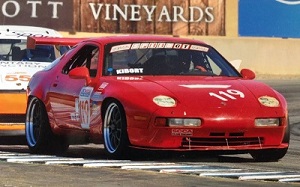


 .. its the same kind of math for this problem.... just give it one more try to find a problem with the conclusion.