When you click on links to various merchants on this site and make a purchase, this can result in this site earning a commission. Affiliate programs and affiliations include, but are not limited to, the eBay Partner Network.
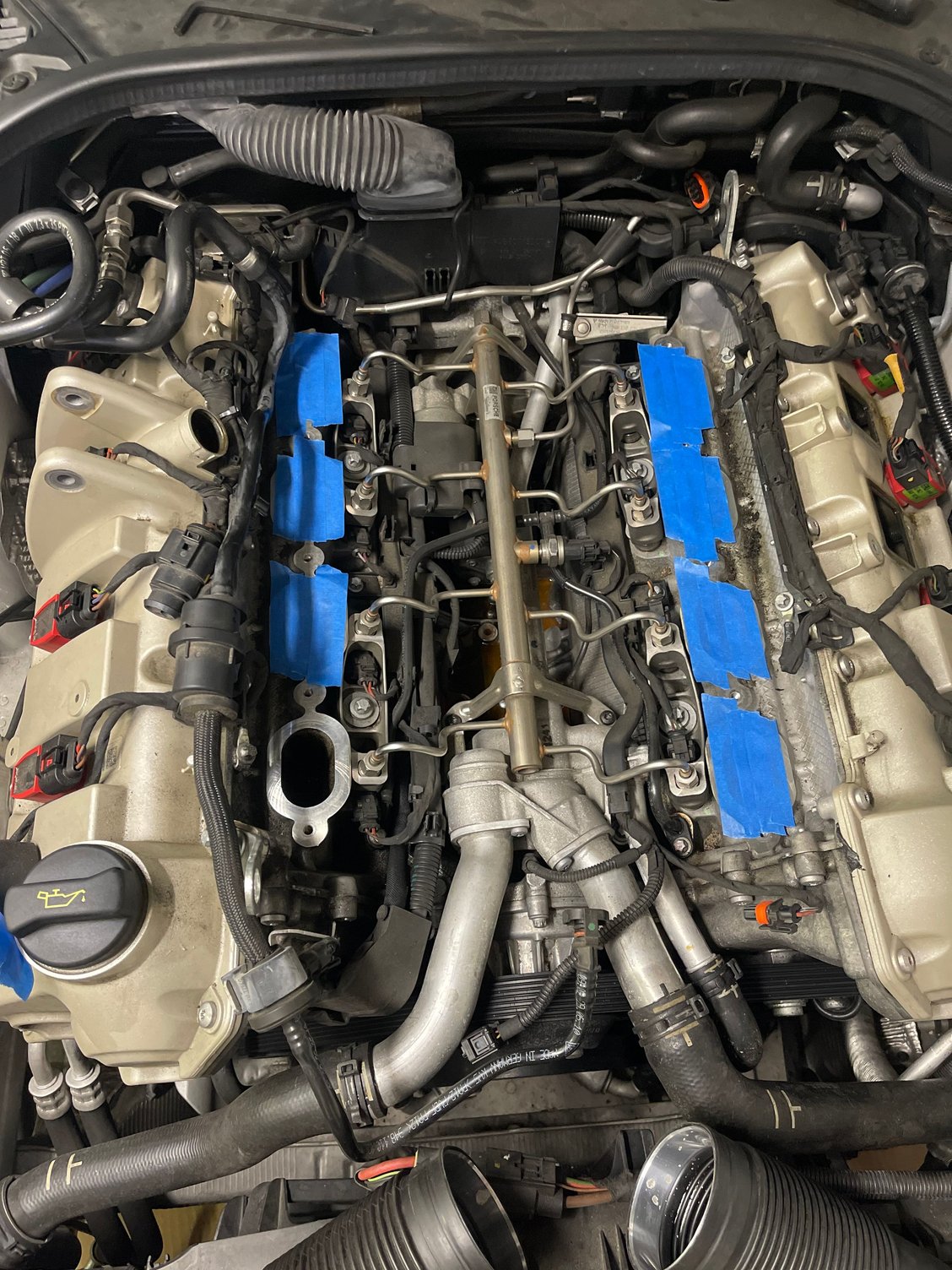
planning to take off the intake manifold on my 2011 s 95k miles to repair the cracked Y coolant lines. And will also replace pulleys, water pump, thermostat, serpentine belt, and intake manifold gaskets while I’m in here.
i figured my intake valves will most likely have carbon build up, so I’m looking into walnut blasting these as well. I’ve watched a bunch of videos and it looks like you just have to turn the crankshaft clockwise to turn the engine manually.
will either use shop vac + walnut blaster or get those 2 in 1 walnut blasters.
anybody have tips or documentation that you can share with me for this project? Thanks!
planning to take off the intake manifold on my 2011 s 95k miles to repair the cracked Y coolant lines. And will also replace pulleys, water pump, thermostat, serpentine belt, and intake manifold gaskets while I’m in here.
i figured my intake valves will most likely have carbon build up, so I’m looking into walnut blasting these as well. I’ve watched a bunch of videos and it looks like you just have to turn the crankshaft clockwise to turn the engine manually.
will either use shop vac + walnut blaster or get those 2 in 1 walnut blasters.
anybody have tips or documentation that you can share with me for this project? Thanks!
hi, I had to do this for my bmw 335d diesel which is notorious for cbu. I used a fiber optic scoping camera to make sure the valve is completely closed. funnily, a quarter sized plug for egr cooler was all it took to prevent it from happening again.
how or why would a panamera have cbu issues? do you have a diesel or is this happening on a panamera for different reasons?
hi, I had to do this for my bmw 335d diesel which is notorious for cbu. I used a fiber optic scoping camera to make sure the valve is completely closed. funnily, a quarter sized plug for egr cooler was all it took to prevent it from happening again.
how or why would a panamera have cbu issues? do you have a diesel or is this happening on a panamera for different reasons?
It's because the Panamera engines are Direct Injection gasoline designs. First there was carburation where gas is introduced to the intake charge immediately at the throttle, then port injection which introduces fuel between the throttle and cylinder, and most recently Direct Injection which introduces fuel (as the name implies) directly into the cylinder.
Each successive technology gives greater control over fuel timing, metering, and mixing, which in turn means greater engine efficiency (more power, more MPG, less emissions, however you choose to exploit that efficiency.)
Carbureted and port injection engines however have some advantages, one of which is that the gasoline in the intake charge rushes past the valve and the solvent nature of the gasoline keeps the valves mostly clean. DI engines do not have this "feature". I first experienced it (carbon build up) during ownership of a MINI Cooper S in the early 2000's as DI was fairly new at the time. As the tech has progressed, manufacturers have come up with solutions/workarounds - for example the D4S system on Toyotas is basically putting both DI and PI systems onto a single engine.
Diesel engines are inherently Direct Injection because of their compression ignition nature. (well, some used a pre-mix chamber but that's a different story).
It's because the Panamera engines are Direct Injection gasoline designs. First there was carburation where gas is introduced to the intake charge immediately at the throttle, then port injection which introduces fuel between the throttle and cylinder, and most recently Direct Injection which introduces fuel (as the name implies) directly into the cylinder.
Each successive technology gives greater control over fuel timing, metering, and mixing, which in turn means greater engine efficiency (more power, more MPG, less emissions, however you choose to exploit that efficiency.)
Carbureted and port injection engines however have some advantages, one of which is that the gasoline in the intake charge rushes past the valve and the solvent nature of the gasoline keeps the valves mostly clean. DI engines do not have this "feature". I first experienced it (carbon build up) during ownership of a MINI Cooper S in the early 2000's as DI was fairly new at the time. As the tech has progressed, manufacturers have come up with solutions/workarounds - for example the D4S system on Toyotas is basically putting both DI and PI systems onto a single engine.
Diesel engines are inherently Direct Injection because of their compression ignition nature. (well, some used a pre-mix chamber but that's a different story).
interesting., the reason 335d has cbu is because they are rerouting exhaust gas through the egr system into the intake manifold (at least here in the USA), that mixes with oil vapors around the intake valves and builds up the carbon that way. I didnt think gas engines would have something of similar nature.
It worked pretty good around 90K miles. Now that I'm at 133K I'm going to do the CRC approach and see if it makes much of a difference. Honestly, I'll be surprised if it does much, because it's running so well and feels so strong.
SeaFoam is a common DIY that people will run through their intakes for things like this. pull a vac line off the manifold and stick it in the SeaFoam bottle while the engine is idling so the product gets sucked into the intake tract via engine vacuum. You will want to pinch the vacuum line so you can meter the seafoam into the engine, if you just let the engine drink it all at once it will stall. (It won't hurt the engine, you just won't get the intended effect from the treatment)
DO NOT do it in your garage, it will smoke out the whole street.
SeaFoam is a common DIY that people will run through their intakes for things like this. pull a vac line off the manifold and stick it in the SeaFoam bottle while the engine is idling so the product gets sucked into the intake tract via engine vacuum. You will want to pinch the vacuum line so you can meter the seafoam into the engine, if you just let the engine drink it all at once it will stall. (It won't hurt the engine, you just won't get the intended effect from the treatment)
DO NOT do it in your garage, it will smoke out the whole street.
Can you tell me exactly where on my Panamera 8 cylinder turbo engine that I can attach to a vacuum line? Is this product known to be better than CRC? Thanks for the info!
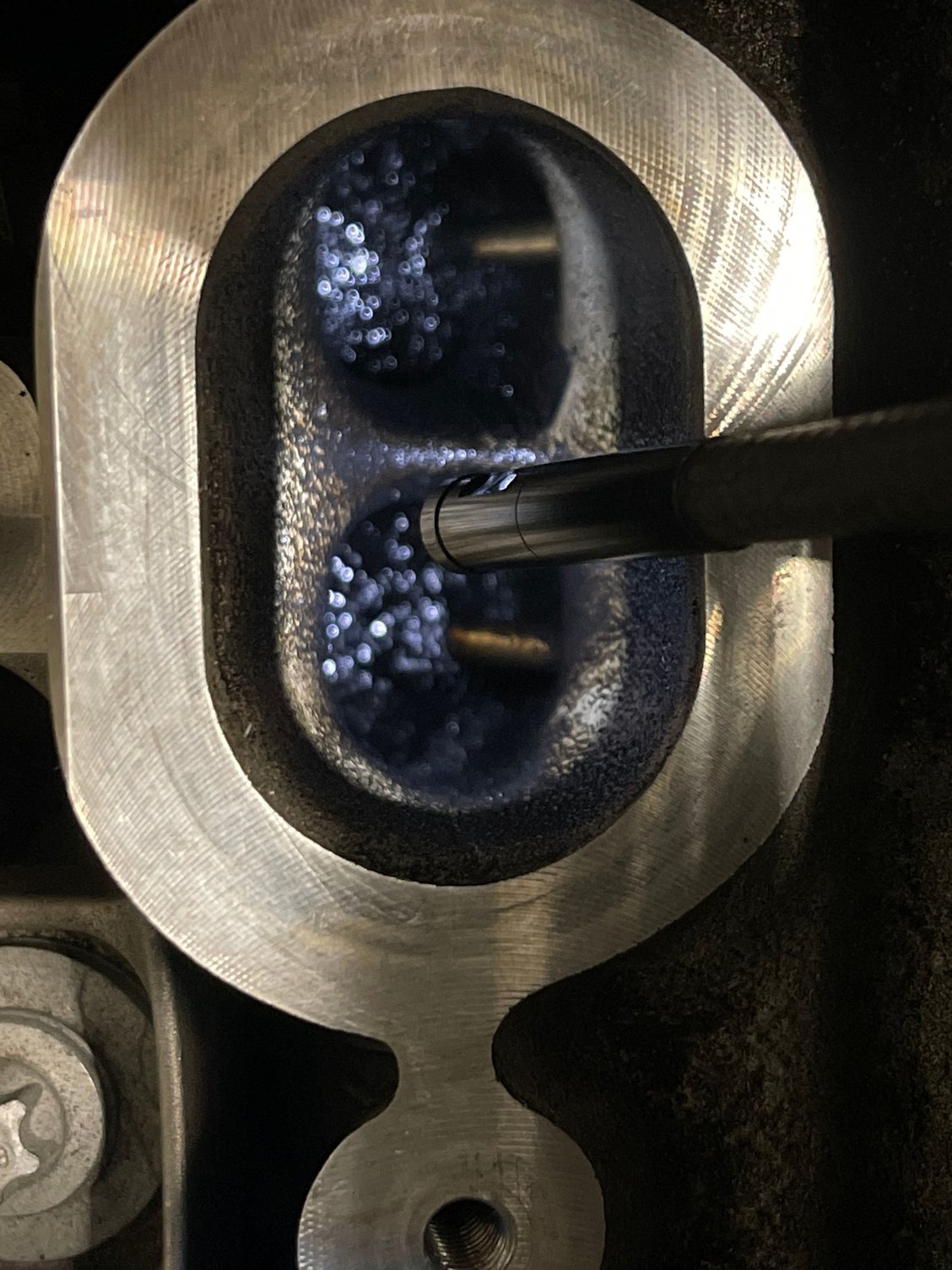
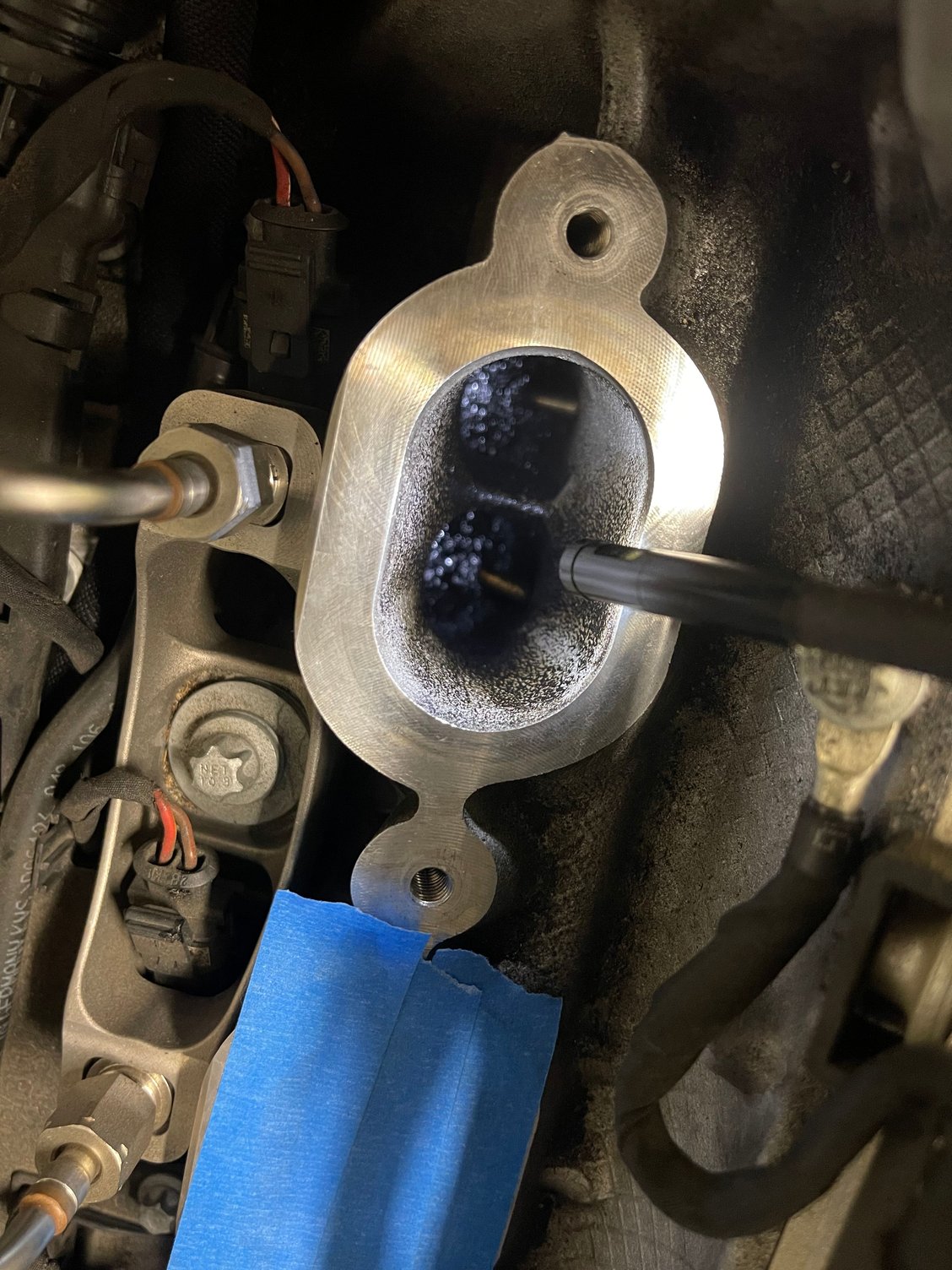
Here are some pictures if you wanna see how dirty they are on a 95k 2011 s. Definitely need walnut blasting here. I wiped the top of the valves so that’s why it looks clean. Was dirty as well.
Looks typical for any DFI car 60k+ miles. Slowly working on this car and finding out more things to fix and buying more parts. Hopefully it’ll be like a new car afterwards and I won’t have to do anything major for another 50-60k miles 😬
I’ve been taking my time to carefully make sure I’m doing this properly. Cross referenced with cayenne DIY videos and even watched many Audi and bmw and Volkswagens videos.
procedure is pretty simple and straight forward. Just ensure that the valves are closed and scrape, soak, or walnut blast away. use a 27mm socket to rotate crankshaft pulley (wsm refers to it as vibration pulley) clockwise only. Going counter clockwise may loosen the timing chain and cause issues like snapping it.
double and triple check intake valves are closed. This was the main thing that was holding me back and I was researching TDC and how four stroke engines worked. But no need to find TDC. Just keep rotating until the valves no longer move. Then continue rotating a little more to verify that it doesn’t move anymore. If you keep rotating, the valve will eventually go back down and you’ll have to cycle again.
im taking my time and working on one cylinder at a time.
i soaked my first cylinder with CRC intake valve and turbo cleaner and then picked away. It was a pain to remove since I didn’t want to use my vacuum to suck it since it’s flammable. Used shampoo pump to pump it but it was not getting everything out. Bought a “lubrication gun” (7 oz syringe) from harbor freight and that didn’t remove it all either. A little was remaining, but figured it’s fine to walnut blast and just proceeded to walnut blast.
it’s gonna take a minute or two of blasting in intervals to clear majority of the carbon depending how stuck your carbon is. Even with soaking I had to pick away at the big pieces in between walnut blasting.
a trick is to walnut blast for a minute or two then use an air hose to dislodge the sticky carbon and leftover walnut so your vacuum can get it. Then check and see if you need to use pick tools. And repeat. Borescope is helpful to ensure no walnut shells are left behind and if there’s any spots you missed. Walnut blasting will not be able to remove all the gunk due to the angle. Some carbon will be blocked by the valve which you’ll have to pick manually.
Afterwards, i just wiped down inside by spraying crc cleaner to paper towel and wiping the top half of the intake valves.
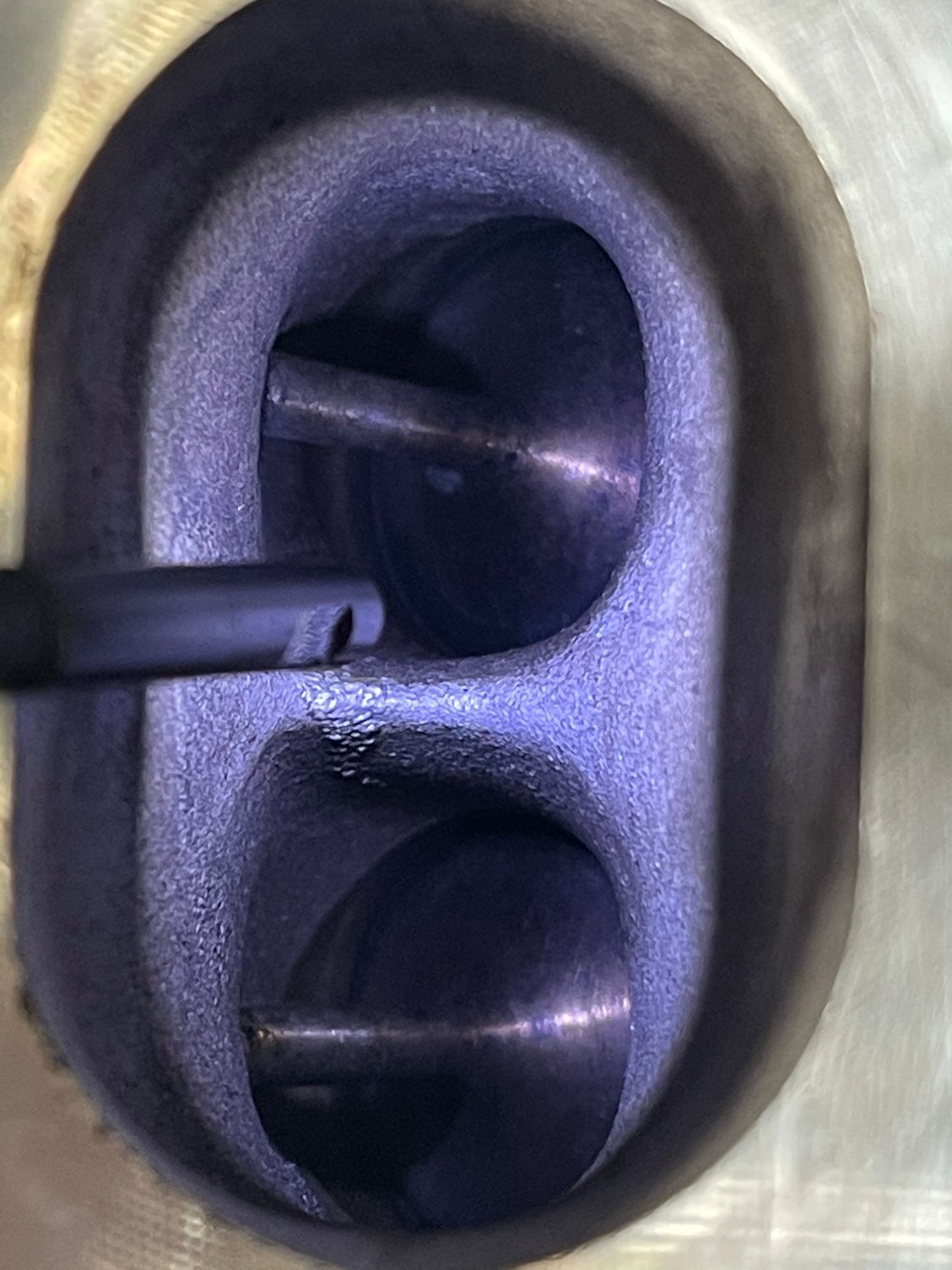
Cylinder two I didn’t use crc cleaner and just did walnut blasting - air hose- picking procedure. This time I started picking away and then vacuuming the big pieces out then I started to walnut blast and air hose and picked more. After pictures of cylinder one. Cylinder two looks similar.
Looks good! But the real question - can you tell a difference in drivability?
I’ll let you know when/if I’m able to put this back together 😂🥲
update: cleaned all the plastic trim peices and used turtle wax’s new hybrid plastic tri restorer.
All 8 intake valves are walnut blasted and clean.
bought new o rings for coolant hose. M3x21.5 is the closest I was able to get to match factory’s o ring. Porsche quote $5 each. I was able to get 8 for $5 from oring west.
thermostat and water pump was replaced.
next step is to remove fuel pipe and replace the brittle coolant vent hose. Then replace the various pulleys (idler, tensioner, etc). Last step is to replace the hood latch and the hood latch cable. Also refill the coolant with uview 550000.
then I’ll run the car and reinstall stuff.
suspension is currently low on the front, so I’ll see what the issue is here.




 Walnut blasting intake valves procedure?