



Odd snowstorm observation

RL Community Team
Rennlist Member
Rennlist Member

Joined: Feb 2010
Posts: 14,893
Likes: 4,291
From: Nearby

Racer
Joined: Sep 2023
Posts: 361
Likes: 127
From: Evergreen, Colorado

Yeah, I really need to weigh in on this. Respectfully. I live in the Colorado mountains and prior to my retirement, when I HAD to make the 30 mile commute to work into Denver, I always used snow tires. Heck, I couldn't have made it out of my driveway on just all-seasons (not without 3+ hours of shovelling anyway). It is an annual affair in the mountains to change to snows in the winter and back to AS in the late spring. Congratulations to all who can drive as well in winter conditions on AS, but that just wouldn't cut it up where I live.

Three Wheelin'
Joined: Apr 2022
Posts: 1,497
Likes: 970
They are great on snow/ice despite the lack of “certification”.
Thinking winter tires are somehow going to save someone who has not been trained in snow driving is a farce. No tire in the world will save the unskilled, because in snow driving skill trumps equipment by 10,000 to 1.
Thinking winter tires are somehow going to save someone who has not been trained in snow driving is a farce. No tire in the world will save the unskilled, because in snow driving skill trumps equipment by 10,000 to 1.
Did you watch the video I posted? Did you see that even at slow speeds (e.g. 10 mph) winter tires can cut stopping distances nearly in half compared to all season tires?
As evangelistic as you're being about using all season tires in winter, I'd bet that you would be the same about winter tires if you understood what they can do.
This thread reminds me that participating in the Porsche ICE experience in Quebec is on my bucket list if I ever get out of "home detection". Here's a link to a fun thread about it:
https://rennlist.com/forums/rennlist...in-quebec.html
Last edited by Woofman; Dec 29, 2024 at 11:03 AM.
RL Community Team
Rennlist Member
Rennlist Member
Joined: Feb 2010
Posts: 14,893
Likes: 4,291
From: Nearby
Yes, winter tires can "save someone" who is not experienced at driving on snow by allowing them to turn instead of sliding out if they take a corner or curve too fast or keep them from sliding into an intersection when they have a red traffic light if they approach an intersection too fast. …
No tire in the world will save the unskilled, because in snow driving skill trumps equipment by 10,000 to 1.
RL Community Team
Rennlist Member
Rennlist Member
Joined: Feb 2010
Posts: 14,893
Likes: 4,291
From: Nearby
Yeah, I really need to weigh in on this. Respectfully. I live in the Colorado mountains and prior to my retirement, when I HAD to make the 30 mile commute to work into Denver, I always used snow tires. Heck, I couldn't have made it out of my driveway on just all-seasons (not without 3+ hours of shovelling anyway). It is an annual affair in the mountains to change to snows in the winter and back to AS in the late spring. Congratulations to all who can drive as well in winter conditions on AS, but that just wouldn't cut it up where I live.

Intermediate
Joined: Dec 2023
Posts: 36
Likes: 10
From: Canada
As a former professional high performance driving instructor - winter tires are a must have in winter conditions - while your driving experience may be sufficient, it is the other drivers you have to concern yourself with. The rubber compounds are different for a reason, and the tire flex matters when driving in the winter and handling/braking is affected. We have a mandatory winter tire law where I am, and I fully support it.
I'll also add that in case of a collision, your tires are part of what I would look at as the plaintiff's attorney in personal injury collisions. But to each their own...
I'll also add that in case of a collision, your tires are part of what I would look at as the plaintiff's attorney in personal injury collisions. But to each their own...
Last edited by FavOutLaw; Dec 29, 2024 at 12:28 PM.
Rennlist Member

Joined: Sep 2023
Posts: 276
Likes: 82
From: Somewhere green
Yike, started the tire crusades have... eh? 
Not getting stuck is definitely one of the reasons to use them but when you live in the mountains in one of the least densely populated states in the union it's the "being able to slow down enough to steer if not outright stop" that becomes the issue on 45 degree graded black ice endeavors formerly known as roads. The physics involved there are actually a bit different from the "snow" part of winter tires in that you're not trying to use weight over minimal surface area to crush ice crystals (snow) into an interlocked lattice against which the x axis tangential to the roll of the tire can exert force while having reciprocal force returned to the tractable surface via the deep grooves holding a chunk of that ice lattice. Ice conditions actually benefit a bit more from the larger amount of hard corners at the grip surface cutting into the ice vs having the flat parts glide over. This requires the rubber to be harder but still pliable at cols temps which the all season compounds aren't as great at doing. There's a thermal range to the properties of materials which tends to mean that ability to optimize for one part of the range takes away from property rating in another. Winter rubber isn't for people who can't drive (I've decades of this under my belt to include MR2s and flavors of 944s), its for extending the envelope of capability in the environment. You don't use CLP to lube rifles at arctic temps even if you were company marksman...
Not getting stuck is definitely one of the reasons to use them but when you live in the mountains in one of the least densely populated states in the union it's the "being able to slow down enough to steer if not outright stop" that becomes the issue on 45 degree graded black ice endeavors formerly known as roads. The physics involved there are actually a bit different from the "snow" part of winter tires in that you're not trying to use weight over minimal surface area to crush ice crystals (snow) into an interlocked lattice against which the x axis tangential to the roll of the tire can exert force while having reciprocal force returned to the tractable surface via the deep grooves holding a chunk of that ice lattice. Ice conditions actually benefit a bit more from the larger amount of hard corners at the grip surface cutting into the ice vs having the flat parts glide over. This requires the rubber to be harder but still pliable at cols temps which the all season compounds aren't as great at doing. There's a thermal range to the properties of materials which tends to mean that ability to optimize for one part of the range takes away from property rating in another. Winter rubber isn't for people who can't drive (I've decades of this under my belt to include MR2s and flavors of 944s), its for extending the envelope of capability in the environment. You don't use CLP to lube rifles at arctic temps even if you were company marksman...
Three Wheelin'
Joined: Apr 2022
Posts: 1,497
Likes: 970
The chances of this actually happening are about one in a billion. You are grossly exaggerating the importance of snow/winter tires while downplaying the vastly more critical, like a million times more critical, acquisition of low grip driving skills via proper coaching and practice.
No tire in the world will save the unskilled, because in snow driving skill trumps equipment by 10,000 to 1.
No tire in the world will save the unskilled, because in snow driving skill trumps equipment by 10,000 to 1.
No amount of "skill" will allow a vehicle to make it up a steep snow/ice covered hill or drive down a steep snow/ice covered hill without losing control without appropriate tires. There isn't enough "skill" on earth for that. This isn't opinion. It's science.
I'm not saying that you can't survive using all season tires in winter but doing that means you're going to have to drive much more slowly, be more at risk, be OK with getting stuck and stay put more often until roads are cleared adequately for your all season tires to be enough. Some of my retired friends do just that. They used winter tires during their work years but now they stay at home when the weather's bad.
Rennlist Stories
The Best Porsche Posts for Porsche Enthusiasts
9 Features and Characteristics That Only Porsche People Understand
Verdad Gallardo
I've Written 500 Rennlist Articles: Here's How Porsche Has Changed Along the Way
Joe Kucinski
10 Most Unnecessary Porsches Ever Built (And Why We Love Them)
Verdad Gallardo
Porsche 911 GT3 S/C vs 718 Spyder RS: 10 Categories, One Winner
Joe Kucinski
This Builder Is Turning Heads With Its Slantnose 911 Creation
Verdad Gallardo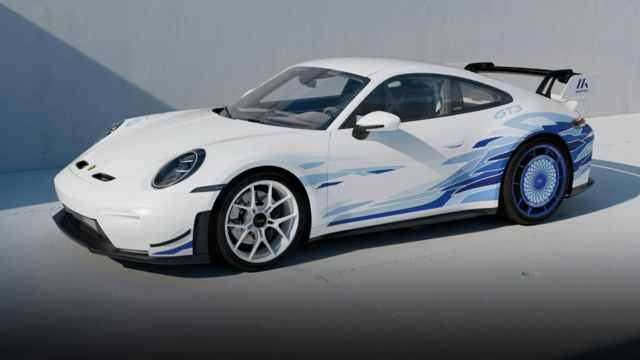
Porsche 911 GT3 Artisan Edition Pays Homage to Japanese Culture
Verdad Gallardo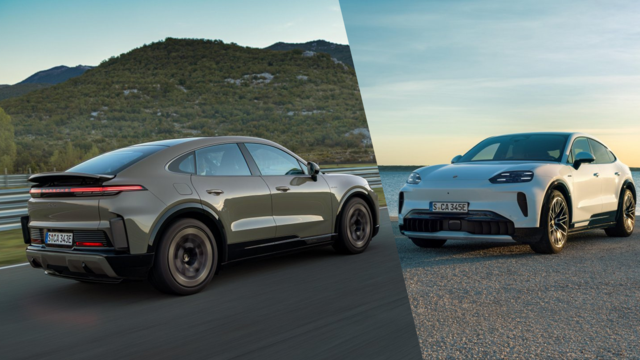
Porsche Reveals Coupe Variant of the Electric Cayenne With a Fresh Look
Verdad Gallardo
10 Porsche Colors That Have More Personality Than Most People
Verdad Gallardo
Guntherwerks' Final Speedster Creation Is the Ultimate Porsche Restomod
Verdad Gallardo
Rennlist Member

Joined: Nov 2011
Posts: 5,017
Likes: 2,041
From: USA
With driving skill in winter conditions being equal, winter tires are better and safer than all seasons.
Yes, skill is required, and counts for a lot. But take that same skill and use winter tires, and you are better off. You can get moving from a stop better, you can slow and stop better, and you can steer with more grip than when driving on all seasons. Using all seasons doesn’t mean you’ll crash, but it’s proven that winter tires are superior when temps drop below 40-45 (depending on tire manufacturer’s recommendation) and/or when there is snow/ice on the ground.
I taught car control (including winter driving) for 10 years at the track, and we also consulted with a tire engineer (who was also part of our HPDE instructor corps).
We taught everyone from teens and open enrollment folks to police departments and contractors going to hostile countries, along with many, MANY fleet drivers. Companies would send their fleet drivers for the training, and in some cases people traveled from all over the country to take the class.. We used retired police cruisers (rear wheel drive Chevy Caprice) for many years as training vehicles before switching to more modern retired police cruisers like Ford Explorers and Taurus. The track owns the training vehicles. We also had a six acre “parking lot” that was used for two skid pads for learning over and under-steer recovery. Skid pad was in addition to drills like “swerve-to-avoid” and threshold stopping and emergency-lane-change that were done at real-world speeds (55-70mph).
We were able to educate several police departments that having winter tires on their fleet was worthwhile and safer than using all season tires.
FWIW I grew up outside Buffalo NY. I drove our family rear-wheel-drive sedans for years, and learned early-on about winter driving. I am a former skier (western NY has hills, not mountains, but the driving can be treacherous especially with lake effect).
I wasn’t able to find it, but I thought someone (the OP maybe) had made a comment that they were not going fast enough to hydroplane/aquaplane). I’d like to understand how one KNOWS they are at a safe speed that avoids hydroplaning, other than feeling as though they have 100% control of the vehicle and it’s behaving as normal. My understanding about hydroplaning is that it happens at a huge variety of speeds based on several variables including how much water is on the surface, the type and depth of tread, the age of the tire compound (older tires become more “brittle” than newer tires), the weight of the vehicle, the width of the tire, etc). One can hydroplane at relatively low speeds. These same variables apply to snow, or anything that will break grip and get in between the tire and the driving surface.
If the vehicle isn’t behaving “normally”, and is otherwise in good mechanical condition (not out of alignment, tire pressures are proper and tires in good condition, suspension is proper, etc…), then the answer is to slow down until you feel the vehicle is under control and behavior has returned to “normal”. It’s possible 53 mph in slushy/snowy conditions was too fast.
Yes, skill is required, and counts for a lot. But take that same skill and use winter tires, and you are better off. You can get moving from a stop better, you can slow and stop better, and you can steer with more grip than when driving on all seasons. Using all seasons doesn’t mean you’ll crash, but it’s proven that winter tires are superior when temps drop below 40-45 (depending on tire manufacturer’s recommendation) and/or when there is snow/ice on the ground.
I taught car control (including winter driving) for 10 years at the track, and we also consulted with a tire engineer (who was also part of our HPDE instructor corps).
We taught everyone from teens and open enrollment folks to police departments and contractors going to hostile countries, along with many, MANY fleet drivers. Companies would send their fleet drivers for the training, and in some cases people traveled from all over the country to take the class.. We used retired police cruisers (rear wheel drive Chevy Caprice) for many years as training vehicles before switching to more modern retired police cruisers like Ford Explorers and Taurus. The track owns the training vehicles. We also had a six acre “parking lot” that was used for two skid pads for learning over and under-steer recovery. Skid pad was in addition to drills like “swerve-to-avoid” and threshold stopping and emergency-lane-change that were done at real-world speeds (55-70mph).
We were able to educate several police departments that having winter tires on their fleet was worthwhile and safer than using all season tires.
FWIW I grew up outside Buffalo NY. I drove our family rear-wheel-drive sedans for years, and learned early-on about winter driving. I am a former skier (western NY has hills, not mountains, but the driving can be treacherous especially with lake effect).
I wasn’t able to find it, but I thought someone (the OP maybe) had made a comment that they were not going fast enough to hydroplane/aquaplane). I’d like to understand how one KNOWS they are at a safe speed that avoids hydroplaning, other than feeling as though they have 100% control of the vehicle and it’s behaving as normal. My understanding about hydroplaning is that it happens at a huge variety of speeds based on several variables including how much water is on the surface, the type and depth of tread, the age of the tire compound (older tires become more “brittle” than newer tires), the weight of the vehicle, the width of the tire, etc). One can hydroplane at relatively low speeds. These same variables apply to snow, or anything that will break grip and get in between the tire and the driving surface.
If the vehicle isn’t behaving “normally”, and is otherwise in good mechanical condition (not out of alignment, tire pressures are proper and tires in good condition, suspension is proper, etc…), then the answer is to slow down until you feel the vehicle is under control and behavior has returned to “normal”. It’s possible 53 mph in slushy/snowy conditions was too fast.


Rennlist Member
Joined: Aug 2022
Posts: 155
Likes: 79
From: Cincinnati, OH
The 3PMSF rating is kind of a joke. All it means is that tire has surpassed a minimum threshold in light snow acceleration traction. They don't test for braking or handling in the snow, and they have to be at least 10% better traction on medium-packed snow compared to an all-season. The Falken Wildpeak AT3W A/Ts I run on my Land Rover Defender have the 3PMSF rating and they are perfectly adequate in the snow, but by no means a snow tire, but noticeably better than the Michelin Latitudes on my Macan. All-terrains are usually better in the snow than all-seasons, but if I lived in an area where I get a lot of snow, I'd always swap in winter tires in the winter.

Pro

Joined: Mar 2003
Posts: 685
Likes: 118
From: Long Island (New York)
This thread makes me wonder how my wife and I made it through some pretty snowy winters on Long Island and New England during the first 10 years of our marriage with just one rear wheel drive car (first, a Nissan 300ZX, and then a 325i), summer performance tires, and no traction control (but limited slip differential, on both cars).

Nordschleife Master

Joined: Aug 2016
Posts: 5,192
Likes: 3,312
On my 2nd Macan. On my 2nd set of winter tires. Have used the A/S in WI winters with both Macans and it's doable. But the winters have much better cold temp traction, along with better traction in snow, ice, and slush. It's kind of like track tires. Yes you can use A/S or 300 TWD but high performance track tires will perform much better. Right tool for the job mentality....
Can only imagine what Macan would be like with studded tires!
Can only imagine what Macan would be like with studded tires!
Nordschleife Master
Joined: Aug 2016
Posts: 5,192
Likes: 3,312
Operating principle
In off-road mode, the power transmission and chassis control systems (e.g. ABS) are automatically adapted to the requirements of off-road driving. This ensures maximum driving dynamics with maximum driving safety.
The PASM (Porsche Active Suspension Management) automatically switches to SPORT PLUS mode.
In conjunction with the air suspension, the vehicle is raised by approx. 40 mm compared to the normal level.
Activation of off-road mode may be useful in the following driving situations:
Driving with snow chains.
Driving in deep snow or on unpaved ground.
Downhill driving with braking on unpaved ground.
Driving on uneven ground with wheels sometimes heavily relieved (axle interlocking).
Free rocking of the stuck vehicle.
Switch offroad driving program on/off
Fig. 1 Buttons for driving program in center console
Switch on Offroad driving program
The speed is less than approx. 90 km/h.
Press button.
The light indicator on the button lights up.
The set driving program is also displayed on the multifunction display.
Switch off offroad driving program
Press button again.
The light indicator on the button goes out.
That's straight from the owners manual of a 2023 Macan GTS, explaining off-road mode
In off-road mode, the power transmission and chassis control systems (e.g. ABS) are automatically adapted to the requirements of off-road driving. This ensures maximum driving dynamics with maximum driving safety.
The PASM (Porsche Active Suspension Management) automatically switches to SPORT PLUS mode.
In conjunction with the air suspension, the vehicle is raised by approx. 40 mm compared to the normal level.
Activation of off-road mode may be useful in the following driving situations:
Driving with snow chains.
Driving in deep snow or on unpaved ground.
Downhill driving with braking on unpaved ground.
Driving on uneven ground with wheels sometimes heavily relieved (axle interlocking).
Free rocking of the stuck vehicle.
Switch offroad driving program on/off
Fig. 1 Buttons for driving program in center console
Switch on Offroad driving program
The speed is less than approx. 90 km/h.
Press button.
The light indicator on the button lights up.
The set driving program is also displayed on the multifunction display.
Switch off offroad driving program
Press button again.
The light indicator on the button goes out.
That's straight from the owners manual of a 2023 Macan GTS, explaining off-road mode
Last edited by Ksdaoski; Dec 31, 2024 at 03:08 AM.
Rennlist Member
Joined: Aug 2022
Posts: 155
Likes: 79
From: Cincinnati, OH