When you click on links to various merchants on this site and make a purchase, this can result in this site earning a commission. Affiliate programs and affiliations include, but are not limited to, the eBay Partner Network.
I'm not a fan of spacers, mainly because I view it as "not doing it the right way." If you want wider wheels, buy wider wheels with the correct offsets as JB mentioned.
That being said, the failure rates are low, especially if you buy quality parts. Additionally, Porsche sells and uses them themselves, so they can't be a catastrophic decision. I believe that even some of the race teams use them on certain tracks to drive certain behaviors, so there's lots of good data about their lasting in strenuous situations.
I used Porsche OE 17mm spacers for my winter rear wheels. They were an interesting design. The OE lug bolts were used to attach the spacer to the hub. The spacer had five threaded studs, and lug nuts were used to attach the wheel using those studs.
Major? What do you consider major? Mechanical failure? Google "wheel spacer failures" you'll find they occur more frequently than you suggest. The point is a modification of any wheel and suspension geometries poses additional wear, worst case is complete failure. Unless, you're a Porsche Engineer, your anecdotal comments are just that. You cannot change physics... I think your comments are irresponsible and clearly without accountability.
lol, you buy cheap junk, you risk a problem.
As for porsche engineers, you might want to ask them about a few of their royal screw ups over the years.
I was just about to bring this point up that Porsche uses spacers on some cars from the factory, you can also buy OEM Porsche spacers in some different sizes...
I'm sure they have put a good deal of engineering effort and hours with this decision.
Originally Posted by Dennis C
I used Porsche OE 17mm spacers for my winter rear wheels. They were an interesting design. The OE lug bolts were used to attach the spacer to the hub. The spacer had five threaded studs, and lug nuts were used to attach the wheel using those studs.
I am curious as well, do you mind elaborating what the trade offs would be. I have heard it could put extra stain on wheel bearings, is this correct?
Properly using wheel spacers is a pretty big topic and there is definitely an experience curve associated with it. There are also strongly held views by different people on whether spacers are ok or a no-no.
First of all OP's post referred to using spacers in conjunction with lowering cars. I won't elaborate on the pros and cons of lowering a car... that's a big and sometimes controversial topic too.
The benefits of using spacers are 'stancing a car' for better looks and better performance, usually in conjunction with lowering a car, and usually in a track/performance driving application. When done well, it can materially improve a sports car's performance and looks, but like anything else you can take a good thing too far... and there are plenty of younger car guys who 'slam cars' with wheels that 'poke out' of wheel wells. Most mature car guys agree that's extreme and just stupid.
The cons are several, but in my experience, all important cons can be managed with skill in application and proper parts:
1) Rubbing against fenders and suspension components (spacers reduce the manufacturer's clearance under the wheel wells, so getting the proper width spacer is very important and sometimes requires trial and error, along with camber adjustments)
2) Vibrations. Spacers should be 'hubcentric' wherever possible, or have some other means of 'locking' itself onto the wheel hub and/or the wheel itself. Spacers that don't do either can sometimes generate wheel shake at highway speeds, as if the wheels need to be balanced. Rule of thumb is anything thicker than a 7-8mm spacer should be hubcentric. In my experience modern BMW's are much more sensitive to wheel spacers than Porsches, and can often develop vibrations or steering/alignment issues. Porsches, in my experience, are very spacer-friendly.
3) Wheel bearing wear. This is often cited as a big con, but in modern Porsches I have never seen a wheel bearing failure due to spacer use. Porsches are very robust, and as others have said Porsche sells some of its NEW cars with spacers on certain wheel sets, and has done so for years.
4) They cost money and you have to buy the right ones. Stick with German brands like H&R or OEM for Porsches, or American sourced ones from German car specialists like Adaptec or ECS Tuning. You need to work with a good retailer or do your own research to get the right ones. You also have to buy longer wheel bolts to match the spacer width you are using. Using original, short wheel bolts with a spacer is unsafe as there may be not enough threads on the bolt to safely grab the wheel hub once a spacer is in place. Or you can go to a wheel stud kit and do away with fixed length wheel bolts altogether and be able to swap spacers and wheels quickly. That is one reason why you see wheel studs on many track-oriented sports cars.
Hope this helps. There are those that say if you want a wider stance just get the right wheels with desired width and offset and off you go. That is correct for sure, but in a world with limited money we can't all do that. And sometimes even with a different wheel set one might want to tweak the front track width on a track car to get the right front camber/geometry and achieve desired turn in characteristics -- in such cases using a small spacer is not a problem if you use good spacers and you know what you are doing.
For example, many track-oriented GT4 owners are using 5 to 7 mm front spacers with the stock wheels to maximize front end grip on track. I can tell you that it may sound small, but having that much more front track DOES make a difference in how that car handles at the limit.
Op Thanks for for posting and thank you guys for explaining. I have lowered my car with PSS10'S and the wheels really look too tucked in, l may look into some 8mm spacers.
Great dialog!!!
In so far as using spacers for racing applications, I would think that the maintenance intervals would be increased with respect to inspecting critical suspension components including wheel bearings, so that issues would be detected early and avoid losing a wheel at 150 MPH plus. Maybe one of the racers can speak to that.
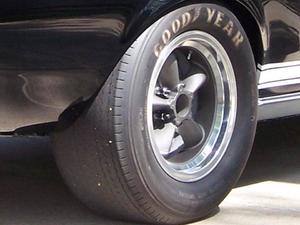
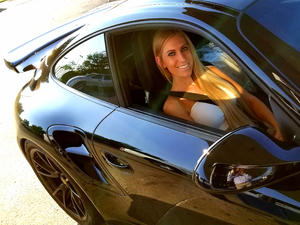
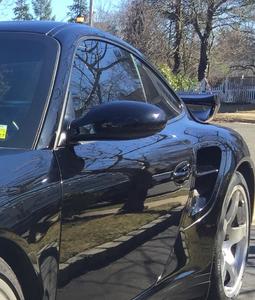
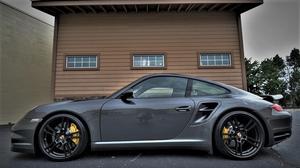
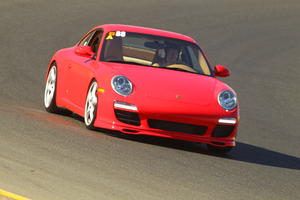
To provide some insight to wheels vs. spacers....below are three pictures.
1. My stock 09 997.1TT
2. and 3. A 997.1TT with HRE FF01 19" wheels. Front 19x8.5 et50 and Rears 19x11 et35; with OEM 235/35/19s and 305/30/19s. (I have no afilation)
Note how the tires come out to the fender's edge. This car has been slightly lowered. These FF01wheels with their custom offsets are aprox $2700.00, as noted in a post above you're driving a $100,000 car. Clearly, you can spend much, much more on wheels, but thats a choice everyone makes, when buying wheels.
Can the correct spacers be safely used, sure they can,...and I'm sure some of you have done so...but if money was no object wouldn't you prefer to have the correct wheels that a manufacturer would stand behind vs. spacers? However, to the OP's original question on bearing wear; yep an argument could be made that custom offset wheels can potentially increase wear on wheel bearings...JB
Porsche 930 came from the factory with a 27 or 28mm spacer on the rear. When I bought new Fikse Fuchs 2 years ago for mine, I ordered custom backspace/offset such that I kept the OEM spacers. Also, you can still order Porsches with OEM spacers. I got a Cayenne GTS for the wifey 2-3 years ago and I ordered with OEM 5mm spacers at all corners.
Like all things there are high quality spacers and low quality spacers. If you guys really want to scare yourself look at all the junk wheels made with low pressure/gravity casting and what happens when they fail.
PS: I ran a custom machined (1/2") spacer on my vintage road racer so that I could stuff the correct size tire without rubbing. Tracked the car like that for years.
As with pretty much any aftermarket part out there....if you buy junk, it'll have a higher chance of failing. This goes for anything....including spacers. All the cheap, generic eBay ones scare me.
FWIW: I had narrow body BBS CH-Rs on my car and ran spacers just to make it look right....I ended up getting HREs with the proper offsets built in. Pics don't do it justice, when a car's wheels are pushed out just a tad, it does enhance how it looks and this is why so many people run them.
IMO, I'd rather have wheels with proper offsets but at the same time, I'm not opposed to using quality spacers.
Proper wheel offset would be the best choice, but most msnucacturers won't push the limit of making the wheel flush enough for my taste when lowered.
The first failed spacer seems to be too thin for a bolt on unit. Minimum I like is 20mm 3/4", thinner than that leaves the spacer too thin for bolt or lug heads to recess and not much material. The next spacer is really the deal breaker, and is destined to fail. It does not seem to be hubcentric,( hub of wheel fits tight into spacer)which is really important. The wheel bolts or lugs in this arrangement are required to not only clamp the wheel to the hub, but also endure twisting from braking and acceleration. The force that makes this design dangerous is the fact that the bolts are asker to hold the weight of the car as well as centering the wheel.
This type of spacer is a disaster waiting, I only needed 1 warning with loose lug bolts on a car to steer clear from this.
12mm one piece hubcentric spacers with the correct 12mm longer bolts or studs is pretty safe IMO. I have larger and bolt on spacers, but to some who say the correct offset wheel is the right way, I agree, but you will probably need custom wheels with custom offsets to make the wheel flush.
Stunning Porsche 356A Super GT Speedster Auction Fails to Meet Reserve
Slideshow: One of the rarest Porsche 356 Speedsters ever built has resurfaced, offering a glimpse into a little-known chapter of the model's competition history.
Theon Goes Full Carbon Fiber With Stunning New Build
Slideshow: Built around a carbon-bodied 964 and a naturally aspirated 4.0-liter flat-six, this bespoke commission highlights how far the restomod formula has evolved.
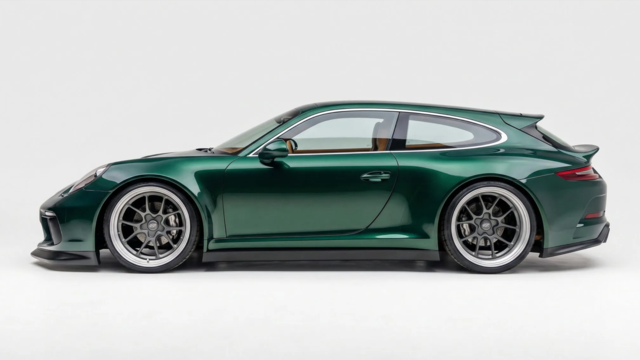
Tuner Is Converting Porsche 911s Into Shooting Brakes
Slideshow: A Polish Porsche specialist is moving ahead with one of the most unusual 911 conversions in recent memory: a shooting brake version of the 991-generation sports car.
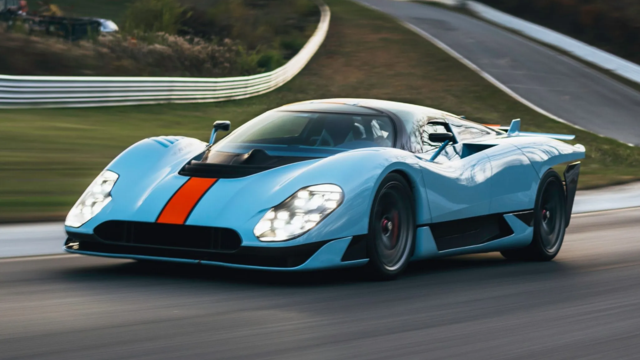
This Coachbuilt Creation Is A Modern Take on the Legendary Porsche 917
Slideshow: A Porsche Carrera GT has been transformed into a one-off coachbuilt machine that blends analog supercar engineering with styling inspired by the legendary 917 race cars.
Is This Convertible Cayenne A Steal, Or A Returnless Investment?
Slideshow: A heavily modified Porsche Cayenne convertible with faux wood trim and a long list of flaws recently sold at auction for surprisingly little money.














 JB
JB