When you click on links to various merchants on this site and make a purchase, this can result in this site earning a commission. Affiliate programs and affiliations include, but are not limited to, the eBay Partner Network.
My research shows front toe should be 0 or slightly toe out for quicker turn in. Also you could use more front camber. The rear not sure if that’s too much toe on or not or not maybe others can chime in.
Depends on where you got the alignment done and how experienced the tech was. Out if calibration machine and inexperience for the operator can make things bad. I have paid for alignments that have left the vehicle unsafe to drive.
However "feel" is usually more (but not completely) effected by Caster:
Caster -Caster as an adjustable angle allows the ability to balance steering effort, high speed stability andfront end cornering effectiveness..Caster is said to be positiveif the in the imaginary line intersecting drawn thru the top and bottom of the upright connecting points to the suspension slopes and (a) positive is towards the rear of the vehicle at the top, and (b) negative if the line slopes towards the front. Increasing the amount of positive caster will increase steering effort and straight line tracking, as well as improve high speed stability and cornering effectiveness. Negative caster results in lighter and easier steeringbut reduced stability when driving in a straight line. (but so does zero/insufficient toe) A symptom of negative/not enough positive caster is a sloppy or loose-feeling steeringwheel (and candidly, which is lot less common than a hard-to-turn wheel). It is not uncommon to adjust caster but far more rare than say toe and camber - that being said certain courses, consistent banking, more slow speed/high acute angle turns vs sweepers etc. could mandate a change - also a adjustable change in Ackerman interplay's with toe and camber as to initial turn in bite.
Ackerman Effect- Ackerman is the difference in turn radius between the front tires. Adjustablity it can be desirable when the number of turns (and type and more left than right etc.) to create a situation where (by example more left that right) the left front tire turns faster than the right front tire. The Ackerman effect can help the car turn better through the center of the turn. You can measure the amount of Ackerman you currently have by using a set of turn plates. Typically, Ackerman is measured by turning the right front 10 degrees to the left. If you have Ackerman, the left front will travel further than the right front. A typical amount would be three degrees in 10 degrees of steering. To simplify (!) , [first adjusting the left side] moving the right front from zero through 10 degrees of steering will cause the left front to move say 13 degrees in this scenario. Ackerman is created by your already constructed front end geometry. Tie rods that angle forward from the inner pivot point out to the spindle will have more Ackerman. On our formula car we can adjust the Ackerman by moving the outside front rod end into one of three pre-drilled holes in spindle arm. Moving the tie rod end closer to the ball joint will create more Ackerman. Adjusting Ackerman requires re-adjusting toe
Toe-in v Toe Out - Front: Toe can also be used to alter a vehicle's handling traits. Increased toe-in will typically result in reduced oversteer, help steady the car and enhance high-speed stability. Increased toe-outwill typically result in reduced understeer, helping free up the car, especially during initial turn-in while entering a corner. More front bite - ".... loose is fast ..." In mid/small bore formula care racing it is universally accepted to use toe in - that being said (all setting being track-type sensitive) on long track with long straights we try to run a minimum of toe out to stop speed scrub - nervous chassis yes - deft touch for sure but facts - at Daytona we went from 3/32 total out to 3/64 total out and picked up mph ........Rear: MUST be toe in -- again track sensitive to amount - as approaching minimum settings creates a very very nervous car.
Camber angle, to a relatively lesser degree as compared to the tire slip or centripetal force, also affects the overall lateral force on the contact patch. ... This camber thrust acts in the direction of, or opposite to the steering induced centripetal force, based on whether the camberangle is positive or negative. Negative Camber (forgetting ovals) virtually always should be equal side to side with the front being more that rear -Of course camber in the front has a substantial effects on handling to include turn in etc - and handling and traction upon deflection (upon acceleration) -
Strings/Alignment: While you may have all wheels correct in settings - recall that all interact with each out and this does NOT correct true forward/"no-crabbing" alignment - meaning are the front and real wheels tracking exactly behind each-other in the same plane ? -- only 4 wheel string alignment (absent the new laser wiz-bang top of the line alignment rack) can guarantee true forward - if you look at pics of recent F1 cars in the garage the eventually out comes the strings -- [ currently they are now setting up there own mobile laser systems ! ]
In closing -- I have a lot more that I could discuss, time permitting - this would include bump-steer, shocks/valving and three/five-way adjustable settings, wheel offsets, springs rates - scales, cross weights , etc but a good overview/start - there are many many good articles on the net - and given our current at home status -some time to read.
HOWEVER-- Many years ago I had two (2) self made t-shirts I would wear at the track at the appropriate times, one as a driver,but the other one was:
" WHAT DO YOU CALL A DOG ALWAYS CHASING HIS TAIL - A RACE ENGINEER "
I just had my alignment done because I replaced my steering rack. Here is my setup. My shop runs more camber on passenger side front on street setups to cope with the crow
n of the road. All I can say is my car drives like a dream and handles so sharp now with the new tie rods, steering rack and DSC controller.
Over the winter I had installed B8 and Eibach springs. Just the other day I had an alignment completed.
The thing is, after the alignment, the front end of the car does not feel great. It almost feels light/wonders. Difficult to describe.
Assuming you got your alignment figured out, how do you like the ride quality of the B8 and Eibach springs combination? I’m considering the same setup in my daily driver.
Assuming you got your alignment figured out, how do you like the ride quality of the B8 and Eibach springs combination? I’m considering the same setup in my daily driver.
Hi.
The ride quality is fine. A little more harsh then stock, but nothing too dramatic.
Alignment and the resulting feel is extremely personal preference. I know people who like go-kart feeling alignment where the car is reacting to every road surface imperfection with steering input required, a go-kart like feel of responsiveness and "Aliveness". Myself, I prefer a very stable feeling alignment where the car feels like it can hit some meaningful bumps and be rock stable and exactly as I pointed it without my hands even being on the wheel (taking it to an extreme to make a point).
Anywho, you changed your spring rates and suspension damping. Not surprised your steering feel is impacted. If it feels too twitchy/light/unstable, give that feedback and an experienced alignment professional should be able to dial that out.
What's interesting to me is you gained a good amount of positive toe (i.e. toe-in) which usually would increase the feeling of stability. Perhaps I should ignore your "before" measurements since they were probably after the suspension was replaced.
In my experience that front-end wandering feel is caused by toe-out on the front wheels. As long as both tires have equal grip things are fine. But as soon as one tire looses grip (road bump, different surfaces, etc.) the other wheel's toe out tries to pull the car in that direction.
Lowering these cars without adjusting the alignment will make the front end toe-out due to the suspension geometry. Your alignment should have fixed this (and the report looks good), it's odd that you say it got worse after alignment. If there is bushing wear the car could still be going toe out under load even though it looks good in the static alignment condition. You can check bushing wear with the front-end on jackstands easily enough.
There's also the possibility the alignment shop fouled up in the settings or something came loose afterwards. As swift17's treatise mentioned, a string alignment really is the way to go to verify this. I did my own string alignment after lowering with Eibach springs and got things dialed in perfectly. You don't need a fancy kit as you can make a very accurate system with $40 of materials from Home Depot.
Stunning Porsche 356A Super GT Speedster Auction Fails to Meet Reserve
Slideshow: One of the rarest Porsche 356 Speedsters ever built has resurfaced, offering a glimpse into a little-known chapter of the model's competition history.
Theon Goes Full Carbon Fiber With Stunning New Build
Slideshow: Built around a carbon-bodied 964 and a naturally aspirated 4.0-liter flat-six, this bespoke commission highlights how far the restomod formula has evolved.
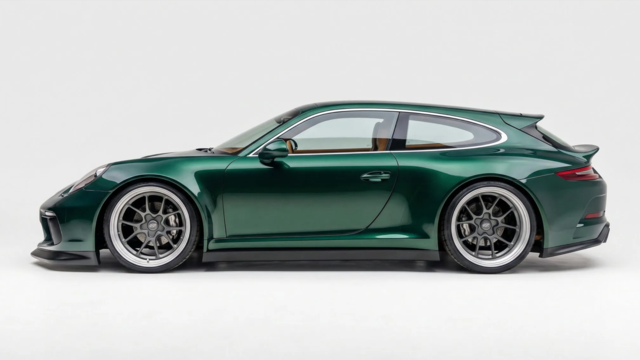
Tuner Is Converting Porsche 911s Into Shooting Brakes
Slideshow: A Polish Porsche specialist is moving ahead with one of the most unusual 911 conversions in recent memory: a shooting brake version of the 991-generation sports car.
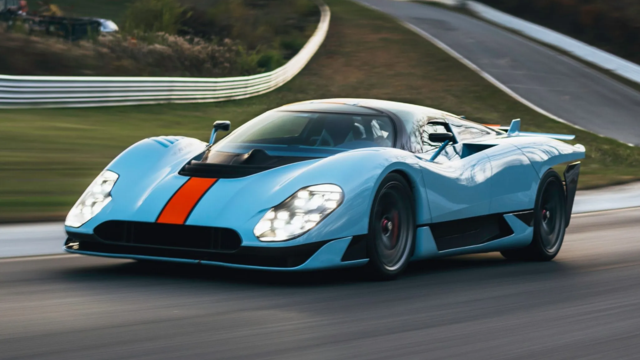
This Coachbuilt Creation Is A Modern Take on the Legendary Porsche 917
Slideshow: A Porsche Carrera GT has been transformed into a one-off coachbuilt machine that blends analog supercar engineering with styling inspired by the legendary 917 race cars.







 Alignment