




warm up time in cold weather?

Thread Starter
Advanced

Joined: Dec 2010
Posts: 96
Likes: 0
From: washington dc
 warm up time in cold weather?
hey fellas - I have an 997 s targa, and it is garaged parked home and work, where temp is 65 degrees. When driving it in the winter say sub freezing conditions, do most of you wait till the engine temp gets to at least 150? I thought about also waiting for oil temp to get around 150 but that seems to take longer and impractical. Any practical advice? It's my daily driver. thanks
Three Wheelin'

Joined: Jun 2009
Posts: 1,835
Likes: 18
From: ATL
Or you could go with what Porsche recommends:
> When starting the engine, be ready to drive
immediately.
Drive vehicle at moderate speeds and avoid
engine speeds above 4,200 rpm during the
first 5 minutes.
> Do not let the engine idle to warm up.
> When starting the engine, be ready to drive
immediately.
Drive vehicle at moderate speeds and avoid
engine speeds above 4,200 rpm during the
first 5 minutes.
> Do not let the engine idle to warm up.

Nordschleife Master

Joined: Mar 2004
Posts: 8,392
Likes: 449
From: Southwest

Rennlist Member
Joined: Apr 2007
Posts: 1,924
Likes: 28
From: Tejas Hill Country
I said pressure, not temperature.  You can tell when the oil is moving well by watching the oil pressure when the engine is idling. When the oil is still thick the pressure will be at the top of the range even when idling, once the oil has thinned and is lubricating well the oil pressure will align more directly to RPM. That's the best indicator you've got for when it's safe to let the RPMs run the full range. It's a little bit complicated by the dry (or damp) sump in a 911 (as compared to a normal scavenged oil engine) but it's still the best bet.
I've always heard (and I'm pleased to see the manual agrees) that it's best to start and go, not idle at a standstill. The engine spends far less time running with compromised lubrication if you just drive right away but keep the revs low.
You can tell when the oil is moving well by watching the oil pressure when the engine is idling. When the oil is still thick the pressure will be at the top of the range even when idling, once the oil has thinned and is lubricating well the oil pressure will align more directly to RPM. That's the best indicator you've got for when it's safe to let the RPMs run the full range. It's a little bit complicated by the dry (or damp) sump in a 911 (as compared to a normal scavenged oil engine) but it's still the best bet.I've always heard (and I'm pleased to see the manual agrees) that it's best to start and go, not idle at a standstill. The engine spends far less time running with compromised lubrication if you just drive right away but keep the revs low.
Trending Topics
Three Wheelin'
Joined: Jan 2007
Posts: 1,797
Likes: 358
From: Central Massachusetts
Yes, the company that built the car knows best. Start it, watch the oil pressure climb (about 5 seconds or less), then drive. The fastest and least damaging way to get your oil temperature up and flowing is to drive it. Letting it idle for several minutes has a very minimal effect on temperature, hence why Porsche says drive it!
Rennlist Stories
The Best Porsche Posts for Porsche Enthusiasts

Six Genius Porsche-Themed Gifts That'll Make Any Dad or Grad Smile
Joe Kucinski
10 Used Porsches Are Selling for Way Too Cheap
Joe Kucinski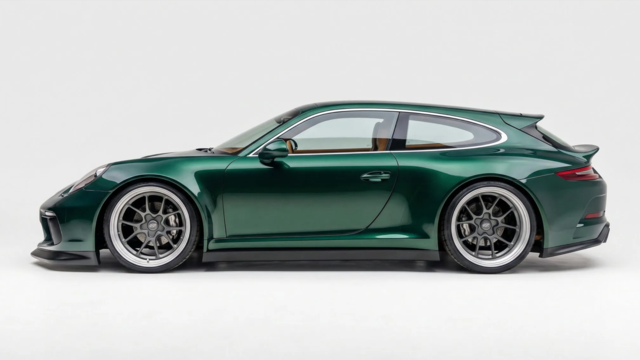
Tuner Is Converting Porsche 911s Into Shooting Brakes
Verdad Gallardo
This Coachbuilt Creation Is A Modern Take on the Legendary Porsche 917
Verdad Gallardo
Is This Convertible Cayenne A Steal, Or A Returnless Investment?
Verdad Gallardo
10 Best Non-Flat Six Porsches You Can Buy For Under $100K
Joe Kucinski
Porsche's Top 5 Most Questionable Naming Decisions
Verdad Gallardo
Pogea Racing's 964 Porsche 911 Reimagination Stands Out in a Crowded Field
Verdad Gallardo
6 Convertible Top MYTHS Most People Don't Understand!
Michael S. Palmer
Nordschleife Master
Joined: Mar 2004
Posts: 8,392
Likes: 449
From: Southwest
I said pressure, not temperature. You can tell when the oil is moving well by watching the oil pressure when the engine is idling. When the oil is still thick the pressure will be at the top of the range even when idling, once the oil has thinned and is lubricating well the oil pressure will align more directly to RPM. That's the best indicator you've got for when it's safe to let the RPMs run the full range. It's a little bit complicated by the dry (or damp) sump in a 911 (as compared to a normal scavenged oil engine) but it's still the best bet.
I've always heard (and I'm pleased to see the manual agrees) that it's best to start and go, not idle at a standstill. The engine spends far less time running with compromised lubrication if you just drive right away but keep the revs low.
You can tell when the oil is moving well by watching the oil pressure when the engine is idling. When the oil is still thick the pressure will be at the top of the range even when idling, once the oil has thinned and is lubricating well the oil pressure will align more directly to RPM. That's the best indicator you've got for when it's safe to let the RPMs run the full range. It's a little bit complicated by the dry (or damp) sump in a 911 (as compared to a normal scavenged oil engine) but it's still the best bet.I've always heard (and I'm pleased to see the manual agrees) that it's best to start and go, not idle at a standstill. The engine spends far less time running with compromised lubrication if you just drive right away but keep the revs low.
I also agree that idling does not heat the engine significantly but modern engines go through a number of emissions-controlled idling adjustments and it does not hurt to let the engine settle before rolling.
In any case we all know that to hammer a cold engine is asking for trouble.

Addict
Lifetime Rennlist
Member
Lifetime Rennlist
Member
Joined: Jun 2003
Posts: 10,495
Likes: 167
From: Southwest Idaho
Tony Said:
In the Olden days in the air cooled models Porsche said to start driving immediately and get going as soon as possible.
Of Course these new motors are works of art and quite a bit different.
Right now I think the 9A1 motor is the best one I have ever had. My previous motors were all
of the historic GT1 964 case motor. One TT, and two GT3's.
In any case we all know that to hammer a cold engine is asking for trouble.
Of Course these new motors are works of art and quite a bit different.
Right now I think the 9A1 motor is the best one I have ever had. My previous motors were all
of the historic GT1 964 case motor. One TT, and two GT3's.
