



Driving Tips for Accident Avoidance

Thread Starter
Banned
Joined: Feb 2005
Posts: 15,022
Likes: 13
From: Back in the OC
 Driving Tips for Accident Avoidance
Seeing that there have been a number of accidents reported here by Rennlisters, especially of the rear end type which can be devastating on a 911, I thought it would be good to get a thread going where we can all share some driving tips for accident avoidance and learn from each other's good driving habits so that hopefully someone else can avoid a preventable mishap as they drive their fine Porsche in that jungle we call traffic.
I touched on this topic in the OT Forum when we were discussing the VW commercials that showed ordinary people doing ordinary things and getting into accidents in the process - you know the ones, especially the one where the two dolts are arguing over using the word "like" too often and the driver, fully engaged in this silly conversation, fails to notice the pickup truck backing out of the driveway and plows right into it. I pointed out that the driver was displaying poor driving habits by not driving defensively and not being on the lookout for potential blind alleys or driveways, but was instead looking right at his passenger while arguing his point. And so it was not surprising that he wasn't able to avoid the accident in the first place.
I simply pointed out that it is better to stay in the leftmost side of the lane when driving down a two lane road like that with potential blind spots on the right, in order to gain a little more visibility and give yourself a split second longer for reaction time. And that you should always look straight ahead when driving while conversing with your passenger in a tight situation like that. Your passenger will not think you are dissing him just because you don't look at him while talking. On the contrary, he should appreciate the fact that you're looking out for his safety as well as yours. On an open highway with little traffic the driving situation is different and calls for slightly less vigilance, and taking your eyes off the road momentarily to look at your passenger while driving is obviously not as risky as in that other situation.
Here is what one 'Lister had to say in that thread:
I'm sure I confuse other drivers with that tactic, a couple of seconds to see something coming out of a row of parked cars on a residential street makes a big difference.
Just like looking both ways before entering an intersection, that one has saved me a couple of times.
Avoiding Rear End Collisions
It's obvious you can't avoid them all but there are a few things you can do to prevent some of them.
• Everybody knows this one: Give yourself enough space between yourself and the car in front of you just in case the car coming up fast on your rear is unable to stop in time and the extra space will allow you to move up just enough to avoid contact.
• And this one: As you're slowing down and coming to a stop, always, and I mean always, look up into your rear view mirror to make sure the guy behind you is paying attention and slowing down as well.
• Here's one that may not have crossed your mind. If you do happen to see in your rear view mirror that the guy behind you is not paying attention and doesn't notice your glowing brake lights, do you just cringe and brace yourself while praying that he eventually wakes up? If you're in that situation, just blast your horn nonstop, even though it's a wimpy sounding horn! The guy in front of you will think you're an idiot, but the guy coming up fast behind you will likely be alerted and will get enough of a warning to brake in time to avoid a rear end collision, after you move up a bit in that buffer space you reserved. So be prepared to use your horn when you need to stop suddenly and use it quickly in that situation. Remember, the horn is not just for the guy in front of you - it's to call attention to anyone within hearing distance. It's better to **** off people with the use of your horn to prevent an accident, than to suffer the alternative possibility.
This probably happens to you and I know it happens to me a lot. There'll be a guy not paying attention two cars ahead when the light turns green and the guy in front of you just sits there doing nothing. When that happens I sound my horn and invariably the guy in front of me, instead of picking up on my cue, thinks I'm sounding the horn at him and looks pissed as he turns and gestures angrily that it's not him but the guy in front of him. I usually just roll my eyes and give him a look that says "No ****, Sherlock, do you think I was expecting you to run right over him?" while I gesture with my hand that it's for the dolt who's holding up traffic.
Anybody else with driving tips we can learn from?
I touched on this topic in the OT Forum when we were discussing the VW commercials that showed ordinary people doing ordinary things and getting into accidents in the process - you know the ones, especially the one where the two dolts are arguing over using the word "like" too often and the driver, fully engaged in this silly conversation, fails to notice the pickup truck backing out of the driveway and plows right into it. I pointed out that the driver was displaying poor driving habits by not driving defensively and not being on the lookout for potential blind alleys or driveways, but was instead looking right at his passenger while arguing his point. And so it was not surprising that he wasn't able to avoid the accident in the first place.
I simply pointed out that it is better to stay in the leftmost side of the lane when driving down a two lane road like that with potential blind spots on the right, in order to gain a little more visibility and give yourself a split second longer for reaction time. And that you should always look straight ahead when driving while conversing with your passenger in a tight situation like that. Your passenger will not think you are dissing him just because you don't look at him while talking. On the contrary, he should appreciate the fact that you're looking out for his safety as well as yours. On an open highway with little traffic the driving situation is different and calls for slightly less vigilance, and taking your eyes off the road momentarily to look at your passenger while driving is obviously not as risky as in that other situation.
Here is what one 'Lister had to say in that thread:
Originally Posted by ibkevin
Originally Posted by OCBen
Personally, I would have been driving as far to the left of the lane as possible when approaching a blind spot to my right like that.
Just like looking both ways before entering an intersection, that one has saved me a couple of times.
It's obvious you can't avoid them all but there are a few things you can do to prevent some of them.
• Everybody knows this one: Give yourself enough space between yourself and the car in front of you just in case the car coming up fast on your rear is unable to stop in time and the extra space will allow you to move up just enough to avoid contact.
• And this one: As you're slowing down and coming to a stop, always, and I mean always, look up into your rear view mirror to make sure the guy behind you is paying attention and slowing down as well.
• Here's one that may not have crossed your mind. If you do happen to see in your rear view mirror that the guy behind you is not paying attention and doesn't notice your glowing brake lights, do you just cringe and brace yourself while praying that he eventually wakes up? If you're in that situation, just blast your horn nonstop, even though it's a wimpy sounding horn! The guy in front of you will think you're an idiot, but the guy coming up fast behind you will likely be alerted and will get enough of a warning to brake in time to avoid a rear end collision, after you move up a bit in that buffer space you reserved. So be prepared to use your horn when you need to stop suddenly and use it quickly in that situation. Remember, the horn is not just for the guy in front of you - it's to call attention to anyone within hearing distance. It's better to **** off people with the use of your horn to prevent an accident, than to suffer the alternative possibility.
This probably happens to you and I know it happens to me a lot. There'll be a guy not paying attention two cars ahead when the light turns green and the guy in front of you just sits there doing nothing. When that happens I sound my horn and invariably the guy in front of me, instead of picking up on my cue, thinks I'm sounding the horn at him and looks pissed as he turns and gestures angrily that it's not him but the guy in front of him. I usually just roll my eyes and give him a look that says "No ****, Sherlock, do you think I was expecting you to run right over him?" while I gesture with my hand that it's for the dolt who's holding up traffic.
Anybody else with driving tips we can learn from?
Burning Brakes
Joined: Aug 2006
Posts: 1,205
Likes: 0
I think this is a good topic, but it's tough to make general rules.
When driving on a two lane road, I was always taught that it is better to stay a little to the right in the lane. That way, if an oncoming driver shifts (for any number of reasons) a little to his left you won't collide head on. And I happened to witness this type of accident, right in front of me, and it was bad.
The key, of course, is to always respect that there are massive forces involved in all types of driving, and to always be alert and focus on the task at hand which is safe driving.
I am interested to see how this thread develops...
When driving on a two lane road, I was always taught that it is better to stay a little to the right in the lane. That way, if an oncoming driver shifts (for any number of reasons) a little to his left you won't collide head on. And I happened to witness this type of accident, right in front of me, and it was bad.
The key, of course, is to always respect that there are massive forces involved in all types of driving, and to always be alert and focus on the task at hand which is safe driving.
I am interested to see how this thread develops...
Thread Starter
Banned
Joined: Feb 2005
Posts: 15,022
Likes: 13
From: Back in the OC
Originally Posted by Tron999
What about taking a HPDE class, and actually learn how to drive the car. Even just a street survival course.
Learning the limits of the car will definitely help you in accident avoidance maneuvers.
Racer
Joined: Oct 2006
Posts: 394
Likes: 9
Not always possible but try to make eye contact either in mirror (if they are moving in same direction) or directly (if they are pulling out in front).
Spend minimum time in blind spots (e.g. spot between rear view mirror field of view and peripheral field of view when overtaking on freeway.
Observe driver activity (applying makeup, eating, reading, cell phone) and avoid as appropriate.
Avoid sudden acceleration/deceleration/direction changes; our cars do those things a lot faster than most other vehicles out there and we can surprise people.
Watch for "vehicle english" (can't think of a better name); many drivers preempt a move with something else (e.g. many veer left before turning right, many also drift in the direction they are thinking of going).
Always have an exit plan (think where you would go in the event of an emergency); many years ago on the A1 in England there was a major crash in front, I was able to stop but I looked in the mirror to see the guy behind locked up, I took the shoulder to the right and actually went by a couple of the stopped vehicles to get out of the way, guy behind hit the rearmost one, not badly, I'd added a car length to his stopping distance.
Assume everyone is trying to hit you (that's from riding a motorbike).
Spend minimum time in blind spots (e.g. spot between rear view mirror field of view and peripheral field of view when overtaking on freeway.
Observe driver activity (applying makeup, eating, reading, cell phone) and avoid as appropriate.
Avoid sudden acceleration/deceleration/direction changes; our cars do those things a lot faster than most other vehicles out there and we can surprise people.
Watch for "vehicle english" (can't think of a better name); many drivers preempt a move with something else (e.g. many veer left before turning right, many also drift in the direction they are thinking of going).
Always have an exit plan (think where you would go in the event of an emergency); many years ago on the A1 in England there was a major crash in front, I was able to stop but I looked in the mirror to see the guy behind locked up, I took the shoulder to the right and actually went by a couple of the stopped vehicles to get out of the way, guy behind hit the rearmost one, not badly, I'd added a car length to his stopping distance.
Assume everyone is trying to hit you (that's from riding a motorbike).

Rennlist Member

Joined: Feb 2004
Posts: 5,535
Likes: 469
From: Los Angeles
I never considered the horn-for-the-guy-behind-you approach. Good tip.
Since rear-end collisions were brought up, it may be stating the obvious, but keep in mind that there are very few cars that will brake in as short a distance as a 997. If somebody is not keeping a substantial distance behind you, they WILL hit you if you brake suddenly...so either get in another lane, or leave even more space in front of you to brake gradually...
...and STAY OFF YOUR CELL PHONE WHILE YOU DRIVE. You are more distracted than you think. Yes, that means you.
Since rear-end collisions were brought up, it may be stating the obvious, but keep in mind that there are very few cars that will brake in as short a distance as a 997. If somebody is not keeping a substantial distance behind you, they WILL hit you if you brake suddenly...so either get in another lane, or leave even more space in front of you to brake gradually...
...and STAY OFF YOUR CELL PHONE WHILE YOU DRIVE. You are more distracted than you think. Yes, that means you.
Thread Starter
Banned
Joined: Feb 2005
Posts: 15,022
Likes: 13
From: Back in the OC
Originally Posted by Lozzy997
Not always possible but try to make eye contact either in mirror (if they are moving in same direction) or directly (if they are pulling out in front).
Spend minimum time in blind spots (e.g. spot between rear view mirror field of view and peripheral field of view when overtaking on freeway.
Observe driver activity (applying makeup, eating, reading, cell phone) and avoid as appropriate.
Avoid sudden acceleration/deceleration/direction changes; our cars do those things a lot faster than most other vehicles out there and we can surprise people.
Watch for "vehicle english" (can't think of a better name); many drivers preempt a move with something else (e.g. many veer left before turning right, many also drift in the direction they are thinking of going).
Always have an exit plan (think where you would go in the event of an emergency); many years ago on the A1 in England there was a major crash in front, I was able to stop but I looked in the mirror to see the guy behind locked up, I took the shoulder to the right and actually went by a couple of the stopped vehicles to get out of the way, guy behind hit the rearmost one, not badly, I'd added a car length to his stopping distance.
Assume everyone is trying to hit you (that's from riding a motorbike).
Spend minimum time in blind spots (e.g. spot between rear view mirror field of view and peripheral field of view when overtaking on freeway.
Observe driver activity (applying makeup, eating, reading, cell phone) and avoid as appropriate.
Avoid sudden acceleration/deceleration/direction changes; our cars do those things a lot faster than most other vehicles out there and we can surprise people.
Watch for "vehicle english" (can't think of a better name); many drivers preempt a move with something else (e.g. many veer left before turning right, many also drift in the direction they are thinking of going).
Always have an exit plan (think where you would go in the event of an emergency); many years ago on the A1 in England there was a major crash in front, I was able to stop but I looked in the mirror to see the guy behind locked up, I took the shoulder to the right and actually went by a couple of the stopped vehicles to get out of the way, guy behind hit the rearmost one, not badly, I'd added a car length to his stopping distance.
Assume everyone is trying to hit you (that's from riding a motorbike).
 )
)Looking for an exit strategy is an excellent tip, and is one that I am in the habit of doing.
Originally Posted by Alan Smithee
Since rear-end collisions were brought up, it may be stating the obvious, but keep in mind that there are very few cars that will brake in as short a distance as a 997. If somebody is not keeping a substantial distance behind you, they WILL hit you if you brake suddenly...so either get in another lane, or leave even more space in front of you to brake gradually...
Trending Topics
Pro
Joined: Jun 2006
Posts: 602
Likes: 1
Great thread. Second on the importance of driver education...no one, no matter how long they've been driving or how many track events they've done, knows everything there is to know about being an excellent driver.
Second also on watching the rear view mirror when braking, thinking about escape routes and recognizing that our cars can out-brake virtually any car on the road.
Here's my tip; instead of looking at the other vehicle (or the driver for that matter) when passing another car on the highway, look at the wheels...you'll be able detect movement a split second sooner and use that time to be proactive and stay safe.
Second also on watching the rear view mirror when braking, thinking about escape routes and recognizing that our cars can out-brake virtually any car on the road.
Here's my tip; instead of looking at the other vehicle (or the driver for that matter) when passing another car on the highway, look at the wheels...you'll be able detect movement a split second sooner and use that time to be proactive and stay safe.
Last edited by Frino; Apr 10, 2007 at 07:57 PM.
Rennlist Stories
The Best Porsche Posts for Porsche Enthusiasts
Porsche Reveals Coupe Variant of the Electric Cayenne With a Fresh Look
Verdad Gallardo
10 Porsche Colors That Have More Personality Than Most People
Verdad Gallardo
Guntherwerks' Final Speedster Creation Is the Ultimate Porsche Restomod
Verdad Gallardo
10 Reasons I Hate Going to the Porsche Dealership (& the 1 Reason I Stay)
Joe Kucinski
Porsche Shakes Up The Nürburgring Lap Record Table Once Again
Verdad Gallardo
6 Ways the Porsche 911 GT3 S/C Redefines Performance
Joe Kucinski
10 Wildest Homologation Specials Porsche Ever Sold
Verdad Gallardo
Super Rare RUF BTR III Comes Out of Hibernation, Looking For a New Home
Verdad Gallardo
10 Porsche Opinions That Can Start a Fight
Joe Kucinski
Thread Starter
Banned
Joined: Feb 2005
Posts: 15,022
Likes: 13
From: Back in the OC
Originally Posted by Frino
Here's my tip; instead of looking at the other vehicle (or the driver for that matter) when passing another car on the highway, look at the wheels...you'll be able detect movement a split second sooner and use that time to be proactive and stay safe.
It's works because of the natural sequence of physical events. The front wheels always lead. You can see the front wheels turn a split second before the mass of the vehicle is able to follow.

Thread Starter
Banned
Joined: Feb 2005
Posts: 15,022
Likes: 13
From: Back in the OC
Originally Posted by rome
OC-- If the "Rocket Scientist" gig doesn't work out for you, you could probably find work as a driving instructor...

Poseur
Rennlist Member
Rennlist Member


Joined: Nov 2005
Posts: 17,733
Likes: 289
From: Santa Barbara, CA
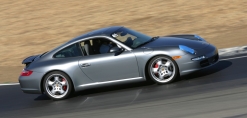
Thanks for starting this thread, Ben. Like the rear horn idea. Also, what I have tried to do (when you have the opportunity) is to position myself behind a very MASSIVE vehicle and in front of a tiny vehicle. I figure one can stop better than the other,--as we know, few can stop faster than a 911 of any vintage. Also, when I used to drive overseas I used to always keep myself an out even at intersections (anti-terrorist training) so always keep an option open for yourself,--we have excellent maneuverability. One final observation. I recall watching a video recently where a Japanese pro driver commented on the new 997s by stating that he observed that the 997s had a tendency not to stay straight on their own,--that you really have to stay up with them. I think he may be on to something. I find that I really have to pay attention to this car. It can get off track in a second. Anyone else notice the steering sensitivity to these? A minor distraction can really be costly.
Straight to Video
Rennlist Member
Rennlist Member
Joined: Jan 2004
Posts: 3,599
Likes: 0
From: Los Gatos, CA
One tip I do when someone is following too close or breaking too late is I tap the breaks periodically. Someone not paying attention will see flashing red lights better than a solid red light.