



First Oil Change?

Addict
Rennlist Member
Rennlist Member
Joined: Aug 2002
Posts: 15
Likes: 0
From: Chester, Va
 re: First Oil Change
Hello,
Thanks for your thoughts.
The 26ppm was found in Don Watsons '02 996. Good idea about the casting method - they have a hard time getting all the silicone from the casting process out prior to engine assembly (from what I've read in the past) and it's entirely possible this is the source of the high level of Silicone.
You said the silicone casting process isn't used in the GT2/3 engines so we'll have to look elsewhere for a source of the high silicone content in the GT3 shown in the Test Results data.
Larry (74 911)
Thanks for your thoughts.
The 26ppm was found in Don Watsons '02 996. Good idea about the casting method - they have a hard time getting all the silicone from the casting process out prior to engine assembly (from what I've read in the past) and it's entirely possible this is the source of the high level of Silicone.
You said the silicone casting process isn't used in the GT2/3 engines so we'll have to look elsewhere for a source of the high silicone content in the GT3 shown in the Test Results data.
Larry (74 911)
R.I.P.
Rennlist
Lifetime Member
Rennlist
Lifetime Member
Joined: Aug 2001
Posts: 3,770
Likes: 0
From: New London, NH & Naples
Hi: Just in case you're wondering, I mis-spoke when I mentioned metal in my oil. It was silicone just as Larry said. My concern was that the higher than normal silicone content (wherever the source) was sufficient for me to decide and change the oil. I don't see how additives would have compensated for the additional abrasiveness caused by the silicone content.

Burning Brakes

Joined: Jul 2003
Posts: 857
Likes: 2
From: Cape Cod
My first analysis showed 58ppm Si. The evaluation was suppossed to normal for break-in. My second at 6950 miles (first at 3265) showed 12 ppm SI. However my fuel% Vol went to 6.5 and now needs watching. I'll be doing a third analysis about the second week of November. I'll have about 10,500 miles.
It's nice to be able to trend your engine.
It's nice to be able to trend your engine.

Instructor
Joined: Jun 2003
Posts: 103
Likes: 0
Originally posted by DonW-Cape Cod
...
I don't see how additives would have compensated for the additional abrasiveness caused by the silicone content.
...
I don't see how additives would have compensated for the additional abrasiveness caused by the silicone content.
basically higher silicon content does not necessarily mean abrasiveness. In order for the silicon particles to be abrasive, they have to be present in a certain granularity (size and shape) and hardness.
Firstly, most oils have silicon added as an anti-foaming agent anyway. Secondly, Porsche uses Dreibond, a silicone-based sealant in its engines which also increases the silicon content of the oil, but is harmless in terms of wear (it is not harmless in terms of possibly clogging up oil lines). Thirdly, silicon could be present from the running in process of the Lokasil cylinders but would then be present in sub-critical granularity.
Obviously, if silicon is present in the form of sand, that's wouldn't be so great.
Cheers,
Uwe

Rennlist Member
Joined: Oct 2003
Posts: 394
Likes: 27
From: Fairfax, VA
Thanks for all the info guys.
Quick question:
Let's say you've got a 5/03 production car and you take delivery in 10/03. And assume you only do <10k miles per year. Do you get the first oil change in 5/04 (1 year after build date) or 10/04 (one year after in service date). Remember that the car was test driven a few time between 06/03 and 10/03 probably.
Thanks.
Quick question:
Let's say you've got a 5/03 production car and you take delivery in 10/03. And assume you only do <10k miles per year. Do you get the first oil change in 5/04 (1 year after build date) or 10/04 (one year after in service date). Remember that the car was test driven a few time between 06/03 and 10/03 probably.
Thanks.
Rennlist Member
Joined: Oct 2003
Posts: 394
Likes: 27
From: Fairfax, VA
Originally posted by jsonnen
Hey guys, are you sure the factory runs synthetic during break-in? I've heard from several different sources that most manufacturers use mineral oil during their break-in periods!! I wonder why??
Hey guys, are you sure the factory runs synthetic during break-in? I've heard from several different sources that most manufacturers use mineral oil during their break-in periods!! I wonder why??
What you are saying was the case on BMWs several years ago. BMW would recommend mineral for break-in before replacement with synthetic. But not any more.
R.I.P.
Rennlist
Lifetime Member
Rennlist
Lifetime Member
Joined: Aug 2001
Posts: 3,770
Likes: 0
From: New London, NH & Naples
Thanks for the advice unm, but for 20 bucks a pop I just don't want to take any chances with my car's motor....and God forbid should something happen I'll have a paper trail. 
Rennlist Stories
The Best Porsche Posts for Porsche Enthusiasts

10 Porsche Colors That Have More Personality Than Most People
Verdad Gallardo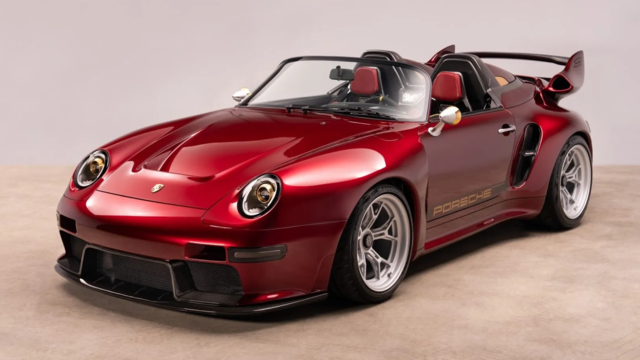
Guntherwerks' Final Speedster Creation Is the Ultimate Porsche Restomod
Verdad Gallardo
10 Reasons I Hate Going to the Porsche Dealership (& the 1 Reason I Stay)
Joe Kucinski
Porsche Shakes Up The Nürburgring Lap Record Table Once Again
Verdad Gallardo
6 Ways the Porsche 911 GT3 S/C Redefines Performance
Joe Kucinski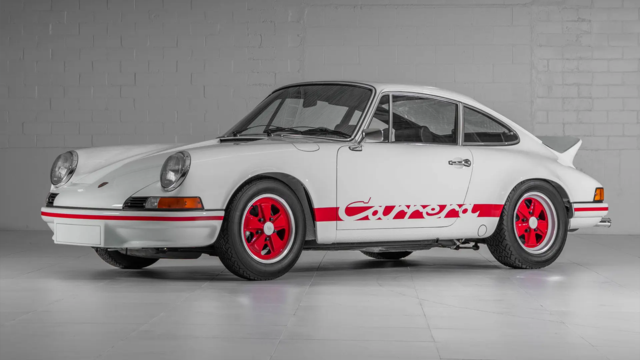
10 Wildest Homologation Specials Porsche Ever Sold
Verdad Gallardo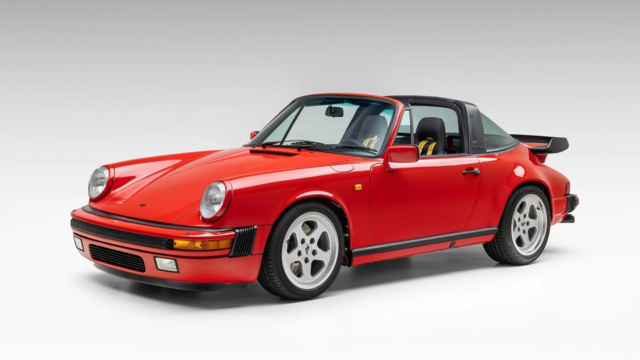
Super Rare RUF BTR III Comes Out of Hibernation, Looking For a New Home
Verdad Gallardo
10 Porsche Opinions That Can Start a Fight
Joe Kucinski