Translation

Drifting

Joined: May 2001
Posts: 2,636
Likes: 16
From: Apex, NC

I don't know if Porsche had ever used the two designations together before this year, 911 and Carrera that is.
From 1965 to 1977 it was simply 911, with an additional designation for specific models such as T, E, or S. Then the 911 Super Carrera debuted, but that was always abbreviated SC.
In 1984 the designation changed to simply Carrera, where it has been ever since. "911" does not appear as a name anywhere in either my owner's manual or on the original window sticker. Officially the car is a "Porsche Carrera Coupe." 911 was more of a parts identifier than an official name, and occasionally used in advertising.
Now, with the 991, Porsche has gone nuts with badging and labeled the new 991 as the "911 Carrera S," with a giant (and undeletable) P O R S C H E badge above it on the rear of the car. But that is a first.
From 1965 to 1977 it was simply 911, with an additional designation for specific models such as T, E, or S. Then the 911 Super Carrera debuted, but that was always abbreviated SC.
In 1984 the designation changed to simply Carrera, where it has been ever since. "911" does not appear as a name anywhere in either my owner's manual or on the original window sticker. Officially the car is a "Porsche Carrera Coupe." 911 was more of a parts identifier than an official name, and occasionally used in advertising.
Now, with the 991, Porsche has gone nuts with badging and labeled the new 991 as the "911 Carrera S," with a giant (and undeletable) P O R S C H E badge above it on the rear of the car. But that is a first.
Track Day
Joined: Sep 2008
Posts: 24
Likes: 0
From: Lakeland Florida
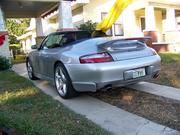
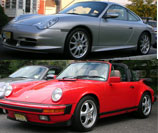
Let me ask you a somewhat unrelated question, I have the Aerokit like your car, installed when new in naples Fl., my car has the bits that fit on the rear fenders, i've never seen these on any other car, are they unusual, or just dorky?
Super Moderator
Lifetime Rennlist
Member
Lifetime Rennlist
Member
Joined: May 1998
Posts: 16,142
Likes: 26
From: Northern New Jersey
I have seen them and I think they complete the kit on MK1 cars, I dont think I have ever seen them on a MK II car.
Drifting

Joined: Jan 2009
Posts: 3,042
Likes: 84
From: Chesapeake, VA
What I don't get is why the luxury-loaded grand touring models are called "Carrera", while the race cars which are far less suited for long-distance road trips are called "GT".
Marketing has bastardized everything.
Marketing has bastardized everything.
Trending Topics

Thread Starter
Racer
Joined: May 2010
Posts: 378
Likes: 5
From: London
Three Wheelin'
Joined: Jul 2008
Posts: 1,288
Likes: 13
From: Jacksonville, FL

The whole rest of the automotive world uses the GT designation for racing. The GT classification began some time in the 1950's to designate full race cars that were derived from street cars rather than purpose built prototypes.
Porsche used the GT designation on several 356A and 356B models that were factory specials for customer purchase. Also the 904GTS. And many, many more.
There have been many models of Porsche with the GT3, GT2, GT1, GTR, GTRS designations. All of the these were originally designed to be customer track cars for various series. Currently, there are about 13 different Porsche spec car series around the world. The GT3 and GT3RS, GT2RS, GT3 Cup, and more are built for these various series.
And the GT3 in North America was always a track oriented car, and not continuously available with the other 911 models such as the Carrera or Carrera S. Such as right now. You cannot order a GT3 unless you are ordering a GT3 Cup for some particular race series such as the Rolex or ALMS. And these are strictly track cars. The fact that you can buy any of these cars through a dealer is because there are rules requiring a minimum number of production vehicles in order for homologation into each of these classes. Right now, there are more than ample orders for the GT3 Cup cars world-wide to more than cover the holomogation requirements. Thus, no need for current GT3's for street customer consumption.
Really, only the USA car manufacturers bastardize the GT designation. But then they always did bastardize real racing names.
Last edited by Thundertub; Jun 2, 2012 at 10:36 PM. Reason: spelin
Three Wheelin'
Joined: Jul 2008
Posts: 1,288
Likes: 13
From: Jacksonville, FL
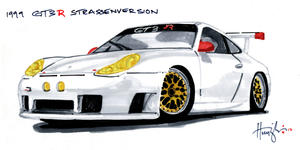
Those rear fairings were factory pieces on the original 996 MK I GT3 cars built for Europe only. We did not get the actual GT3 in the USA until 2003. Starting in 1999, you could order the Aero Kit that was the body bits and pieces from the early Euro-only MK I GT3. Some folks ordered them for C2 coupes and even C2 Cabriolets. The Cabriolets had a different rear spoiler in order for clearance between the metal portion of the tonneau cover when it operates up and back and the Taco spoiler which sits high and close. There may also be visibilty problems with the CHMSL on a Cabriolet with a Taco since the bodywork in that area is slightly different than the Coupe. I have never seen any data to say that the Taco spoiler was unsafe or ineffective on a cabriolet body. But Porsche sold only the "basket handle" and "half taco" spoilers for cabriolets.
Nordschleife Master
Joined: Oct 2006
Posts: 7,446
Likes: 69
Three Wheelin'
Joined: Jul 2008
Posts: 1,288
Likes: 13
From: Jacksonville, FL
Actually, the 911 never did well in this race because it was only run between 1950 and 1954. However, the Porsche 356 won its class and the overall, one year, in which the original 4-cam 4-cyl "Furmann" engine was introduced, and thus the Carrera name was born and applied to all 356 Porsche's and race cars with that engine, throughout the 1950's and early 1960's. The first 904's were the last cars to have the 4-cam 4cyl engine. The 1972 Carrera RS did not have the 4-cam 4-cyl engine, but was the beginning of the SOHC 6 having the Carrera name apllied within the 911 Series. The last of the 904's also were also known as Carrera GTS, but had the then brand new SOHC 6 engine shared with the new Type 911.
Now before somebody nit-picks me on a couple of the details, I did this from memory. And I will now go back over the next couple hours and look up to make certain I got it all right.
Thank goodness they won that race!
Carrera should not be confused with "Carrara" which is a very white marble in Spain and which gave its name to the the very white color appelation of recent history, including the 996. So if you have a white 996, you may have a Carrara Carrera - White Racer - which somehow doesn't really sound so good these days, but might have been OK with the "old school" Germans and Austrians. But I digress...