


New 993 Owner Questions...

Thread Starter
AutoX
Joined: Jan 2002
Posts: 14
Likes: 0
From: Newport Coast, CA
 New 993 Owner Questions...
I am a new 96 C4 owner. I smile all day long but have a few basic questions, if anyone can help it would be appreciated,
In warm weather (50 - 80) how long do I idle before driving? Until the gauge moves up or sooner?
When shifting up from first to second how far do I run up the rpm's before shifting. I always seem to get a little bobble in the shift.
I know not to "lug" but is there a rule of thumb, especially in 2nd gear?
Thanks.
In warm weather (50 - 80) how long do I idle before driving? Until the gauge moves up or sooner?
When shifting up from first to second how far do I run up the rpm's before shifting. I always seem to get a little bobble in the shift.
I know not to "lug" but is there a rule of thumb, especially in 2nd gear?
Thanks.
Phlat Black Guru
Rennlist
Lifetime Member
- Times 2
Rennlist
Lifetime Member
- Times 2
Joined: May 2001
Posts: 4,484
Likes: 2
From: Back In RI...............
Great Car!....I am in Santa barbara County, It gets a little cold here in the winter....I idle until my abs light goes off. I do not get on it, until engine is warm, ussually about 10-15 minutes. I have found 1st gear to be a pain, but I never redline it there.....2nd, 3rd, 4th, for the big redline.......But I am still knew to this car, Only been a year!!! <img src="graemlins/bigok.gif" border="0" alt="[thumbsup]" />
Addict
Rennlist Member
Rennlist Member

Joined: May 2001
Posts: 450
Likes: 0
From: Los Angeles, California
Irrespective of the outside weather, try not to exceed 4000 rpms until your oil temperature gauge rises above the second temperature line (the one very close to the bottom temperature line). I believe the five temperature lines correspond to 104, 140, 194, 248, and 302 degrees Farenheit. Standard operating temperature should be between 180-250 F.
I don't know what to say about your "bobble," but I'd keep the engine above 1800-2000 rpms. These cars are happiest when the revs are up.
I don't know what to say about your "bobble," but I'd keep the engine above 1800-2000 rpms. These cars are happiest when the revs are up.
Race Car
Joined: Dec 2001
Posts: 3,547
Likes: 7
From: Switzerland
Idle before driving? I just turn on the engine and go. When real cold, maybe just about 10 seconds before going. Revs from 1st to 2nd, normally only around 2000 unless really doing a fast start, redlining it. 
Addict
Rennlist Member
Rennlist Member
Joined: Nov 2001
Posts: 554
Likes: 3
From: Herefordshire
Conventional modern wisdom is to move off soon after starting, but not use more than 1/2 throttle or more than 4K revs until the oil is warm - witness the BMW Motorsport 'tricky tacho' that shades the sector >4K in red until oil is a good temp.
HTH, Cheers, Maurice
HTH, Cheers, Maurice
Addict
Rennlist Member
Rennlist Member
Joined: May 2001
Posts: 2,956
Likes: 0
From: Houston, Tx
there was some recent discussion about how cruising revs should be ~2,500 - 3,700. Even though the manual's 'economy' shift point is ~2,600, and there is torque down lower, the valves stay cleaner w/o appreciable engine wear when used consistently at the higher revs for cruising.

Instructor
Joined: Oct 2001
Posts: 192
Likes: 0
From: CA
It's been a while since I've combed through my owner's manual, but I seem to recall that it answers the shift points with Minimum Upshift RPMs (they are all around 2700-3000). It may also answer the "idle before drive" question (I think it says not necessary, but many on the Board will give it 10 to 15 seconds before rolling).
I'd quote directly from the manual, but it isn't accessible right now.
Enjoy your awesome car! <img src="graemlins/jumper.gif" border="0" alt="[jumper]" />
I'd quote directly from the manual, but it isn't accessible right now.
Enjoy your awesome car! <img src="graemlins/jumper.gif" border="0" alt="[jumper]" />
Trending Topics

Racer
Joined: Jun 2001
Posts: 283
Likes: 0
From: The Netherlands
There's much more experience and expertise in the members, but not yet chiming in. I recall from earlier posts it is recommended to drive the car to warm up. Idling the car for longer is not recommended as it warms the engine un-evenly and not "as intended". Warm up is important and affects engine wear as all tolerances and clearances in the engine (notably pistons-rings-cylinders) change during the transient.
As far as my routine goes, 65F is as low as it gets over here in the winter . My car is a daily driver, and I do a fair share of short trips. I usually move before the brake pressure light goes off, don't lug the engine and upshift around 4000 RPM until the oil temp gauge hits 8:30 or so. With our 115F summers that is a matter of minutes, and if I park the car, hours later it is still warm <img src="graemlins/burnout.gif" border="0" alt="[burnout]" />
Enjoy, Nol
As far as my routine goes, 65F is as low as it gets over here in the winter
. My car is a daily driver, and I do a fair share of short trips. I usually move before the brake pressure light goes off, don't lug the engine and upshift around 4000 RPM until the oil temp gauge hits 8:30 or so. With our 115F summers that is a matter of minutes, and if I park the car, hours later it is still warm <img src="graemlins/burnout.gif" border="0" alt="[burnout]" /> Enjoy, Nol
Rennlist Stories
The Best Porsche Posts for Porsche Enthusiasts
9 Features and Characteristics That Only Porsche People Understand
Verdad Gallardo
I've Written 500 Rennlist Articles: Here's How Porsche Has Changed Along the Way
Joe Kucinski
10 Most Unnecessary Porsches Ever Built (And Why We Love Them)
Verdad Gallardo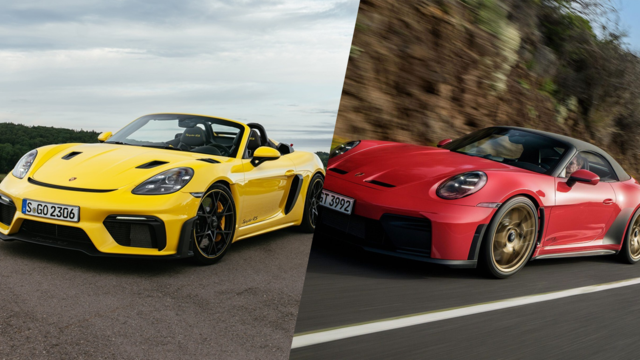
Porsche 911 GT3 S/C vs 718 Spyder RS: 10 Categories, One Winner
Joe Kucinski
This Builder Is Turning Heads With Its Slantnose 911 Creation
Verdad Gallardo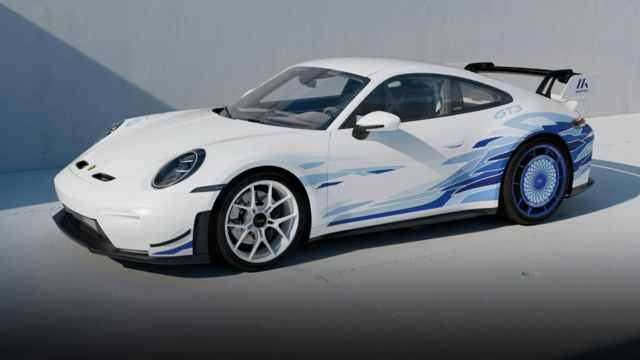
Porsche 911 GT3 Artisan Edition Pays Homage to Japanese Culture
Verdad Gallardo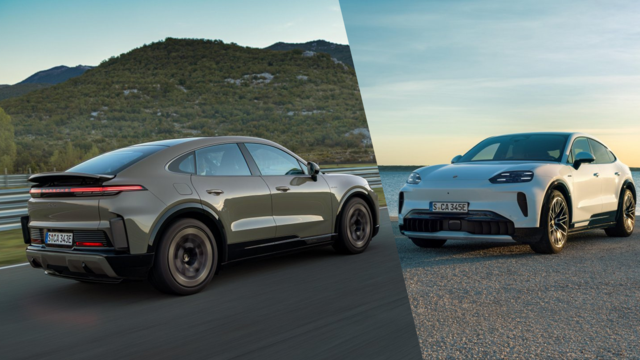
Porsche Reveals Coupe Variant of the Electric Cayenne With a Fresh Look
Verdad Gallardo
10 Porsche Colors That Have More Personality Than Most People
Verdad Gallardo
Guntherwerks' Final Speedster Creation Is the Ultimate Porsche Restomod
Verdad Gallardo
Instructor
Joined: Oct 2001
Posts: 183
Likes: 0
From: CT
I don't know how to give the direct link to an OT but the ques. of idle at start up is discussed at length in this one:
<a href="http://forums.rennlist.com/scripts/rennforums/ultimatebb.cgi?ubb=get_topic&f=3&t=000095" target="_blank">http://forums.rennlist.com/scripts/rennforums/ultimatebb.cgi?ubb=get_topic&f=3&t=000095</a>
if you do a search for "let car warm up at idle" you should be able to find this discussion titled "Is there anything wrong with letting the car roll in neutral"
Good Luck,
Evan
<a href="http://forums.rennlist.com/scripts/rennforums/ultimatebb.cgi?ubb=get_topic&f=3&t=000095" target="_blank">http://forums.rennlist.com/scripts/rennforums/ultimatebb.cgi?ubb=get_topic&f=3&t=000095</a>
if you do a search for "let car warm up at idle" you should be able to find this discussion titled "Is there anything wrong with letting the car roll in neutral"
Good Luck,
Evan

Burning Brakes
Joined: May 2001
Posts: 967
Likes: 1
I usually idle the car until it drops from its high, cold idle speed down to the lower, warm idle speed. I know all the experts say to drive right away, but I just can’t bring myself to do that. I also don’t get this “un-even” warm up stuff. What’s going to happen, the left side gets warmer than the right? The top warmer than the bottom? Why would driving cause the heat to spread evenly versus idling, which allegedly causes the heat to stay in one place?
Like others, I don’t exceed 4000 revs before some heat registers on the temp gauge. I don’t go to red line or use full throttle until the car is completely warmed up.
Like others, I don’t exceed 4000 revs before some heat registers on the temp gauge. I don’t go to red line or use full throttle until the car is completely warmed up.

Addict & Guru
Rennlist Member
Rennlist Member
Joined: May 2001
Posts: 3,897
Likes: 3
From: St. Louis
Tom
I think the common advice to warm up a car by conservative driving is that all moving parts & fluids (e.g., tranny, diff, wheel bearings, tires, etc.) get up to operating temps, not just the engine. An added benefit is the increased fuel efficiency (idle = 0 mpg).
I think the common advice to warm up a car by conservative driving is that all moving parts & fluids (e.g., tranny, diff, wheel bearings, tires, etc.) get up to operating temps, not just the engine. An added benefit is the increased fuel efficiency (idle = 0 mpg).
Burning Brakes
Joined: May 2001
Posts: 967
Likes: 1
Dan, yes, the fluids, bearings, tranny, etc are all why I drive conservatively until they all warm up. But I see no harm in letting the engine and oil get warm first, then let the rest of the stuff warm up while driving. I want to make sure the oil is warm and lubricating all areas of the engine properly before I put stress on the motor, even the stress of conservative driving. When a motor is cold, it runs rich, with cold thin oil (more toward the 15 in 15W50) being washed away by the rich mixture. I wait until the cold, rich idle goes away, and the oil is slightly warm (more toward the 50 in 15W50), properly lubricating an engine that is no longer running rich.
And I’m not worried about the 0 MPG for a minute or two when the car is cold. I’d rather pay a few cents for gas than pay for a premature rebuild.
And I’m not worried about the 0 MPG for a minute or two when the car is cold. I’d rather pay a few cents for gas than pay for a premature rebuild.