





What does adjusting pss10 settings really do?
Thread Starter
Rennlist Member

Joined: Dec 2002
Posts: 1,689
Likes: 257
From: Utah
 What does adjusting pss10 settings really do?
My car came with the pss10 suspension and I absolutely love it. The car feels so tight. Never having had an adjustable suspension I am not exactly sure how adjusting the settings from 1-10 changes how the car handles. From reading on Bilsteins website I know that 1 is softer and 10 is a stiffer setting, but How does that effect under steer/ over steer? Forgive me if this is a dumb question. Thanks.

Pro

Joined: Oct 2011
Posts: 651
Likes: 29
From: Seattle, WA
before you feed under\over steer you will feel the soft\hard difference when you drive it. If you start changing the balance of hard\soft between the front\rear you can adjust the handling characteristics... same idea as with tire pressure\sway bars.. going softer gives you more grip, harder give less grip. With the engine in the rear most run the rear 2 clicks harder, but depends what type of ride you are going for.
phil.
phil.

Racer

Joined: Jul 2010
Posts: 416
Likes: 0
From: Sydney Australia
Hi 996scott,
The adjustments (valves) on the PSS10's adjusts the rate at which the fluid (oil) in your dampers (shocks) travels between cavities or how easy or difficult it is for the fluid to move, hence making the suspension hard or soft
This adjusts the bounce and rebound.
PSS10's are coil over dampers and springs, you can also adjust the height by adjusting the spring perch.
.
The adjustments (valves) on the PSS10's adjusts the rate at which the fluid (oil) in your dampers (shocks) travels between cavities or how easy or difficult it is for the fluid to move, hence making the suspension hard or soft
This adjusts the bounce and rebound.
PSS10's are coil over dampers and springs, you can also adjust the height by adjusting the spring perch.
.
Nordschleife Master
Joined: Feb 2011
Posts: 5,297
Likes: 6
From: Deep Downtown Carrier, OK
Scott, in a easy nutshell - remember that the single adjustment alters both "bump" and "rebound" (intuitive terms).
The dampers control, for the most part, the transitional phases of the car's handling; i.e., corner turn in, chassis unloading at track-out, performance over bumps and undulations, and compression up and down larger undulations.
For the street, adjust to whatever is comfortable, yet not too stiff - we're all different here.
On track, start with your street settings for a few semi-hot laps, then dial up until the car feels more "settled" at turn-in (i.e body roll is a bit more controled), run a few more laps.
Then dial up all the way to 10. You may find the car feels even better, but now jumps a bit over the little bumps and on kerbs - dial down a bit until this goes away. This is about the best you can do with the PSS10s.
If yer running full stiff on all 4 corners, and liking what you feel - from there you can fine tune a bit of handling. For us, this normally means turn-in understeer, or power on understeer mid-corner - simply dial out the front shocks a bit to help this.
FWIW, I ran 10R and 9F.
When you're done with all of this, call Steve W. and order a set of MCS dampers, tehe....
The dampers control, for the most part, the transitional phases of the car's handling; i.e., corner turn in, chassis unloading at track-out, performance over bumps and undulations, and compression up and down larger undulations.
For the street, adjust to whatever is comfortable, yet not too stiff - we're all different here.
On track, start with your street settings for a few semi-hot laps, then dial up until the car feels more "settled" at turn-in (i.e body roll is a bit more controled), run a few more laps.
Then dial up all the way to 10. You may find the car feels even better, but now jumps a bit over the little bumps and on kerbs - dial down a bit until this goes away. This is about the best you can do with the PSS10s.
If yer running full stiff on all 4 corners, and liking what you feel - from there you can fine tune a bit of handling. For us, this normally means turn-in understeer, or power on understeer mid-corner - simply dial out the front shocks a bit to help this.
FWIW, I ran 10R and 9F.
When you're done with all of this, call Steve W. and order a set of MCS dampers, tehe....

Banned
Joined: Sep 2009
Posts: 198
Likes: 33
From: OC, CA
my car came with PSS10 and i love it as well.
question is for my first DE ever in the 993, i'm planning on running 1 (softest) all around to get a feel for the rear heavy tendency. any advice on the settings?
question is for my first DE ever in the 993, i'm planning on running 1 (softest) all around to get a feel for the rear heavy tendency. any advice on the settings?
Trending Topics
King of Cool
Rennlist Member
Rennlist Member
Joined: May 2001
Posts: 14,212
Likes: 8
From: Miami Beach, FL
Scott, in a easy nutshell - remember that the single adjustment alters both "bump" and "rebound" (intuitive terms).
The dampers control, for the most part, the transitional phases of the car's handling; i.e., corner turn in, chassis unloading at track-out, performance over bumps and undulations, and compression up and down larger undulations.
For the street, adjust to whatever is comfortable, yet not too stiff - we're all different here.
On track, start with your street settings for a few semi-hot laps, then dial up until the car feels more "settled" at turn-in (i.e body roll is a bit more controled), run a few more laps.
Then dial up all the way to 10. You may find the car feels even better, but now jumps a bit over the little bumps and on kerbs - dial down a bit until this goes away. This is about the best you can do with the PSS10s.
If yer running full stiff on all 4 corners, and liking what you feel - from there you can fine tune a bit of handling. For us, this normally means turn-in understeer, or power on understeer mid-corner - simply dial out the front shocks a bit to help this.
FWIW, I ran 10R and 9F.
When you're done with all of this, call Steve W. and order a set of MCS dampers, tehe....
The dampers control, for the most part, the transitional phases of the car's handling; i.e., corner turn in, chassis unloading at track-out, performance over bumps and undulations, and compression up and down larger undulations.
For the street, adjust to whatever is comfortable, yet not too stiff - we're all different here.
On track, start with your street settings for a few semi-hot laps, then dial up until the car feels more "settled" at turn-in (i.e body roll is a bit more controled), run a few more laps.
Then dial up all the way to 10. You may find the car feels even better, but now jumps a bit over the little bumps and on kerbs - dial down a bit until this goes away. This is about the best you can do with the PSS10s.
If yer running full stiff on all 4 corners, and liking what you feel - from there you can fine tune a bit of handling. For us, this normally means turn-in understeer, or power on understeer mid-corner - simply dial out the front shocks a bit to help this.
FWIW, I ran 10R and 9F.
When you're done with all of this, call Steve W. and order a set of MCS dampers, tehe....
But one key point that many fail to do, whether shocks, tire pressures, swaybars or whatever is this:
ADJUST ONLY ONE THING AT THE TIME.
So let's say you start with middle setting on both ends, go out and car understeers a bit, soften the front for example couple of clicks softer, then go out again and see what it does. If you have adjustable sways, start messing with those until you have the car to handle basically the way you want, then fine tune with shocks.
If you adjust front softer, rear harder, sways also etc. you'll never know exactly what did what & how much so...
ADJUST ONLY ONE THING AT THE TIME.
Rennlist Stories
The Best Porsche Posts for Porsche Enthusiasts
9 Vehicles Porsche Helped Engineer that Aren't Porsches
Verdad Gallardo
9 Features and Characteristics That Only Porsche People Understand
Verdad Gallardo
I've Written 500 Rennlist Articles: Here's How Porsche Has Changed Along the Way
Joe Kucinski
10 Most Unnecessary Porsches Ever Built (And Why We Love Them)
Verdad Gallardo
Porsche 911 GT3 S/C vs 718 Spyder RS: 10 Categories, One Winner
Joe Kucinski
This Builder Is Turning Heads With Its Slantnose 911 Creation
Verdad Gallardo
Porsche 911 GT3 Artisan Edition Pays Homage to Japanese Culture
Verdad Gallardo
Porsche Reveals Coupe Variant of the Electric Cayenne With a Fresh Look
Verdad Gallardo
10 Porsche Colors That Have More Personality Than Most People
Verdad Gallardo
Rennlist Member
Joined: Feb 2004
Posts: 12,312
Likes: 10
From: Roseville, CA
What track, what group?




Thread Starter
Rennlist Member
Joined: Dec 2002
Posts: 1,689
Likes: 257
From: Utah
So by adjusting the setting down to a lower number it will soften the compression and rebound which will give me more grip. So if I have understeer I can reduce it going to a lower setting in the front? Is that right?
Rennlist Member
Joined: Jun 2001
Posts: 3,887
Likes: 167
From: California Boardwalk, Skanderborg Denmark
To discuss, as I "understand" it.
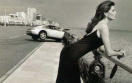
The graph is a family of curves for each setting on the shock.
0 = a static shock and the origin of each set of 2 curves above and below zero for each setting of the shock.
The horizontal X axis is the velocity of the shock motion in in/sec, as the curve moves to the right the faster the shock is going (higher frequency motion)
The vertical Y axis is the force required to move the shock in pounds, the lines below zero are shock extension (or rebound) and the lines above zero are for shock bump (or compression) force values.
Note: Bilstein usually quotes meters/second in most of their literature and gives one value in newtons per millimeter at 0.5 m/sec (~20 in/sec) as a fraction rebound/bump like "110/60"
It is much easier to compress the shock than to extend the shock. Also note the force increases as the shock velocity increases in either direction. These shocks have a digressive curve in that the rate of increase is non-linear, here decreasing as shock velocity increases.
The lower velocity values (low frequency) have more to do with chassis motion (~ handling) and the high velocity (high frequency) values have more to do with wheel motion (~ ride) and this is why the curve is digressive to separate these functions to a certain extent.
Really fancy shocks like Motons for example can have up to 4 way adjustments, really 2 ways for each shock direction. Shock force values can be essentially adjusted for above and below the digression point for each direction thus controlling chassis and wheel motion separately.
This allows the adjustment of the rate of tire loading on corner entry and exit to affect handling as well as adjustment of wheel motion control to affect the way the wheel goes over bumps.
The graph is a family of curves for each setting on the shock.
0 = a static shock and the origin of each set of 2 curves above and below zero for each setting of the shock.
The horizontal X axis is the velocity of the shock motion in in/sec, as the curve moves to the right the faster the shock is going (higher frequency motion)
The vertical Y axis is the force required to move the shock in pounds, the lines below zero are shock extension (or rebound) and the lines above zero are for shock bump (or compression) force values.
Note: Bilstein usually quotes meters/second in most of their literature and gives one value in newtons per millimeter at 0.5 m/sec (~20 in/sec) as a fraction rebound/bump like "110/60"
It is much easier to compress the shock than to extend the shock. Also note the force increases as the shock velocity increases in either direction. These shocks have a digressive curve in that the rate of increase is non-linear, here decreasing as shock velocity increases.
The lower velocity values (low frequency) have more to do with chassis motion (~ handling) and the high velocity (high frequency) values have more to do with wheel motion (~ ride) and this is why the curve is digressive to separate these functions to a certain extent.
Really fancy shocks like Motons for example can have up to 4 way adjustments, really 2 ways for each shock direction. Shock force values can be essentially adjusted for above and below the digression point for each direction thus controlling chassis and wheel motion separately.
This allows the adjustment of the rate of tire loading on corner entry and exit to affect handling as well as adjustment of wheel motion control to affect the way the wheel goes over bumps.