NitroFill

Rennlist Member

Joined: Aug 2006
Posts: 3,228
Likes: 471
From: Charlotte, NC

Yep. 315/30R19 R6 rear heats up to about 230 degrees. In fairness, I start with low 20 pressure and it gets to 36-38 at operating temp. I'm not the quickest guy out there but I do okay and if I run street tires I'll go through set in a day. They just overheat and melt away. It makes for a fun but slippery and expensive day.
IMHO - As others have said the only advantage to Nitrogen, is that its dry. and that advantage is only relevant when you get near the state change of water (212 deg). But you will never see that in a street tire, so its irrelevant in that application.
The other thing I think is funny is the same tire shops that sell Nitrogen for the tires (again to keep water out), will mount the tires with water based lube…. I watched one shop smear the whole barrel of the rim with this goo… Forget a little water vapor, they are adding liquid water to your tires.

Rennlist Member

Joined: Nov 2003
Posts: 1,237
Likes: 44
From: Sturgeon Falls
230deg??? Are you drifting??? If racing/DE you are overheating the tire, optimum temp should be 180 -210 depending on the tire. Drive a tidier (is that a word?) line and you wil be faster and the tire will last longer.
IMHO - As others have said the only advantage to Nitrogen, is that its dry. and that advantage is only relevant when you get near the state change of water (212 deg). But you will never see that in a street tire, so its irrelevant in that application.
The other thing I think is funny is the same tire shops that sell Nitrogen for the tires (again to keep water out), will mount the tires with water based lube…. I watched one shop smear the whole barrel of the rim with this goo… Forget a little water vapor, they are adding liquid water to your tires.
IMHO - As others have said the only advantage to Nitrogen, is that its dry. and that advantage is only relevant when you get near the state change of water (212 deg). But you will never see that in a street tire, so its irrelevant in that application.
The other thing I think is funny is the same tire shops that sell Nitrogen for the tires (again to keep water out), will mount the tires with water based lube…. I watched one shop smear the whole barrel of the rim with this goo… Forget a little water vapor, they are adding liquid water to your tires.
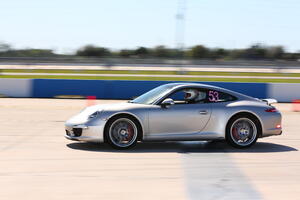
Talk to Hoosier. The tire doesn't even start working until 175. It isn't uncommon to see a rear on a 911 get above 225. The tire overheats arount 240 (again according to hoosier). The course I run is 3 miles long and consists of 22 turns. The tarmac is brand new but can be hard on tires because of turns. PSE is on at all times so there isn't much drifting.
The fastest stock GT3 do the course in 2:16 and I was in around 2:22 with a fast lap of 2:19.
Keep in mind that many people who don't run dedicated test sessions are only measuring tire temps at the end of sessions and probably did a little bit of a cool down lap plus came into the pits. Tire temps drop rapidly and should be taken in pit lane after a hot lap to be as accurate as possible. I had to do this because hoosier suggested that I was overheating my first set causing them to split at the shoulder.
Hope this isn't interpreted as argumentative, I was just going with what the guys at Hoosier told me.

Rennlist Member
Joined: Nov 2003
Posts: 1,237
Likes: 44
From: Sturgeon Falls
Addict
Rennlist Member
Rennlist Member
Joined: Jun 2001
Posts: 2,017
Likes: 0
From: Lat: 47 Deg 26.848N Lon: 122 Deg 21.341W Seattle
Let's see...fill tires with air: 78% Ni and 22% O
After a month assume ALL the O leaks out....
Refill with air ( the 22% that leaked out): .22 x 78 = 17%. 17% NI + 78% = 95% Ni and 5% O
Refill after another month: .05 x 78% = 4% Ni . 4% = 95% = 99% Ni + 1% O
And so on...after about 3 refills with air the percentage of Oxygen is negligible.
Fine for street cars if the air is reasonably dry. Track is another issue as tires are mounted and dismounted more often and heat cycles are more extreme.
After a month assume ALL the O leaks out....
Refill with air ( the 22% that leaked out): .22 x 78 = 17%. 17% NI + 78% = 95% Ni and 5% O
Refill after another month: .05 x 78% = 4% Ni . 4% = 95% = 99% Ni + 1% O
And so on...after about 3 refills with air the percentage of Oxygen is negligible.
Fine for street cars if the air is reasonably dry. Track is another issue as tires are mounted and dismounted more often and heat cycles are more extreme.
Rennlist Member
Joined: Aug 2006
Posts: 3,228
Likes: 471
From: Charlotte, NC
Sorry, feel the need to defend my honour! :P
Talk to Hoosier. The tire doesn't even start working until 175. It isn't uncommon to see a rear on a 911 get above 225. The tire overheats arount 240 (again according to hoosier). The course I run is 3 miles long and consists of 22 turns. The tarmac is brand new but can be hard on tires because of turns. PSE is on at all times so there isn't much drifting.
The fastest stock GT3 do the course in 2:16 and I was in around 2:22 with a fast lap of 2:19.
Keep in mind that many people who don't run dedicated test sessions are only measuring tire temps at the end of sessions and probably did a little bit of a cool down lap plus came into the pits. Tire temps drop rapidly and should be taken in pit lane after a hot lap to be as accurate as possible. I had to do this because hoosier suggested that I was overheating my first set causing them to split at the shoulder.
Hope this isn't interpreted as argumentative, I was just going with what the guys at Hoosier told me.
Talk to Hoosier. The tire doesn't even start working until 175. It isn't uncommon to see a rear on a 911 get above 225. The tire overheats arount 240 (again according to hoosier). The course I run is 3 miles long and consists of 22 turns. The tarmac is brand new but can be hard on tires because of turns. PSE is on at all times so there isn't much drifting.
The fastest stock GT3 do the course in 2:16 and I was in around 2:22 with a fast lap of 2:19.
Keep in mind that many people who don't run dedicated test sessions are only measuring tire temps at the end of sessions and probably did a little bit of a cool down lap plus came into the pits. Tire temps drop rapidly and should be taken in pit lane after a hot lap to be as accurate as possible. I had to do this because hoosier suggested that I was overheating my first set causing them to split at the shoulder.
Hope this isn't interpreted as argumentative, I was just going with what the guys at Hoosier told me.
No argument from me....If Hoosier engineers are telling you they are good to 230deg, who am I to argue.... I guess I need to push them further than I have... I was going by the published specs.
Rennlist Member
Joined: Nov 2003
Posts: 1,237
Likes: 44
From: Sturgeon Falls
As the outside of the tire cools the internals follow. As a practical example, your tire pressures will not have dropped all the way down between sessions but your tires surface time will be much less.
Rennlist Member
Joined: Nov 2003
Posts: 1,237
Likes: 44
From: Sturgeon Falls
Let's see...fill tires with air: 78% Ni and 22% O
After a month assume ALL the O leaks out....
Refill with air ( the 22% that leaked out): .22 x 78 = 17%. 17% NI + 78% = 95% Ni and 5% O
Refill after another month: .05 x 78% = 4% Ni . 4% = 95% = 99% Ni + 1% O
And so on...after about 3 refills with air the percentage of Oxygen is negligible.
Fine for street cars if the air is reasonably dry. Track is another issue as tires are mounted and dismounted more often and heat cycles are more extreme.
After a month assume ALL the O leaks out....
Refill with air ( the 22% that leaked out): .22 x 78 = 17%. 17% NI + 78% = 95% Ni and 5% O
Refill after another month: .05 x 78% = 4% Ni . 4% = 95% = 99% Ni + 1% O
And so on...after about 3 refills with air the percentage of Oxygen is negligible.
Fine for street cars if the air is reasonably dry. Track is another issue as tires are mounted and dismounted more often and heat cycles are more extreme.

Nitrogen has nothing to do with the gas being used. Nitrogen is simply the easiest and most abundant gas to pull from the atmosphere and is completely in-volatile and safe. It's the 'dry' air that is important. I should also note that many shop air systems have oil in their air lines to keep tools and equipment running properly even after it's been dried by a dryer. Air that you get at the gas station is almost certainly not dry.
Rennlist Stories
The Best Porsche Posts for Porsche Enthusiasts
9 Features and Characteristics That Only Porsche People Understand
Verdad Gallardo
I've Written 500 Rennlist Articles: Here's How Porsche Has Changed Along the Way
Joe Kucinski
10 Most Unnecessary Porsches Ever Built (And Why We Love Them)
Verdad Gallardo
Porsche 911 GT3 S/C vs 718 Spyder RS: 10 Categories, One Winner
Joe Kucinski
This Builder Is Turning Heads With Its Slantnose 911 Creation
Verdad Gallardo
Porsche 911 GT3 Artisan Edition Pays Homage to Japanese Culture
Verdad Gallardo
Porsche Reveals Coupe Variant of the Electric Cayenne With a Fresh Look
Verdad Gallardo
10 Porsche Colors That Have More Personality Than Most People
Verdad Gallardo