When you click on links to various merchants on this site and make a purchase, this can result in this site earning a commission. Affiliate programs and affiliations include, but are not limited to, the eBay Partner Network.
As soon as 0-60 times got below 5 seconds I lost interest. In-gear performance is much more relevant in the real world.
Motor magazine in Australia regularly publishes lap times for cars it tests. As well as videos (helps me that they use Winton, a track I know intimately):
When most performance cars hover around the 3 second mark for 0-60 times, it becomes largely irrelevant -- if not a complete affectation for those who do not know any better.
Like you said, in-gear performance is much more relevant. Even if a person does not track their cars (and admittedly not enough people do), a car's ability to turn and accelerate has much more relevance to real world, daily driving performance than straight line speed.
A car's ability to handle a circuit, whether it's one in Australia (like Winton), or a the Ring, says a lot more about how a car will drive dynamically on the street -- be it cornering, navigating twisties on a favorite mountain road, or the ability of the car to stay composed when taking an off-ramp at speed. None of those things -- the actual driving dynamics of the car -- are reflected in 0-60 times.
For those that say 0-60 times matter to the majority of 911 buyers, I think that may have been the case decades ago. Today I think that's a different story. Most Porsche sales agents I've spoken couldn't quote you the 0-60 times of any Porsche -- 911, included.
Seriously, I've always thought that 0-60 times nowadays are reserved for the Tesla fanbois. But then, what do I know. I actually like to turn and drive my cars at the same time.
There is little doubt that 0-60 times for upper level performance vehicles have become quite academic as have the megapixels of cameras, terabyte memory capacities of computers etc.
1/4 mile trap mph is still a very relevant metric and is an extremely good indicator of how much fun the car will be to drive in the real world. There is a HUGE difference between a vehicle that traps 115mph and another capable of 125mph. I'm not sure just how much bearing this has on road course performance. I am guessing that it would make a real difference but that is not my world. I think the road course guys here could enlighten on this.
Pithy as always, Ipse.
I am mildly curious about 0 to 60 times, but more interested in lap times, which one could argue are irrelevant on the street, but...
lap times on relatively slow tracks, such as Streets of Willow, approximates canyon carving type of driving.
I also look at national championship SCCA autocross times.
Gordon Murray goes out of his way in interviews regarding his TC 50, encore to the McLaren F1, which has an obscene power to weight ratio, to say that he's not interested in lap times or 0 to 60 times, but only driver enjoyment.
I believe AP has also said lightness is going to be increasingly important in the future as opposed to power.
Pithy as always, Ipse.
I am mildly curious about 0 to 60 times, but more interested in lap times, which one could argue are irrelevant on the street, but...
lap times on relatively slow tracks, such as Streets of Willow, approximates canyon carving type of driving.
I also look at national championship SCCA autocross times.
Gordon Murray goes out of his way in interviews regarding his TC 50, encore to the McLaren F1, which has an obscene power to weight ratio, to say that he's not interested in lap times or 0 to 60 times, but only driver enjoyment.
I believe AP has also said lightness is going to be increasingly important in the future as opposed to power.
Respectfully disagree.
While the exact number of a lap time might not be relevant, the comparative lap times between cars (say, a C8 Corvette and a 911) do have real world relevance. If a C8 can lap a circuit faster/slower than a comparable 911, it will inform how the car will handle in regular day-to-day driving -- be it taking twisties up a mountain, or even how the car steers and communicates road feel - versus its competitors. In other words, comparative lap times will reveal how much better of a driver's car it is (versus some other comparable competitor)
0-60 times, while fun to talk about, really have very little real world relevance. Unless of course you enjoy stop-light racing with dads in minivans or the newest tech millionaire in a Tesla Model S Plaid.
Last edited by ipse dixit; Jul 6, 2021 at 08:19 PM.
Back in the day we only focused on ¼ mile times so It amazes me that with a simple tune you can have a mild mannered DD Carrera S capable of 10’s in the ¼ mile, and perfectly at home on the race track. Today lap times are more important at tracks I’ll visit like Laguna Seca. Always interesting, and humbling to see what a top driver achieved in the same car, and how my car compares to others
For folks who haven’t been to the track yet, but would like to experience the full performance of these cars I suggest you give it a try. No reason to be Intimidated it’s a welcoming controlled environment where you can learn at your own pace
Pithy as always, Ipse.
I am mildly curious about 0 to 60 times, but more interested in lap times, which one could argue are irrelevant on the street, but...
lap times on relatively slow tracks, such as Streets of Willow, approximates canyon carving type of driving.
I also look at national championship SCCA autocross times.
Gordon Murray goes out of his way in interviews regarding his TC 50, encore to the McLaren F1, which has an obscene power to weight ratio, to say that he's not interested in lap times or 0 to 60 times, but only driver enjoyment.
I believe AP has also said lightness is going to be increasingly important in the future as opposed to power.
My perspective on this is that a well balanced and set up road car will be enjoyable to drive on a track, and a competent driver will be able to get the most out of it. There are always exceptions to the rule but in general it holds true, and modern 911's (and 718's for that matter) are great examples.
My DD is a tuned 992TTS, HIGH 9 s 1/4 mi.seen 1.5 gs on launch, No problem, on road course takes a little finesse to manage.
That is why my track car is a 991.2 GT3RS
When most performance cars hover around the 3 second mark for 0-60 times, it becomes largely irrelevant -- if not a complete affectation for those who do not know any better.
Like you said, in-gear performance is much more relevant. Even if a person does not track their cars (and admittedly not enough people do), a car's ability to turn and accelerate has much more relevance to real world, daily driving performance than straight line speed.
A car's ability to handle a circuit, whether it's one in Australia (like Winton), or a the Ring, says a lot more about how a car will drive dynamically on the street -- be it cornering, navigating twisties on a favorite mountain road, or the ability of the car to stay composed when taking an off-ramp at speed. None of those things -- the actual driving dynamics of the car -- are reflected in 0-60 times.
For those that say 0-60 times matter to the majority of 911 buyers, I think that may have been the case decades ago. Today I think that's a different story. Most Porsche sales agents I've spoken couldn't quote you the 0-60 times of any Porsche -- 911, included.
Seriously, I've always thought that 0-60 times nowadays are reserved for the Tesla fanbois. But then, what do I know. I actually like to turn and drive my cars at the same time.
Why do folks say this kinda stuff? For most people, 0-60 is one indicator of a car's over all performance....a quick look bulk filter. Most buyers then apply filters based on increasingly finer, more nuanced indicators, actually driving the cars, etc. Blathering about tautologies such as "0-60 is not an indicator of handling, blah, blah, blah"...Guess what brah, we all know this. Talk about your ridiculous straw men.
While the exact number of a lap time might not be relevant, the comparative lap times between cars (say, a C8 Corvette and a 911) do have real world relevance. If a C8 can lap a circuit faster/slower than a comparable 911, it will inform how the car will handle in regular day-to-day driving -- be it taking twisties up a mountain, or even how the car steers and communicates road feel - versus its competitors. In other words, comparative lap times will reveal how much better of a driver's car it is (versus some other comparable competitor)
0-60 times, while fun to talk about, really have very little real world relevance. Unless of course you enjoy stop-light racing with dads in minivans or the newest tech millionaire in a Tesla Model S Plaid.
I respectfully disagree that we disagree. In other words we agree.
I attempted to preempt those who would say lap times are irrelevant on the street, and for race tracks with very high average speeds, that might be true.
Lap times for low to moderate speed tracks are in fact extremely relevant to street driving as you point out, and was exactly my point
Autocross lap times arguably even more so.
Last edited by Tompoodie; Jul 7, 2021 at 11:26 AM.
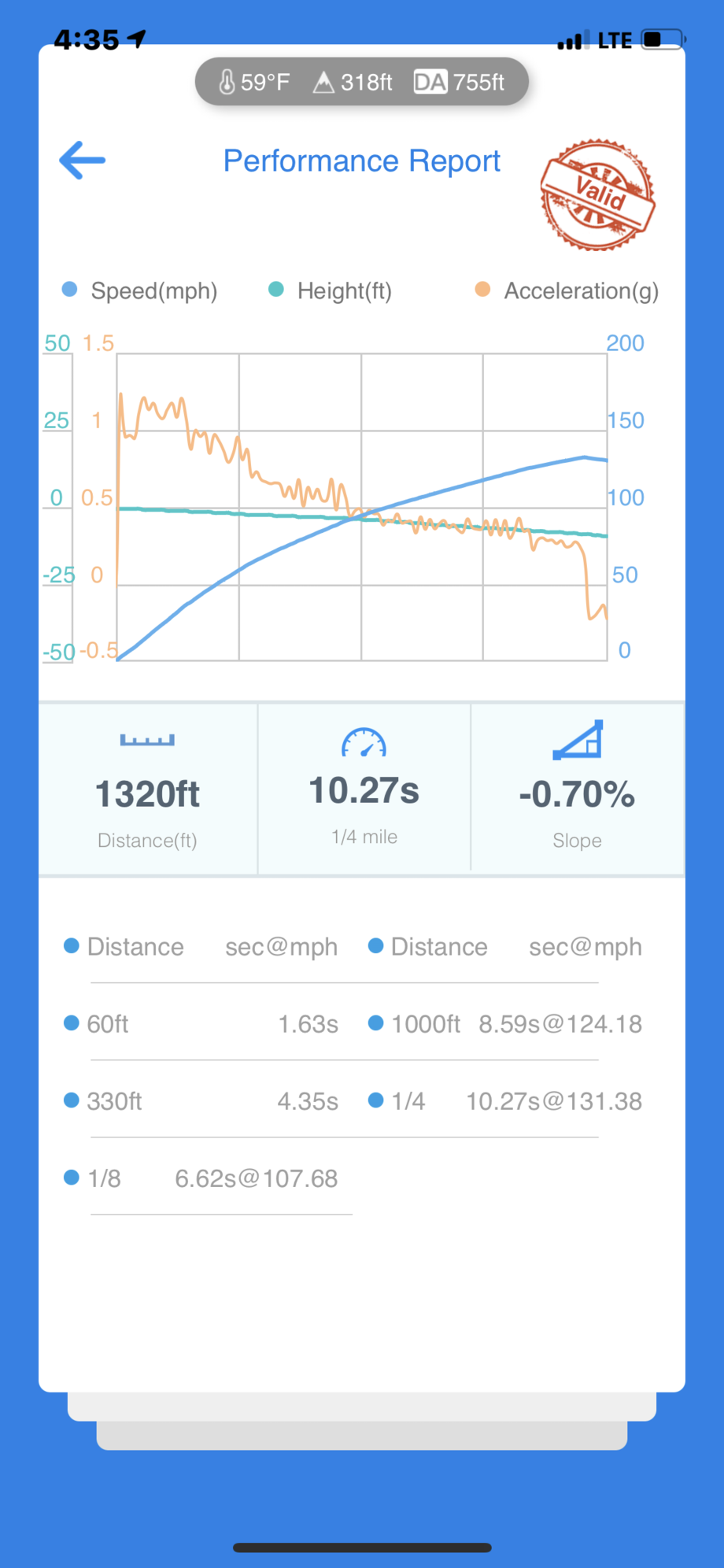
My dragracing days are over . I think I stopped doing burnouts in high school. I’m still always impressed By acceleration times. 11.1 is really strong what was the trap speed? I have a 992 manual and what I’m seeing on road tests for the car is 12.2 ,big difference! Carl
123MPH trap is strong. The car should be fun to drive on the street which is what the majority of us care about and there are many who aren't even concerned about that, just having a 911 in the garage is enough to satisfy their needs and desires. The guys who scour the internet for road course times and base their sports car purchases on these parameters are in a very distinct minority whether they realize that fact or not. Nothing wrong with this approach and how they prioritize but it just isn't what most of us do.
123MPH trap is strong. The car should be fun to drive on the street which is what the majority of us care about and there are many who aren't even concerned about that, just having a 911 in the garage is enough to satisfy their needs and desires. The guys who scour the internet for road course times and base their sports car purchases on these parameters are in a very distinct minority whether they realize that fact or not. Nothing wrong with this approach and how they prioritize but it just isn't what most of us do.
Yeah a 911 has been my dream car since I was a little kid. Didn't care about the performance numbers, just loved the car. Still do. But very impressed with the numbers
I respectfully disagree that we disagree. In other words we agree.
I attempted to preempt those who would say lap times are irrelevant on the street, and for race tracks with very high average speeds, that might be true.
Lap times for low to moderate speed tracks are in fact extremely relevant to street driving as you point out, and was exactly my point
Autocross lap times arguably even more so.
Yeah a 911 has been my dream car since I was a little kid. Didn't care about the performance numbers, just loved the car. Still do. But very impressed with the numbers
Glad to see that you are enjoying your 911. Trips to the drag strip are fun and don't require an abundance of skill, special equipment, and have minimal risk to you and your car.
No need to attend drag strips or perform stop light heroics, just pick up a Dragy and discover the actual gps based performance metrics of your car on your own terms.
The first attempt in my 992 TTS and I lifted before reaching the end (blue and orange lines dip before car reached 1320 ft)....
Now I know and have experienced the correlation between my actual numbers and what YouTubers and magazines have stated.... this car is a beast!!