








991 Fuel Consumption

Burning Brakes
Joined: May 2006
Posts: 897
Likes: 15

I don't know how much you use your 991, or if you use it everyday.
Personally, with Q7, everyday home-work trip for me is like 170-180km. 70% of trip is city road, 30% highway. Lets take 175km as average: 5 days a week X 175km = 875km/week. That's 270-280€ fuel per week.
This is my 4th year of this everyday 175km trip. For this everyday "trip" i drove cars like: Nissan GT-R, Ferrari 360, Audi RS4, Maserati Quattroporte, Shelby GT500. So that means I paid A LOT money for fuel, for 4 years
Personally, with Q7, everyday home-work trip for me is like 170-180km. 70% of trip is city road, 30% highway. Lets take 175km as average: 5 days a week X 175km = 875km/week. That's 270-280€ fuel per week.
This is my 4th year of this everyday 175km trip. For this everyday "trip" i drove cars like: Nissan GT-R, Ferrari 360, Audi RS4, Maserati Quattroporte, Shelby GT500. So that means I paid A LOT money for fuel, for 4 years
Racer
Joined: Apr 2008
Posts: 466
Likes: 6
From: Omaha, NE
Sorry, but I don't get this post. I don't have 911s for the mileage and I really don't care how much I get or don't get.
I purchased these as sports cars with that (sports), intended for the use. I am thinking about selling my M5, which probably doesn't get very good mileage, and ordering either a Panamera GTS or heavily loaded C4S. One question that I have never asked the Porsche or the BMW dealers is the MPG for these cars.
If the concern is MPG, then Porsche is NOT the car to buy. Of course, unless you are like my wife when she traded her Cayenne GTS for a Cayenne S Hybrid. There are the hybrid Cayennes also. But a 991 Hybrid - I hope not, it is alittle of an oxymoron.
I purchased these as sports cars with that (sports), intended for the use. I am thinking about selling my M5, which probably doesn't get very good mileage, and ordering either a Panamera GTS or heavily loaded C4S. One question that I have never asked the Porsche or the BMW dealers is the MPG for these cars.
If the concern is MPG, then Porsche is NOT the car to buy. Of course, unless you are like my wife when she traded her Cayenne GTS for a Cayenne S Hybrid. There are the hybrid Cayennes also. But a 991 Hybrid - I hope not, it is alittle of an oxymoron.
Burning Brakes
Joined: Mar 2004
Posts: 1,151
Likes: 0
From: Calif
well, for me, the 991 is just a comfortable car, it is not a sports car - maybe a touring car, but NOT NOT NOT a sports car - my morgan +4 is a sports car. The 991 has nice seats, it behaves like I want it to, and I see no reason to try and prove my manhood by outrunning a kid with a loud muffler. So, I at least appreciate getting decent mileage - it's reducing the carbon load on the environment and it saves a few dollars that can be put to other uses.
and by the way, why should a porsche not be a good car for MPG - my 356 averaged about 45 mpg and I once got 56 - that's still pretty good mileage despite over 50 years of technolgy - it wasn't fast, but it was comfortable
and by the way, why should a porsche not be a good car for MPG - my 356 averaged about 45 mpg and I once got 56 - that's still pretty good mileage despite over 50 years of technolgy - it wasn't fast, but it was comfortable

Racer
Joined: Aug 2012
Posts: 391
Likes: 0
Germans have better math skills than Americans. Most of us couldn't do the conversion if our lives depended on it.
MPG is a useless metric, the inverse of the correct metric. MPG makes a 50 MPG Prius and a 10 MPG Ferrari both look better than they really are.
When the U.S. government calculates "corporate average fuel economy," they actually use GPM.
MPG is a useless metric, the inverse of the correct metric. MPG makes a 50 MPG Prius and a 10 MPG Ferrari both look better than they really are.
When the U.S. government calculates "corporate average fuel economy," they actually use GPM.
Rennlist Stories
The Best Porsche Posts for Porsche Enthusiasts

Every Era of 911 Owner Explained in One Sentence
Verdad Gallardo
Thinking of Buying a Porsche? Do These 10 Things First
Joe Kucinski
Pixar Pals Turned Into 1-of-1 Porsches!
Michael S. Palmer
Theon Goes Full Carbon Fiber With Stunning New Build
Verdad Gallardo
Genius Porsche-Themed Gifts That'll Make Any Dad or Grad Smile
Joe Kucinski
10 Used Porsches Are Selling for Way Too Cheap
Joe Kucinski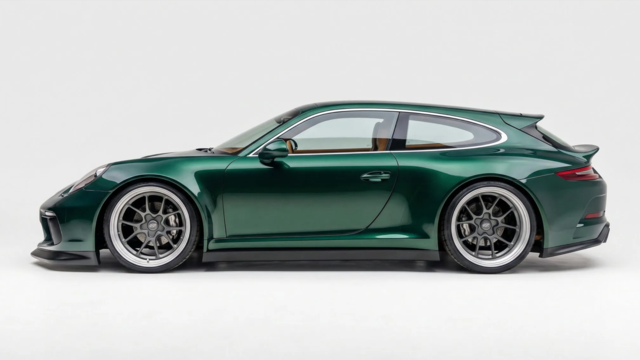
Tuner Is Converting Porsche 911s Into Shooting Brakes
Verdad Gallardo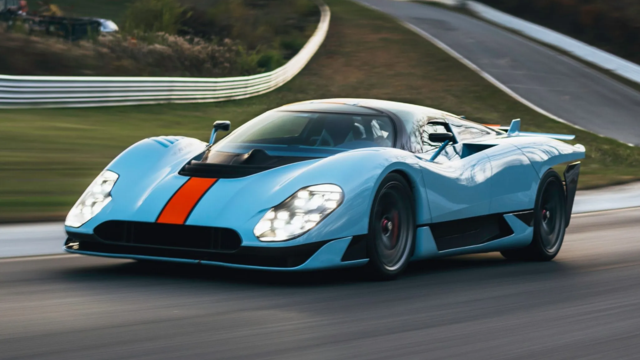
This Coachbuilt Creation Is A Modern Take on the Legendary Porsche 917
Verdad Gallardo
Is This Convertible Cayenne A Steal, Or A Returnless Investment?
Verdad Gallardo
Burning Brakes
Joined: Mar 2004
Posts: 1,151
Likes: 0
From: Calif
Germans have better math skills than Americans. Most of us couldn't do the conversion if our lives depended on it.
MPG is a useless metric, the inverse of the correct metric. MPG makes a 50 MPG Prius and a 10 MPG Ferrari both look better than they really are.
When the U.S. government calculates "corporate average fuel economy," they actually use GPM.
MPG is a useless metric, the inverse of the correct metric. MPG makes a 50 MPG Prius and a 10 MPG Ferrari both look better than they really are.
When the U.S. government calculates "corporate average fuel economy," they actually use GPM.

Intermediate
Joined: Jul 2012
Posts: 33
Likes: 0
From: Hampshire - United Kingdom
i guess it's great to have an option of being super fuel efficient or a hooligan as mood dictates.
Love my 911 BTW - having come from an Audi RS5 it's SO much more together
m33

AutoX
Joined: Jun 2012
Posts: 14
Likes: 0
I picked up car on a European Delivery and am averaging 22mph on mixed driving thru Germany / Austria. Have 2000km on car so still in break in mode. In regular hwy driving the mileage is very good and naturally drops in mountain driving in sport mode.

Pro
Joined: Jul 2012
Posts: 616
Likes: 2
I get 26-27mpg on the freeway on the way to the track and 9-10mpg on the track. I love the fact that it is comfortable on the way there and gets decent mileage. I also love that with the push of a few buttons (Sport Plus, Sport Suspension, rear wing up, AC off) the 991S becomes a pretty fast sports car. It's way more than just a touring car if you want to explore its capabilities and learn how to drive it.
That's why I got the 991S because it does comfy and fast exceedingly well.
That's why I got the 991S because it does comfy and fast exceedingly well.
Racer
Joined: Aug 2012
Posts: 391
Likes: 0
could you please explain the above? there is an absolute 1 to 1 equivalence between miles per gallon and gallons per mile - your above two numbers turn into .020 for the prius and .1 for the Ferrari - why is one useful and the other not useful? This makes no sense at all.
Now, you upgrade to a 20 MPG vehicle. You’ll use 500 gallons per year, a savings of 500 gallons.
Then you get really tree-hugging green and upgrade/downgrade to a 30 MPG vehicle. You’ll use 333.3 gallons per year, saving 166.7 gallons per year. This second upgrade has a significantly diminished return than your first one (10 MPG to 20 MPG).
O.k., now you go militantly green and upgrade to a 40 MPG vehicle. You’ll use 250 gallons per year with a savings of 83.3 gallons over your 30 MPG vehicle.
With your fourth upgrade to a 50 MPG vehicle, you’re down to 200 gallons per year, with a savings of 50 only gallons per year.
Gallons/year vs. MPG would be a 1/X graph, very steep downward a low values of MPG, and almost flat at high values of MPG. I gotta’ go to work, so I don’t have time to make, .jpg, and post a draft.
Gallons/year vs. GPM would be a straight line graph.
So, if you’re driving a 20 MPG Porsche and upgrade to a 10 MPG Ferrari the logic that “it’s only a 10 MPG reduction” doesn’t really describe the increased fuel use you will have (500 gallons/year). Similarly the tree-hugger bragging has he’s gone form a 30 MPG car to a 40 MPG car really isn’t the big deal he’s making it out to be (only 83.3 gallons/year). Each driver changed their MPG only 10 MPG, but with drastically different consequences (the good not really being that good, the bad being really bad).
Here’s another example of MPG being the wrong metric.
Family A has two cars, each driving 10,000 miles/year: a 20 MPG car and a 30 MPG car. Their average MPG is 25. But their fuel used is 500 plus 333.3, or 833.3 gallons per year.
Family B has two 25 MPG cars, each driving 10,000 miles/year. Their annual fuel use is 800 gallons per year.
Both families have two cars with an average MPG of 25, but Family B uses less gas. This is why the EPA calculates C.A.F.E. in 1/MPG or GPM, and then flips the final answer to get the corporate MPG. The math geeks call this “geometric averaging.”
This 1/x thing also shows up in the benefits of insulation thickness in buildings. Heat flow is inversely proportional to the thickness of the insulation. Going from 3.5 inches to 5.5 inches makes a pretty good difference (1.57 times more insulation, but 36% reduction in heat flow). But, going to 11 inches from 3.5 would take 3.14 times the insulation but reduce heat flow only 68%. The more insulation you use, the less the additional benefit. Eventually, you’re better off spending money elsewhere to reduce energy costs.
Last edited by goatboy; Oct 1, 2012 at 08:43 PM. Reason: INVERSELY proportional...

Instructor
Joined: Mar 2012
Posts: 249
Likes: 7
From: San Francisco
I'm always a little perplexed about conversations regarding the cost of fuel for cars that cost >$100k. In the greater scheme of things, is it significant? If the cost of something like fuel really bothered me, I'd be buying a 5 year old diesel VW Golf or a 30 year old MB W123 to run on waste cooking oil/biodiesel.
Unless someone else is paying for all the 991 costs (note, maintenance etc.) except fuel or you are putting intergalactic travel miles on it, fuel is really a small piece of the total cost of ownership.
Unless someone else is paying for all the 991 costs (note, maintenance etc.) except fuel or you are putting intergalactic travel miles on it, fuel is really a small piece of the total cost of ownership.