



Grinding noise after clutch change.
Thread Starter
Racer

Joined: Mar 2005
Posts: 459
Likes: 10
From: Malaga (SPAIN)
 Grinding noise after clutch change - SOLVED
Today I finally fire up the car after a reseal due to a head stud failure.<br />After some electrical mistake, I got it to run fine and smoothly, but I get a grinding noise when pressing the clutch pedal.<br />Clutch kit and flywheel are new.<br />Probable the source of the problem is that I used some regular bolts for the clutch it’s self (did not have the right ones…..). I used some allen head bolts, which are probably 2-3 mm taller that the torx ones.<br />Just when I start pressing the pedal I get the grinding noise. Did not fully depressed since I am afraid of damaging something.<br />I attached a video with the noise coming on and off.<br />Any ideas would be very much appreciated.<br />Is the space so tight that 2-3 mm difference are making the bolt touch the gearbox cover?<br />Thanks,
Last edited by MA7008O; Dec 27, 2017 at 02:57 PM.
Rennlist Member

Joined: May 2001
Posts: 13,507
Likes: 834
From: Auckland, New Zealand.
Sure sounds like a rotating object hitting something on a regular basis. A bolt head hitting something is a real possibility. Sorry I can't be more positive, but as I suspect you already know there is only one way to sort this.....
Burning Brakes
Joined: Mar 2004
Posts: 767
Likes: 16
From: Texas
Per my Indy...
"Short head 12 point bolts are needed (these are factory) . When the clutch releases it is pulling the pressure plate assembly into the belhousing causing more interference than it already has. Also need to make sure the disc is installed correctly "transmission side" should be indicated. You could potentially change the bolts through the starter hole. The bolt heads will likely have aluminum on them (from the bell housing)"
I was trying to visualize the issue as I just had all this apart and was trying to picture why you would have a problem.
Also, did you install a dual mass flywheel or convert to single mass?
"Short head 12 point bolts are needed (these are factory) . When the clutch releases it is pulling the pressure plate assembly into the belhousing causing more interference than it already has. Also need to make sure the disc is installed correctly "transmission side" should be indicated. You could potentially change the bolts through the starter hole. The bolt heads will likely have aluminum on them (from the bell housing)"
I was trying to visualize the issue as I just had all this apart and was trying to picture why you would have a problem.
Also, did you install a dual mass flywheel or convert to single mass?
Thread Starter
Racer
Joined: Mar 2005
Posts: 459
Likes: 10
From: Malaga (SPAIN)
Per my Indy...
"Short head 12 point bolts are needed (these are factory) . When the clutch releases it is pulling the pressure plate assembly into the belhousing causing more interference than it already has. Also need to make sure the disc is installed correctly "transmission side" should be indicated. You could potentially change the bolts through the starter hole. The bolt heads will likely have aluminum on them (from the bell housing)"
I was trying to visualize the issue as I just had all this apart and was trying to picture why you would have a problem.
Also, did you install a dual mass flywheel or convert to single mass?
"Short head 12 point bolts are needed (these are factory) . When the clutch releases it is pulling the pressure plate assembly into the belhousing causing more interference than it already has. Also need to make sure the disc is installed correctly "transmission side" should be indicated. You could potentially change the bolts through the starter hole. The bolt heads will likely have aluminum on them (from the bell housing)"
I was trying to visualize the issue as I just had all this apart and was trying to picture why you would have a problem.
Also, did you install a dual mass flywheel or convert to single mass?
Interfreance is the key I think.
Thread Starter
Racer
Joined: Mar 2005
Posts: 459
Likes: 10
From: Malaga (SPAIN)

IHI KING!
Rennlist Member
Rennlist Member
Joined: Aug 2001
Posts: 13,400
Likes: 230
From: Nashua, New Hampshire, USA
Yes, the bolt heads as most likely too tall. When I bought my C2 and a few years later, we had the engine out for some work, we discovered that the bell housing was all scratched up. Turns out the previous owner had substitute the wrong bolts on the pressure plate. I recommend using the original style bolts.
Trending Topics
Burning Brakes
Joined: Mar 2004
Posts: 767
Likes: 16
From: Texas
Pull the starter first and look inside. My guys are telling me you should be able to see the bolts through there. My understand is you might even be able to swap the bolts out through that hole. If nothing else you should be able to inspect to see if they are what is grinding. This route is far better than dropping the motor first....
Are you certain the clutch disk is not in backwards?
Did your pressure plate/clutch kit not have bolts with it? I seem to remember my Sachs kit had all the hardware....
Are you certain the clutch disk is not in backwards?
Did your pressure plate/clutch kit not have bolts with it? I seem to remember my Sachs kit had all the hardware....
Rennlist Stories
The Best Porsche Posts for Porsche Enthusiasts

Every Era of 911 Owner Explained in One Sentence
Verdad Gallardo
Thinking of Buying a Porsche? Do These 10 Things First
Joe Kucinski
Pixar Pals Turned Into 1-of-1 Porsches!
Michael S. Palmer
Theon Goes Full Carbon Fiber With Stunning New Build
Verdad Gallardo
Genius Porsche-Themed Gifts That'll Make Any Dad or Grad Smile
Joe Kucinski
10 Used Porsches Are Selling for Way Too Cheap
Joe Kucinski
Tuner Is Converting Porsche 911s Into Shooting Brakes
Verdad Gallardo
This Coachbuilt Creation Is A Modern Take on the Legendary Porsche 917
Verdad Gallardo
Is This Convertible Cayenne A Steal, Or A Returnless Investment?
Verdad Gallardo
Thread Starter
Racer
Joined: Mar 2005
Posts: 459
Likes: 10
From: Malaga (SPAIN)
Pull the starter first and look inside. My guys are telling me you should be able to see the bolts through there. My understand is you might even be able to swap the bolts out through that hole. If nothing else you should be able to inspect to see if they are what is grinding. This route is far better than dropping the motor first....
Are you certain the clutch disk is not in backwards?
Did your pressure plate/clutch kit not have bolts with it? I seem to remember my Sachs kit had all the hardware....
Are you certain the clutch disk is not in backwards?
Did your pressure plate/clutch kit not have bolts with it? I seem to remember my Sachs kit had all the hardware....
As far as the clutch disk, now you make me doubt, seriously…. Any way to check???
I am certain that I did no use the proper bolts. The ones I used are 2-3 mm longer at the head.
Thanks,
Technical Guru
Rennlist Member
Rennlist Member
Joined: May 2002
Posts: 8,138
Likes: 122
From: USVI
Did you adjust the clutch pedal stop after installing the new pieces? There is an opening on the bottom of the bell-housing that you can see the bolt heads from, no need to remove the starter. You can also look through the opening on the opposite side (from the starter) of the bell-housing. If the noise is coming from the release fork hitting the front of the pressure plate (incorrectly adjusted clutch pedal stop) you'll see wear on the perimeter of the pressure plate and not on the bolts.
Thread Starter
Racer
Joined: Mar 2005
Posts: 459
Likes: 10
From: Malaga (SPAIN)
Did you adjust the clutch pedal stop after installing the new pieces? There is an opening on the bottom of the bell-housing that you can see the bolt heads from, no need to remove the starter. You can also look through the opening on the opposite side (from the starter) of the bell-housing. If the noise is coming from the release fork hitting the front of the pressure plate (incorrectly adjusted clutch pedal stop) you'll see wear on the perimeter of the pressure plate and not on the bolts.
The noise starts just when I start to press the pedal, after the normal “non-actuating” free play.
Could you explain it to me, please?
Thanks,
Technical Guru
Rennlist Member
Rennlist Member
Joined: May 2002
Posts: 8,138
Likes: 122
From: USVI
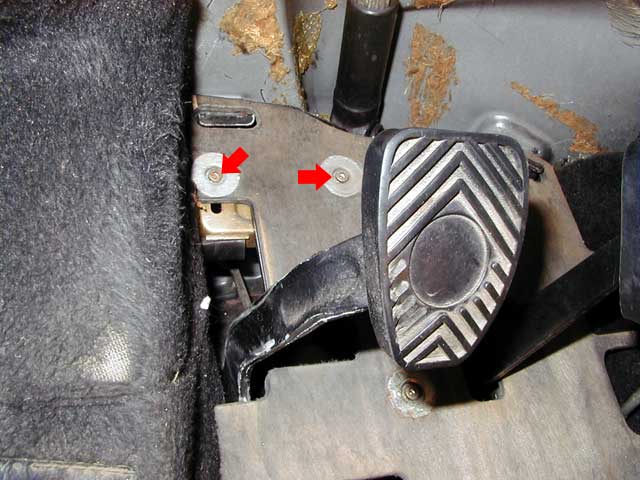
Loosen the fasteners pointed at by the red arrows to move the pedal stop (black rubber directly behind the pedal) and then
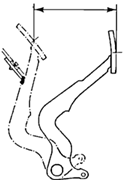
use a piece of string or a ruler. The spec for total pedal travel is (150mm ± 5).
Thread Starter
Racer
Joined: Mar 2005
Posts: 459
Likes: 10
From: Malaga (SPAIN)
This procedure is to regulate how far does the pedal travel, right?
I mean, the pedal is supposed to be all the way up, and this procedure is to regulate that it does not goes too far, correct?
If I am correct, this is not the source of the noise, since it starts just by depressing the pedal a little bit, not when it is pressed fully (which actually I haven’t done with engine on due to the noise).
Thanks again,
Technical Guru
Rennlist Member
Rennlist Member
Joined: May 2002
Posts: 8,138
Likes: 122
From: USVI
Originally Posted by MA70080
it starts just by depressing the pedal a little bit
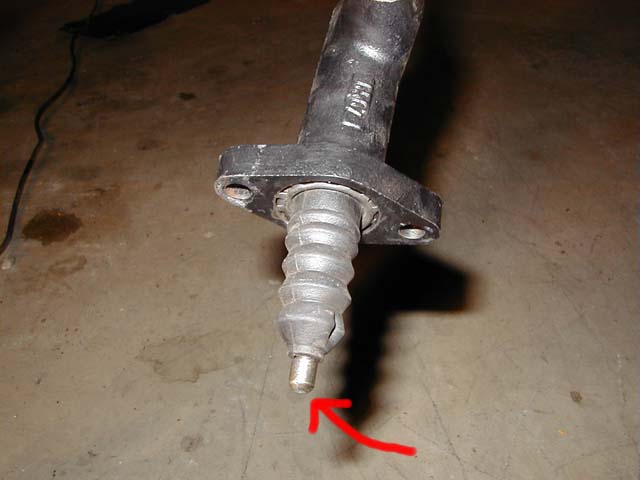
resting in the receiving cup of the release fork?
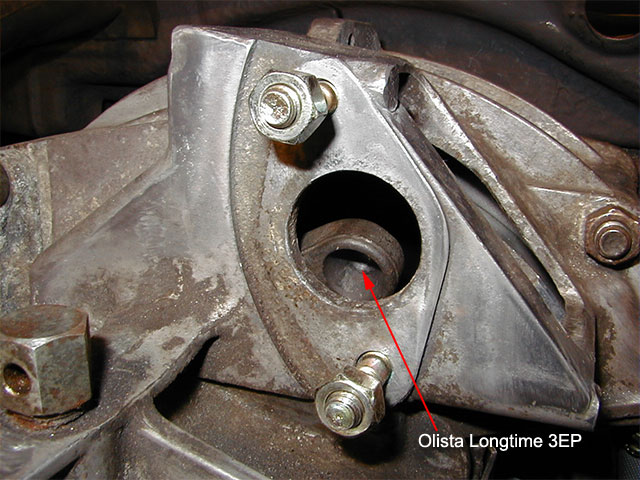
I guess I would start by looking through the opening on the bottom of the bell-housing, if nothing looks out of the ordinary down there. Then head over to the side opening of the bell-housing on the driver's (left - opposite of the starter) side.