



Static Spring Rates

Thread Starter
Rennlist Member


Joined: Aug 2010
Posts: 8,468
Likes: 202
From: USA
 Static Spring Rates
Looking for static spring rates for earlier "S" type cars that I believe have the green markings. We have springs at the shop that are marked brown and believe are off of the 79. OEM for the 79 are: front: 215 lbs./inch and rear: 120 lbs./inch. TIA. T
Rennlist Member
Joined: Feb 2010
Posts: 1,350
Likes: 79
From: Tucson,AZ
Tony,
WSM page 40-46 (Suspension volume) has the spring rates for brown markings. Depending on how many brown dots you have it varies from 6375 N - 6570 N for one dot, to 6767 N - 6963 N for three dots. Compressed distance is 191mm at that force. Spring length should be 340 mm uncompressed for new springs with brown markings. So if I understand it correctly, it takes 6375 N to compress the spring 191 mm. Now you just have to convert that to lb/inches
Here is one link: http://www.leespring.com/tolerance1.asp
Another: http://people.physics.anu.edu.au/~am..._conversio.htm
And one more: http://www.proshocks.com/calcs/coilsprate.htm
Cheers!
Carl
WSM page 40-46 (Suspension volume) has the spring rates for brown markings. Depending on how many brown dots you have it varies from 6375 N - 6570 N for one dot, to 6767 N - 6963 N for three dots. Compressed distance is 191mm at that force. Spring length should be 340 mm uncompressed for new springs with brown markings. So if I understand it correctly, it takes 6375 N to compress the spring 191 mm. Now you just have to convert that to lb/inches
Here is one link: http://www.leespring.com/tolerance1.asp
Another: http://people.physics.anu.edu.au/~am..._conversio.htm
And one more: http://www.proshocks.com/calcs/coilsprate.htm
Cheers!
Carl

Developer
Joined: Dec 2001
Posts: 7,005
Likes: 64
From: Horicon, WI
That's really good information, Carl
Years ago, I took a set of stock 1982 non-S springs to a shop that had a spring measuring stand to measure their spring rate. We brought them down into the center of their range and they measured 215 lb/ft in the front and 120 lb/ft in the rear. I always thought that low, but that's what the machine said.
Later, we had a customer who wanted just to replace his springs with stock spring rates. He just wanted new springs of OEM stiffness. When we used these numbers, the curb height stood too low and the suspension was very soft. We fitted others, and arrived at 300 lb/fronts and 200 lb/ft rears to get a very stock-like look and feel. This is likely just a small bit stiffer than OEM for that year/model.
I have since installed several sets of these, and the results are repeatable. For this year/model, 300 lb/ft fronts and 200 lb/ft rears produce a setup very close to stock.
I hope this info is useful for you.
Years ago, I took a set of stock 1982 non-S springs to a shop that had a spring measuring stand to measure their spring rate. We brought them down into the center of their range and they measured 215 lb/ft in the front and 120 lb/ft in the rear. I always thought that low, but that's what the machine said.
Later, we had a customer who wanted just to replace his springs with stock spring rates. He just wanted new springs of OEM stiffness. When we used these numbers, the curb height stood too low and the suspension was very soft. We fitted others, and arrived at 300 lb/fronts and 200 lb/ft rears to get a very stock-like look and feel. This is likely just a small bit stiffer than OEM for that year/model.
I have since installed several sets of these, and the results are repeatable. For this year/model, 300 lb/ft fronts and 200 lb/ft rears produce a setup very close to stock.
I hope this info is useful for you.
Rennlist Member
Joined: Feb 2010
Posts: 1,350
Likes: 79
From: Tucson,AZ
Thanks Carl,
Doing the math with above links, I come up with a spring rate of about 208 lb/inch for the front. Can't find any info for the rear springs. It is low, but close to what you measured. I wonder how much "spring rate" the lower A-arm rubber bushings add to the package?
Was that customer using springs of the exact same length or shorter springs with same rate?
Cheers!
Carl
Doing the math with above links, I come up with a spring rate of about 208 lb/inch for the front. Can't find any info for the rear springs. It is low, but close to what you measured. I wonder how much "spring rate" the lower A-arm rubber bushings add to the package?
Was that customer using springs of the exact same length or shorter springs with same rate?
Cheers!
Carl
Developer
Joined: Dec 2001
Posts: 7,005
Likes: 64
From: Horicon, WI
It was one of our Hypercoil/Koni shock setups that he wanted to emulate stock springs. That means we would have been using an 8" tall spring in the front and a 12" tall spring in the rear. Like this:
Thread Starter
Rennlist Member
Joined: Aug 2010
Posts: 8,468
Likes: 202
From: USA
Thanks for the info Carl & Carl. Used the pro shocks link Carl (FLYVMO) provided above for the following calculations. Here is how the front spring rates fared. OEM wire diameter.574, Weltmeister .622, both spring diameters were the same at 5.12, and both have 6 active spring coils. OEM free length: 350mm, Weltmeister: 260mm ! So it looks like if one coil were removed, the OEM spring rate would be 324.9 and if 1.5 coils were removed the OEM spring rate would be 361.0. T
Rennlist Member
Joined: Feb 2010
Posts: 1,350
Likes: 79
From: Tucson,AZ
Awesome Tony!
You're a real math wizard! Good info, thanks for posting it. Let me know how the cutting works out with the front adjustment issue.
Edit: With same calculator, stock spring rate comes out to 270...higher than I thought, and higher than measured by Carl earlier.
Cheers!
Carl
You're a real math wizard! Good info, thanks for posting it. Let me know how the cutting works out with the front adjustment issue.
Edit: With same calculator, stock spring rate comes out to 270...higher than I thought, and higher than measured by Carl earlier.
Cheers!
Carl
Trending Topics
Thread Starter
Rennlist Member
Joined: Aug 2010
Posts: 8,468
Likes: 202
From: USA
Awesome Tony!
You're a real math wizard! Good info, thanks for posting it. Let me know how the cutting works out with the front adjustment issue.
Edit: With same calculator, stock spring rate comes out to 270...higher than I thought, and higher than measured by Carl earlier.
Cheers!
Carl
You're a real math wizard! Good info, thanks for posting it. Let me know how the cutting works out with the front adjustment issue.
Edit: With same calculator, stock spring rate comes out to 270...higher than I thought, and higher than measured by Carl earlier.
Cheers!
Carl
Last edited by 77tony; Aug 13, 2014 at 12:02 AM.
Rennlist Stories
The Best Porsche Posts for Porsche Enthusiasts
Porsche's Top 5 Most Questionable Naming Decisions
Verdad Gallardo
Pogea Racing's 964 Porsche 911 Reimagination Stands Out in a Crowded Field
Verdad Gallardo
6 Convertible Top MYTHS Most People Don't Understand!
Michael S. Palmer
2026 Porsche 911 Club Coupe is Spectacular, And Everything Wrong with the Porsche Market
Joe Kucinski
Talos Takes Your 991 Porsche 911 GT3 to the Next Level for a Cool $1.13 Million
Verdad Gallardo
9 Vehicles Porsche Helped Engineer that Aren't Porsches
Verdad Gallardo
9 Features and Characteristics That Only Porsche People Understand
Verdad Gallardo
I've Written 500 Rennlist Articles: Here's How Porsche Has Changed Along the Way
Joe Kucinski
10 Most Unnecessary Porsches Ever Built (And Why We Love Them)
Verdad Gallardo
Rennlist Member
Joined: Feb 2009
Posts: 1,202
Likes: 99
From: Gainesville, FL
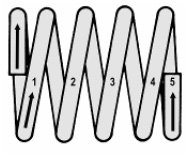
Tony - doing some research and digging into understanding coil / spring calculations. You mentioned 6 active coils in your formula. Are you sure it would not be 7 coils? Based on this link I think you count the final (i.e the top or bottom, not both) coil as well as the internal coils. http://springipedia.com/compression-counting-coils.asp
Thread Starter
Rennlist Member
Joined: Aug 2010
Posts: 8,468
Likes: 202
From: USA
Tony - doing some research and digging into understanding coil / spring calculations. You mentioned 6 active coils in your formula. Are you sure it would not be 7 coils? Based on this link I think you count the final (i.e the top or bottom, not both) coil as well as the internal coils. http://springipedia.com/compression-counting-coils.asp
could chime in here. T
Nordschleife Master

Joined: Jul 2003
Posts: 7,743
Likes: 78
From: Minneapolis
The springs are rated at the total force at a compressed height. You can't work back from these numbers as it doesn't say how much it was compressed to get here. The figures say it's applying roughly 1500 pounds when compressed to 8 inches. This helps set even spring heights which is especially important for the non-adjustable fronts on OBs.
To the last post:
Springs aren't "bending" and much as the wire is twisting. It's not real important, but I think it's interesting. Halps to figure out what shortening the coils does. Reduce it by X percent and it's 1/X percent stiffer. For example, if you cut off 50% (1/2) then it's 200% (2x) stiffer. Math is fun.
So... If you cut 1.5 coils off a 7 coil spring it'll be 27% stiffer. That makes a 300 lb/in spring a 381. If it was supporting an 8" spring supporting 900 pounds, the old compressed height was 5" and the new height is 3.1".

Pro
Joined: Mar 2009
Posts: 631
Likes: 16
From: Brisbane, Australia.
Tony - doing some research and digging into understanding coil / spring calculations. You mentioned 6 active coils in your formula. Are you sure it would not be 7 coils? Based on this link I think you count the final (i.e the top or bottom, not both) coil as well as the internal coils. http://springipedia.com/compression-counting-coils.asp
928 springs are 'open' coil. This allows every coil to be active. Means U can do more with the spring in limited space.
By cutting off a coil you will actually increase the spring rate since the total shorter length of wire will have to twist more per inch of suspension travel.
Leave everything as is. In everyday driving you wont notice the difference.
Cheers.
Upfixen.
1990 GT. 1000lb/in fronts. 800lb/in rear. Revalved Konis.
Rennlist Member
Joined: Feb 2010
Posts: 1,350
Likes: 79
From: Tucson,AZ
Going back a bit...
The springs are rated at the total force at a compressed height. You can't work back from these numbers as it doesn't say how much it was compressed to get here. The figures say it's applying roughly 1500 pounds when compressed to 8 inches. This helps set even spring heights which is especially important for the non-adjustable fronts on OBs.
To the last post:
Springs aren't "bending" and much as the wire is twisting. It's not real important, but I think it's interesting. Halps to figure out what shortening the coils does. Reduce it by X percent and it's 1/X percent stiffer. For example, if you cut off 50% (1/2) then it's 200% (2x) stiffer. Math is fun.
So... If you cut 1.5 coils off a 7 coil spring it'll be 27% stiffer. That makes a 300 lb/in spring a 381. If it was supporting an 8" spring supporting 900 pounds, the old compressed height was 5" and the new height is 3.1".
The springs are rated at the total force at a compressed height. You can't work back from these numbers as it doesn't say how much it was compressed to get here. The figures say it's applying roughly 1500 pounds when compressed to 8 inches. This helps set even spring heights which is especially important for the non-adjustable fronts on OBs.
To the last post:
Springs aren't "bending" and much as the wire is twisting. It's not real important, but I think it's interesting. Halps to figure out what shortening the coils does. Reduce it by X percent and it's 1/X percent stiffer. For example, if you cut off 50% (1/2) then it's 200% (2x) stiffer. Math is fun.
So... If you cut 1.5 coils off a 7 coil spring it'll be 27% stiffer. That makes a 300 lb/in spring a 381. If it was supporting an 8" spring supporting 900 pounds, the old compressed height was 5" and the new height is 3.1".
Cheers!
Carl
Nordschleife Master
Joined: Jul 2003
Posts: 7,743
Likes: 78
From: Minneapolis
The problem is that Porsche doesn't spec the free length, only the compressed height and force. If you're sure the free length is X and it has force F compressed to Y then the rate is F/(X-Y). Porsche specs the springs as "F at Y."
Rennlist Member
Joined: Feb 2010
Posts: 1,350
Likes: 79
From: Tucson,AZ
Hi Glen
Maybe I am misunderstanding the shop manuals then, but they do list the free lengths, see below, rightmost column:
This makes me come up with either 208 or 267 lb/inches depending on how you interpret L1. If L1=length of entire spring when compressed then it is 208 lb/inches. If L1=distance compressed then 267 lb/inches. I did guesstimate that it was the first number since it corresponds closely to what has been measured. Although I can't tell for sure what spring the test was done on.
Cheers!
Carl
Maybe I am misunderstanding the shop manuals then, but they do list the free lengths, see below, rightmost column:
This makes me come up with either 208 or 267 lb/inches depending on how you interpret L1. If L1=length of entire spring when compressed then it is 208 lb/inches. If L1=distance compressed then 267 lb/inches. I did guesstimate that it was the first number since it corresponds closely to what has been measured. Although I can't tell for sure what spring the test was done on.
Cheers!
Carl