
Roadtaxes again


Thread Starter
Three Wheelin'

Joined: Jan 2003
Posts: 1,986
Likes: 86
From: Netherlands
 Roadtaxes again
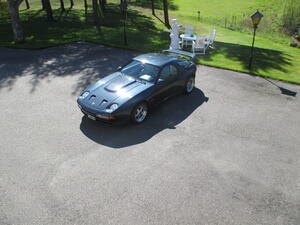
In the Netherlands, up until now, classic cars older than 25 years were free from roadtaxes. This has been the reason for people to use old junkcars as their dd, thereby increasing the number of old cars on the road, including the dirty old diesels that were cheap at the gasstation. To counteract that, government has changed the roadtax rules. Only cars that are older than 40 years are free from roadtax as from 1-JAN-2014. Cars that are between 25 and 40 years old have to pay a limited amount with a maximum of EUR 120 per year if they on't drive in december, jan, feb, march. If you want to drive your classic all year round, you'll have to pay the full amount. Perhaps this will increase the interest in model-T's and model-A's again. Perhaps a model-A with a V8 will increase in value now? Try to grab one overhere! The value of OB 928's will certainly decrease. It is already very hard to sell rhese cars. It will be near imposible now. There are like 20 of these cars for sale in NL but there are not 20 propective buyers.
Addict
Rennlist Member
Rennlist Member
Joined: Jun 2003
Posts: 9,386
Likes: 72
From: Helsinki, Finland
At least you didn't get planned GPS based monitoring system what was under works while back. In here very similar plan was presented yesterday. Its likely to go ahead in few years. Germany is taking kilometer based road tax into use and Denmark is likely to follow. In Finland high purchase tax is basically going to die since its fashionably tied to CO2 emissions. Hybrids are geting close to 0g/km on EU cycle meaning purchase tax is going down fast. Usual daily trips can be done in future with just electric power so fuel tax results are going down also. Its virtually impossible to tax electricity used in cars differently than other use. Solution is to track individual car moment and tax by kilometers driven, where they were driven, what time etc. Big brother is coming into our cars.

Shameful Thread Killer
Rennlist Member
Rennlist Member
Joined: Aug 2004
Posts: 19,886
Likes: 151
From: Rep of Texas, N NM, Rockies, SoCal
Good reason to buy a 1974 Matra Bagheera. 40 YO, no tax, good gas mileage, three seats, and it should last a good 3-4 months before the pan rusts away under your butt!



Thread Starter
Three Wheelin'
Joined: Jan 2003
Posts: 1,986
Likes: 86
From: Netherlands
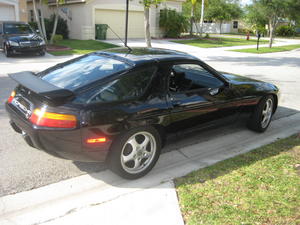
We pay for using the road with roadtaxes for our dd's, decent family cars and company cars. Classic cars are mostly used for very a limited amount of km's, say 5000 km max per year. Some of these cars (the more valuable ones) will probably cover no more than 500 km's per year. People with a collection of cars will have a large bill for all those roadtaxes while covering very little km's.
Addict
Rennlist Member
Rennlist Member
Joined: Jun 2003
Posts: 9,386
Likes: 72
From: Helsinki, Finland
Cheapest new Porsche Boxster is $103K in here. $33K of it is car import tax and price also includes 24% VAT. Porsche factory will barely get $40K out of the total price. Import tax is based on CO2 emissions and cars list price. Fuel tax is something like $4/gallon and 24% VAT is added to it also. Yearly road tax depends on CO2 emissions. For 928 its maybe $300/year.
Problem is that both import and fuel tax revenue is going down in near future. New 918 has CO2 of only 79g. This means importing it gives about same import tax as normal 991 Turbo S which has CO2 of 227g. $150K tax for $1200K list price 918 vs $165K for $436K Turbo S PDK. Next generation hybrid models from Porsche will have 0g or very close to it meaning import tax is going down to near $0.00 from $30-175K what its on current lineup. Same is happeing in normal cars like VW Golfs etc. Average new car CO2 is now 130-140g. In next 10 years its going to be very close to 0g. Only real option is to replace import and fuel tax with kilometer based system where driven distance, where it was driven, when and with what car is used as basis for tax. One good byproduct of this is that removing import tax will lower expensive sport car prices down a lot. $30K saved in Boxster purchase will never be collected back by other means. Especially when they are usually driven only part of the year and much less than average family cars. This will also mean I don't have to pay $50K import tax to get $50K Ferrari 550 Maranello from Italy or in some years from now $50K early Aston Martin DB9 into local plates.