


Aligning converter plug for ATF change?


Thread Starter
Advanced
Joined: Dec 2001
Posts: 68
Likes: 0
From: Redwood City, CA.
 Aligning converter plug for ATF change?
I have to do a ATF change and I read the repair manual and the Nichol's tips, but I have one question still. To drain the converter, they all say to turn the crankshaft to get the plug lined up in the access window. Now this is where I start to look stupid. I assume my crankshaft is the center pulley, down at the bottom looking from the front of the engine. The pulley looks to be shielded by some piece of metal and connects indiretcly to the radiator fan in front of it. I can access the bolt on that pulley from the side and the bolt seems like a 1-1/16". Am I on the right track here? Can I just slap a socket on that and give it a pull(clockwise of course)? Do I need to worry about overtorqueing that bolt? Is there a better way to align the converter drain plug?

Rennlist Member
Rennlist Site Sponsor

Joined: Jun 2001
Posts: 6,469
Likes: 13
From: Ball Ground, GA

Yes, that is how they tell you to do it. Looks like a two-person job to me!
Don't worry about overtorquing that particular bolt - I have sheared a Craftsman 1/2" extension trying to get one loose!
Don't worry about overtorquing that particular bolt - I have sheared a Craftsman 1/2" extension trying to get one loose!

Instructor
Joined: Mar 2002
Posts: 136
Likes: 0
From: Maidenhead U.K.
the eay i did it was to put the car on ramps in neutral(blocked up of course).get a screwdriver and carefully spin the converter through the window until you see the plug.
cheers
Tim euro 84 s2 auto
cheers
Tim euro 84 s2 auto
Guest
Posts: n/a
I also did it Tim's way - one person job then, no problems experienced. Watch that you get the pan gasket seated squarely as you tighten the bolts - mine had taken a set from cramped storage and gave me a hard time. Also, read the book notes on refill procedure - get as much in as possible (4Litres?) before starting engine so there will be room to add the rest.
jp
jp
Thread Starter
Advanced
Joined: Dec 2001
Posts: 68
Likes: 0
From: Redwood City, CA.
Thanks for the tips guys. Is it important which way to spin the converter with the screwdriver technique? I thought since it was important to spin the crankshaft clockwise, the converter might have a similar need. Perhaps it only turns one way? Should I expect this thing to turn easy or will I need to really put some muscle into it?
Trending Topics
Three Wheelin'
Joined: May 2001
Posts: 1,641
Likes: 0
From: Hudson Valley NY
Turn the torque converter in the direction of engine rotation only; it turns the engine via torque tube. ( TB TENTIONNER)
Steve C
The Great White
<img src="graemlins/beerchug.gif" border="0" alt="[cheers]" />
Steve C
The Great White
<img src="graemlins/beerchug.gif" border="0" alt="[cheers]" />

Addict
Lifetime Rennlist
Member
Lifetime Rennlist
Member

Joined: Jun 2000
Posts: 40,491
Likes: 139
From: Insane Diego, California
Interesting Steve. I was under the impression that, due to the torque converter being a 'fluid clutch', that the converter itself could be moved without it turning the torque tube.
Perhaps you would like to expound on your assertion.
Perhaps you would like to expound on your assertion.
Three Wheelin'
Joined: May 2001
Posts: 1,641
Likes: 0
From: Hudson Valley NY
Randy,
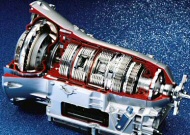
The torque converter serves two primary functions. First, it acts as a fluid coupling to smoothly connect engine power through oil to the transmission gear train. Second, it multiplies the torque or twisting effort from the engine when additional performances is desired.
The torque converter consists of three basic elements: the pump (driving member), the turbines (driven or output member), and the stator (reaction member). The converter cover is welded to the pump to seal all three members in oil filled housing. The converter cover is bolted to the engine flex-plate, which is bolted directly to the engine crankshaft. The converter pump is therefore mechanically connected to the engine and turns at engine speed whenever the engine is operating.
When the engine is running and the converter pump is spinning, it acts as a centrifugal pump, picking up oil at its rim between the blades. The shape of the converter pump shells and blades causes this oil to leave the pump spinning in a clockwise direction toward the blades of the turbine. As the oil strikes the turbine blades it imparts a force to the turbine causing it to turn. When the engine is idling and the converter pump is not spinning fast, the force of the oil leaving the pump is not great enough to turn the turbine with any efficiency. This allows the vehicle to stand in gear with the engine idling. As the throttle is opened and the pump speed increases, the force of the oil increases as engine power is more efficiently transmitted to the turbine member and the gear train.
The fluid coupling effect is from the torque converter to the transmission, not from the torque converter to the engine. The engine rotating is the force that puts the transmission fluid into motion (spinning).
Randy,
Visualize this: if you could slice the torque converter in half, in the car, you will see 2 fans. The transmission side fan is connected to the planetary gears. The engine fan is connected to the engine. The only connection between them is transmission fluid (coupling member). When the transmission fluid is put into motion by the rotation of the engine, it connects both fans, there by transmitting the engine power through the engine fan, to the transmission fluid, to the transmission fan. That’s why you can turn (by hand) the torque converter and turn the engine while not turning the transmission rear wheels. If the engine were running as soon as you step on the gas the transmission would turn. In this form, this torque converter is known as a fluid coupling with no multiplication of torque. For torque multiplication we would need a 3rd member in-between the fans, called a stator. That’s a tech for another time. <img src="graemlins/drink.gif" border="0" alt="[cherrsagai]" />
Steve
The Great White
<img src="graemlins/yltype.gif" border="0" alt="[typing]" /> <img src="graemlins/beerchug.gif" border="0" alt="[cheers]" />
The torque converter serves two primary functions. First, it acts as a fluid coupling to smoothly connect engine power through oil to the transmission gear train. Second, it multiplies the torque or twisting effort from the engine when additional performances is desired.
The torque converter consists of three basic elements: the pump (driving member), the turbines (driven or output member), and the stator (reaction member). The converter cover is welded to the pump to seal all three members in oil filled housing. The converter cover is bolted to the engine flex-plate, which is bolted directly to the engine crankshaft. The converter pump is therefore mechanically connected to the engine and turns at engine speed whenever the engine is operating.
When the engine is running and the converter pump is spinning, it acts as a centrifugal pump, picking up oil at its rim between the blades. The shape of the converter pump shells and blades causes this oil to leave the pump spinning in a clockwise direction toward the blades of the turbine. As the oil strikes the turbine blades it imparts a force to the turbine causing it to turn. When the engine is idling and the converter pump is not spinning fast, the force of the oil leaving the pump is not great enough to turn the turbine with any efficiency. This allows the vehicle to stand in gear with the engine idling. As the throttle is opened and the pump speed increases, the force of the oil increases as engine power is more efficiently transmitted to the turbine member and the gear train.
The fluid coupling effect is from the torque converter to the transmission, not from the torque converter to the engine. The engine rotating is the force that puts the transmission fluid into motion (spinning).
Randy,
Visualize this: if you could slice the torque converter in half, in the car, you will see 2 fans. The transmission side fan is connected to the planetary gears. The engine fan is connected to the engine. The only connection between them is transmission fluid (coupling member). When the transmission fluid is put into motion by the rotation of the engine, it connects both fans, there by transmitting the engine power through the engine fan, to the transmission fluid, to the transmission fan. That’s why you can turn (by hand) the torque converter and turn the engine while not turning the transmission rear wheels. If the engine were running as soon as you step on the gas the transmission would turn. In this form, this torque converter is known as a fluid coupling with no multiplication of torque. For torque multiplication we would need a 3rd member in-between the fans, called a stator. That’s a tech for another time. <img src="graemlins/drink.gif" border="0" alt="[cherrsagai]" />
Steve
The Great White
<img src="graemlins/yltype.gif" border="0" alt="[typing]" /> <img src="graemlins/beerchug.gif" border="0" alt="[cheers]" />
Three Wheelin'
Joined: May 2001
Posts: 1,641
Likes: 0
From: Hudson Valley NY
Erik,
Use a new Allen wrench to remove the toque converter drain bolt
Or you may strip the head.
Steve C
The Great White
<img src="graemlins/beerchug.gif" border="0" alt="[cheers]" />
Use a new Allen wrench to remove the toque converter drain bolt
Or you may strip the head.
Steve C
The Great White
<img src="graemlins/beerchug.gif" border="0" alt="[cheers]" />

User
Joined: Jul 2001
Posts: 3,291
Likes: 2
From: Midland, Texas
Steve, anybody,
Several posts from last year led me to believe that messing around - removing the fluid from the T/C - was better left alone.
Was this because of difficulty in removing, re-installing the T/C plug? Losing the plug? I didn't bother last time...just new filter and gasket - old stuff was very clean -, and spun the wheels - up on jacks - to push out some of the fluid internal to the T/C. Didn't evacuate as much as I had hoped for.
As I said I didn't even bother with the T/C plug, everything seemed in place so using the old "if it ain't broke" adage I cleaned things up with acetone and called it a morning. If It is merely a PITA I'll do abetter job next time.
TIA.
John S. & Pattycakes
Several posts from last year led me to believe that messing around - removing the fluid from the T/C - was better left alone.
Was this because of difficulty in removing, re-installing the T/C plug? Losing the plug? I didn't bother last time...just new filter and gasket - old stuff was very clean -, and spun the wheels - up on jacks - to push out some of the fluid internal to the T/C. Didn't evacuate as much as I had hoped for.
As I said I didn't even bother with the T/C plug, everything seemed in place so using the old "if it ain't broke" adage I cleaned things up with acetone and called it a morning. If It is merely a PITA I'll do abetter job next time.
TIA.
John S. & Pattycakes
Addict
Lifetime Rennlist
Member
Lifetime Rennlist
Member
Joined: Jun 2000
Posts: 40,491
Likes: 139
From: Insane Diego, California
Great explanation of torque converter function - thanks Steve.
So I was mistaken in my previous assumption that the torque converter body can be rotated in either direction.
So I was mistaken in my previous assumption that the torque converter body can be rotated in either direction.

Chronic Tool Dropper
Lifetime Rennlist
Member
Lifetime Rennlist
Member
Joined: Oct 2001
Posts: 20,506
Likes: 564
From: Bend, Oregon
Ten seconds of comments and I'll shut up.
There's a write-up on the fluid change procedure at Greg Nichols' site, grabbed from a post I did on the subject to Rennlist a couple of years ago.
I'm not a fan of prying on the converter casing with a screwdriver. The socket in the front of the engine works fine. The car needs to be up on stands and level for fluid refill, so it's no problem rolling forward and back on the creeper between the wrench and the converter plug to get it lined up right.
Once you have it lined up, put a paint or nail-polish mark on the balancer hub, lined up with the timing pointer. Until you change the torque tube, this mark will let you do the next alignment from above in the engine bay before you even lift the car.
Cheers! <img src="graemlins/beerchug.gif" border="0" alt="[cheers]" />
There's a write-up on the fluid change procedure at Greg Nichols' site, grabbed from a post I did on the subject to Rennlist a couple of years ago.
I'm not a fan of prying on the converter casing with a screwdriver. The socket in the front of the engine works fine. The car needs to be up on stands and level for fluid refill, so it's no problem rolling forward and back on the creeper between the wrench and the converter plug to get it lined up right.
Once you have it lined up, put a paint or nail-polish mark on the balancer hub, lined up with the timing pointer. Until you change the torque tube, this mark will let you do the next alignment from above in the engine bay before you even lift the car.
Cheers! <img src="graemlins/beerchug.gif" border="0" alt="[cheers]" />
Three Wheelin'
Joined: May 2001
Posts: 1,641
Likes: 0
From: Hudson Valley NY
Hey John,
I thought you were MIA, I remember that post, you were changing your 02 sensors. The plug can be a real PITA TO REMOVE. I save that post.
RANDY, YOUR WELLCOME
Steve C
The Great White
In the market place today there are many good transmission-flushing machines, which utilize two methods of flushing. The first one, which I don't recommend, is the cooler line machines which is simply disconnecting the lines and pumping transmission fluid in and out of the transmission. This method only achieves an exchanged rate of 73%. The other method, which I do recommend, is transmission flush, dropping the pan, changing the filter and draining the torque converter (928s have a torque converter drain plug). The fluid exchange rate with this method is 85%. The bottom line is when you drop the pan you always do a more effective job, because that’s were the contaminants reside. Transmission fluid is the lifeblood of an automatic transmission. An incorrect fluid level, high or low, can cause foaming, which causes the fluid to overheat and oxidize and affects the operation of the transmission. The 928 have a high temperature transmission. The best fluid to run is synthetic transmission fluid, Amsoil or Swepo, not cheap.
John if you’re going to drain the trans, drop the pan and change the filter, it’s easy. The pan gasket is made of rubber, new ones don’t fit right. JUST STRETCH IT, by pulling
it a little. 928 INTERNATIONAL Trans kit 3speed #123 270 00 98 Torque pan bolts
71lbs filter bolts 35lbs. You can fill the trans and diff. With a suction gun.
I agree, the torque converter plug could pose a problem, best leave it to the so called experts
Steve. C
<img src="graemlins/beerchug.gif" border="0" alt="[cheers]" />
I thought you were MIA, I remember that post, you were changing your 02 sensors. The plug can be a real PITA TO REMOVE. I save that post.
RANDY, YOUR WELLCOME
Steve C
The Great White
In the market place today there are many good transmission-flushing machines, which utilize two methods of flushing. The first one, which I don't recommend, is the cooler line machines which is simply disconnecting the lines and pumping transmission fluid in and out of the transmission. This method only achieves an exchanged rate of 73%. The other method, which I do recommend, is transmission flush, dropping the pan, changing the filter and draining the torque converter (928s have a torque converter drain plug). The fluid exchange rate with this method is 85%. The bottom line is when you drop the pan you always do a more effective job, because that’s were the contaminants reside. Transmission fluid is the lifeblood of an automatic transmission. An incorrect fluid level, high or low, can cause foaming, which causes the fluid to overheat and oxidize and affects the operation of the transmission. The 928 have a high temperature transmission. The best fluid to run is synthetic transmission fluid, Amsoil or Swepo, not cheap.
John if you’re going to drain the trans, drop the pan and change the filter, it’s easy. The pan gasket is made of rubber, new ones don’t fit right. JUST STRETCH IT, by pulling
it a little. 928 INTERNATIONAL Trans kit 3speed #123 270 00 98 Torque pan bolts
71lbs filter bolts 35lbs. You can fill the trans and diff. With a suction gun.
I agree, the torque converter plug could pose a problem, best leave it to the so called experts
Steve. C
<img src="graemlins/beerchug.gif" border="0" alt="[cheers]" />