When you click on links to various merchants on this site and make a purchase, this can result in this site earning a commission. Affiliate programs and affiliations include, but are not limited to, the eBay Partner Network.
So I started the car up after almost 2 months of sitting and discovered to my horror a brake fluid leak.
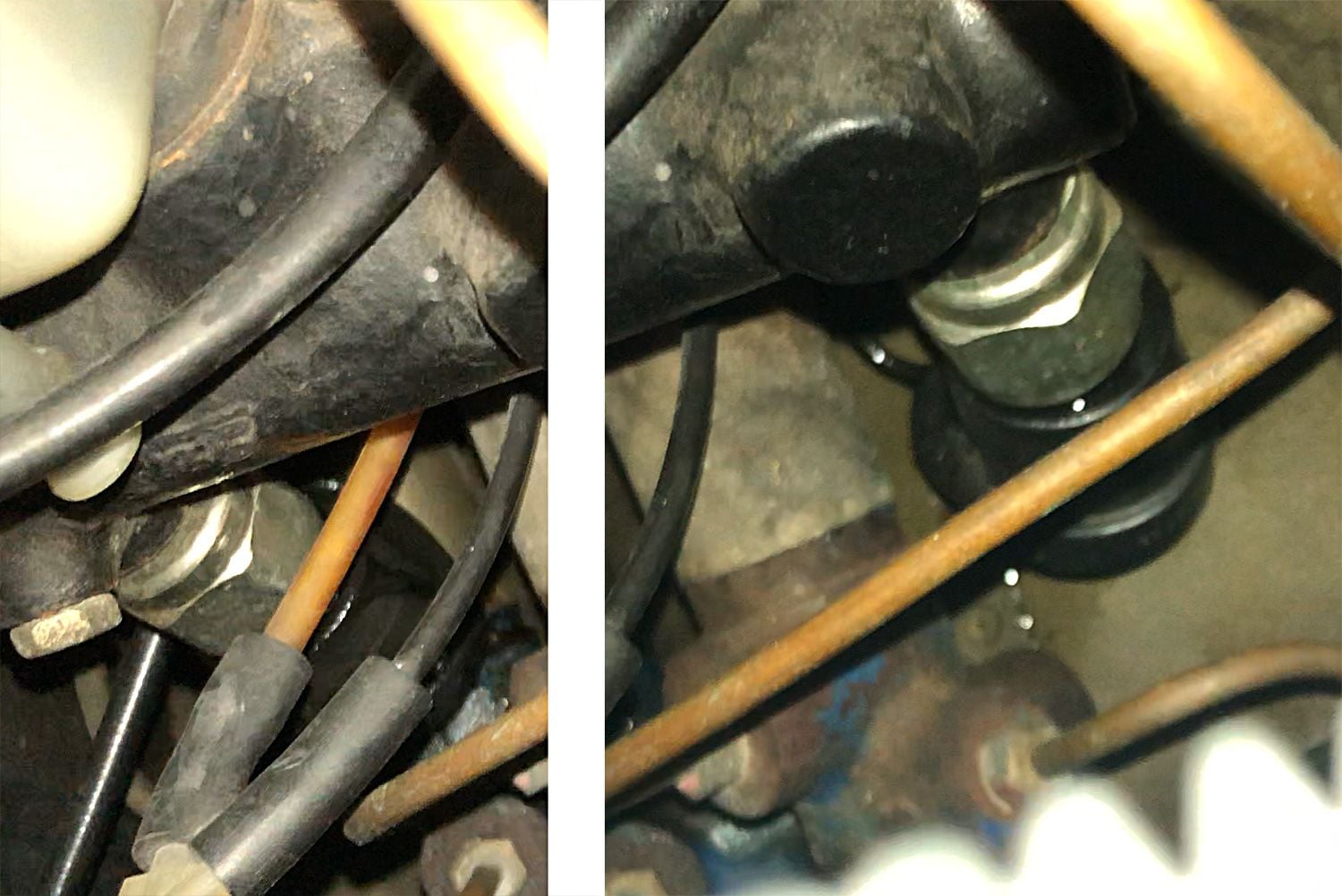
It appears that the leak(s) are coming from the actual brake switches themselves. In the pic and the video, it looks like the rubber boots are filling with fluid, that the leaks aren't coming from the seal between each switch and the master cylinder, but from the actual switches themselves. Is this possible?
I replaced these switches about a year and a half ago.
In the video, the surging of the leaks are when the brakes are pumped.
Can anyone diagnose the problem from the photograph and video?
Yes, the switches can leak internally.
Video diagnosis has its limits, but that is what appears to be happening.
Where did I you buy the switches?
If a site sponsor, I would talk to them.
If cheap Chinese knock-offs, I would order new from site sponsor and acknowledge “lesson learned”.
Audi/VW parts, should be easy to find. Seal the reservoir cap with cling film, R&R switches one at a time, taking care to not tighten too much (has been known to crack the m/cyl). Getting the wire connector back on can be a challenge. Dont try to connect the wiring before installing, as the twist in the wires can damage them. IIRC nut is 32mm.
jp 83 Euro S AT 57k RHD
Yes, the switches can leak internally.
Video diagnosis has its limits, but that is what appears to be happening.
Where did I you buy the switches?
If a site sponsor, I would talk to them.
If cheap Chinese knock-offs, I would order new from site sponsor and acknowledge “lesson learned”.
Thanks for your reply. They weren't bought from any of the site's sponsors though I have just bought a pair that are. I'll post the findings if enlightening.
Curious on the reason for using the cling film on reservoir? Is that a trick to reduce the flow of brake fluid once the switches are removed or for cleanliness purposes.
Thanks
Tbruz
adding the flim is a way to slow the flow of fluid. but a better way to do this is to press the pedal down a few inches and hold it there,
.put a stick on the seat and to the pedal then move the seat enough.
moving the brake MC piston off of rest will shut off the feed port,
a few drops will come out but fluid loss will be minimal .
NOTE when swapping in new switches remove the old one and screw in the new one dont dally,
put some PTFE loctite non setting sealant on the threads of the new switch
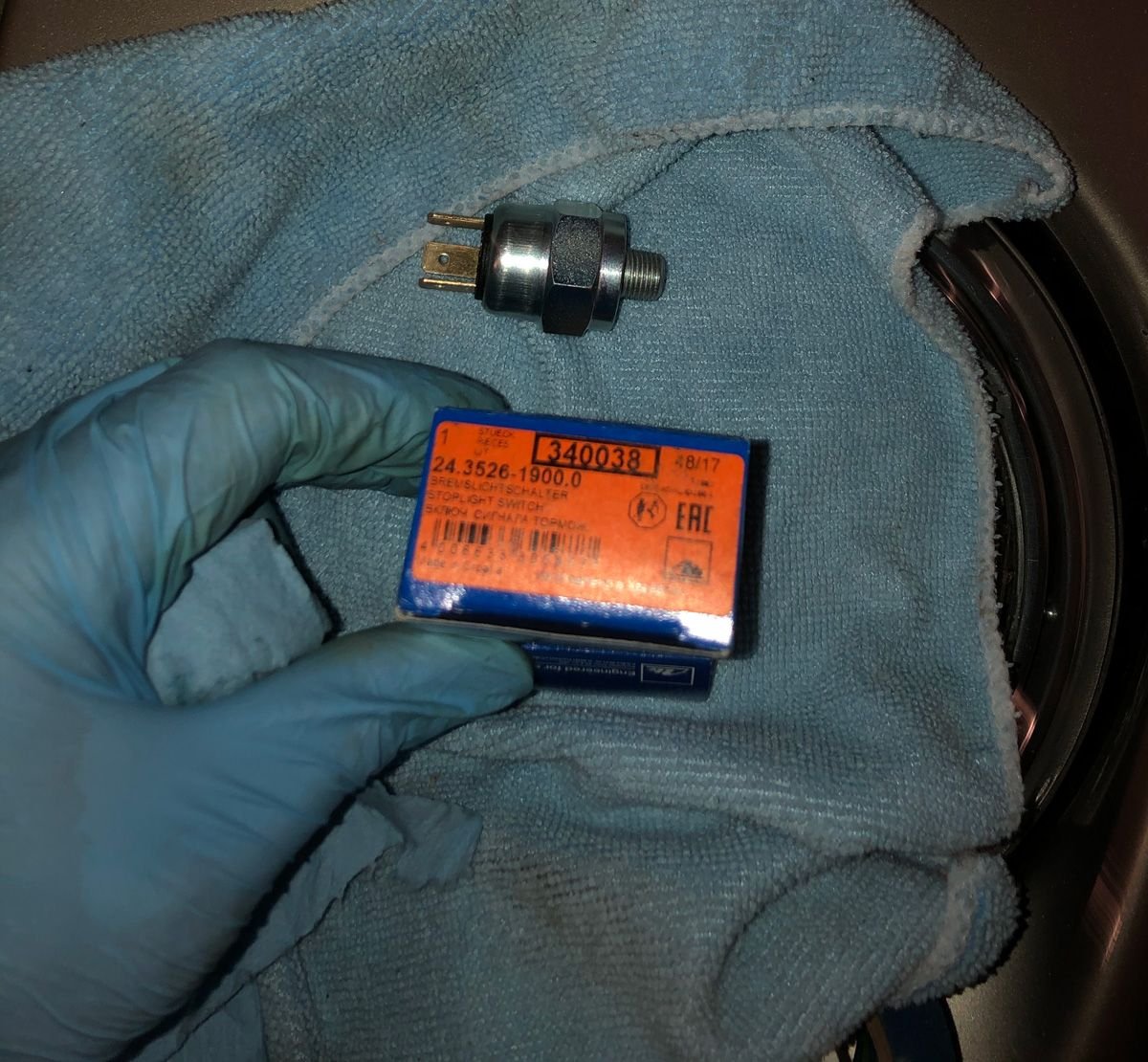
Okay, I've just replaced both my cheapo crappy switches with genuine OEM ones. For anyone interested in doing this, access is somewhat tight, you'll need a stubby 24mm wrench! I modified a 6inch adjustable wrench and it worked a treat. As it turns out, there's barely any fluid dripping in the 5-10 second window for each swap, so long as the reservoir cap is on tight (I presume).





 Leaking brake fluid