When you click on links to various merchants on this site and make a purchase, this can result in this site earning a commission. Affiliate programs and affiliations include, but are not limited to, the eBay Partner Network.
Just a quick question about the coolant system, I've been reading many posts about how to replace the thermostat and flush the coolant and finally decided to attempt it today. Everything seemed to go rather smoothly except two little things that I was not expecting. The first is the driver's side engine block drain plug. This was the first plug that I decided to pull and to my astonishment, nothing came out! When the passenger side plug was pulled a ton of coolant came out as with the one under the radiator. Is it normal for the driver's side plug to be empty like that? Perhaps something is plugged? Should I be worried?
I have a hunch that the head gasket is leaking as well. There was some sludgy oily stuff in the coolant reservoir, that I took out with a turkey baster. The coolant that I drained out today was fairly clear but it did have a slight rainbow oil film on the top. And when I replaced the oil i noticed some of that 'milkshake' stuff that other threads had mentioned. Is there even a slightest chance that this could be the result of anything except the head gasket? I'm pretty sure that task won't be something I can do in an afternoon...at least not anytime soon.
After replacing the coolant I took it for a short drive to get the air out of the system per the instructions. The gauge didn't come close to the half way mark but it is rather cool today, hopefully replacing the thermostat and coolant was a good idea anyways.
Below are pictures of the thermostat i took out, it looks a little dated.
If you have an early 928 say from 78 to 84 you should figure that it should have the head gaskets replaced.
Based on what your reporting and the [i9ctures of the old T stat I would drive the car then do a hydrocarbon test on it to see if your head gaskets are leaking,
also look along the V where the HGs are for white crusty deposits leeching from the gasket edges,
if you find them its a good indicator that the engines ready for HGs
The block drain plug hole has most likely got crud inside blocking the coolants exit. Wriggle a piece of wire up in there to clear it.
Oil is evident in the coolant from your pics. A common problem with early cars was leaking engine oil cooler located in the LH side radiator tank.
I feel that for oil to leak into the coolant gallery via the head gasket, there would be other signs, like coolant/oil seeping from around the head/block joint.
For me, a simple old burnt out mechanic, I would first flush the cooling system with an appropriate coolant flush fluid. I know that some BIG manufacturers, including Porsche workshops, have used dishwasher powder for this. I read of at least 2 organisations that had oil coolers within the radiator that had routinely leaked and cleaning the cooling system post leak proved quite difficult and both used dishwasher power [mixed with water of course] recovering from this failure.
I'm not suggesting your system looks that bad but it clearly has oil in there that should be flushed. The other clear sign of the need to flush your system is that the coolant can not drain out of the block drain.
What ever flushing method you care to use should not be left in the cooling system for too long. Dishwasher powder and other like detergents tend to be quite caustic.
Flush, rinse, run briefly with plain clean water, check and if all is well, fill with the correct coolant mix.
As Merlin says, you should check the head/block joint for signs.
Your pic of the thermostat shows corrosion, white powdery stuff around the edge. Can you tell us how many miles the car has traveled and do you know the history of its coolant type/usage.
To remove the heads and replace the head gasket is a seriously big job. Having done this a few times the head surface of both the heads themselves and the block invariably need to be resurfaced.
I tried to 'cheat' with this some years ago, on an 81S engine by just rebuilding and resurfacing the heads, only to have to remove and completely strip the motor and have the block 'decked' and buy another pair of head gaskets.
One simple way to check for head gasket to cooling system leaks is to run a warm engine with the radiator cap off and look into the header tank. if you see a continuous bubbling of air coming up out of the coolant in the tank, suspect a head gasket issue.
The second, non invasive, method is to have 'leak down' test done on your engine. This test is very informative as well and will compare all cylinders with each other for combustion chamber leakage via rings, valves and gasket, even cracks heaven forbid!
Reminder that you can check for cooling system leaks with a cooling system pressure tester, usually a free-rent at your local parts store. Leave the system pressurized for a while and verify that it holds pressure. If it doesn't, and you suspect the oil cooler in the radiator is leaking, disconnect the oil lines from the cooler, and catch the oil. Once the cooler has drained down, pressurize it again with the tester, this time with a plastic cup under the bottom oil cooler port. You'll find coolant traces in the cup the next morning if there's a leak, .and. there's no other leak that bleeds pressure faster.
Stunning Porsche 356A Super GT Speedster Auction Fails to Meet Reserve
Slideshow: One of the rarest Porsche 356 Speedsters ever built has resurfaced, offering a glimpse into a little-known chapter of the model's competition history.
Theon Goes Full Carbon Fiber With Stunning New Build
Slideshow: Built around a carbon-bodied 964 and a naturally aspirated 4.0-liter flat-six, this bespoke commission highlights how far the restomod formula has evolved.
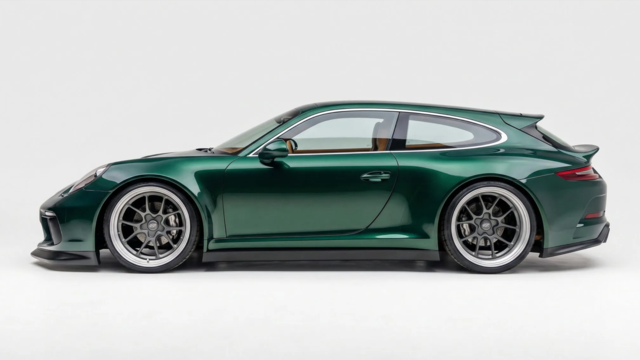
Tuner Is Converting Porsche 911s Into Shooting Brakes
Slideshow: A Polish Porsche specialist is moving ahead with one of the most unusual 911 conversions in recent memory: a shooting brake version of the 991-generation sports car.
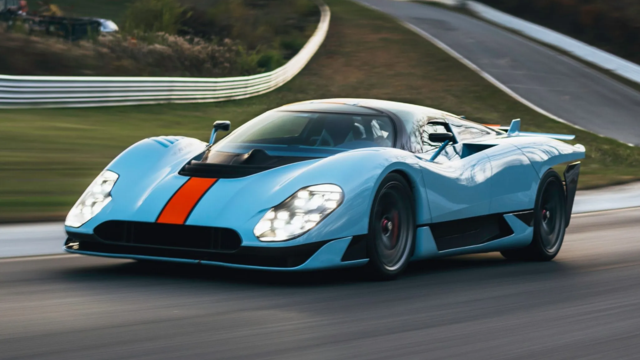
This Coachbuilt Creation Is A Modern Take on the Legendary Porsche 917
Slideshow: A Porsche Carrera GT has been transformed into a one-off coachbuilt machine that blends analog supercar engineering with styling inspired by the legendary 917 race cars.
Is This Convertible Cayenne A Steal, Or A Returnless Investment?
Slideshow: A heavily modified Porsche Cayenne convertible with faux wood trim and a long list of flaws recently sold at auction for surprisingly little money.





 Coolant engine block plug question '78 (Euro)