When you click on links to various merchants on this site and make a purchase, this can result in this site earning a commission. Affiliate programs and affiliations include, but are not limited to, the eBay Partner Network.
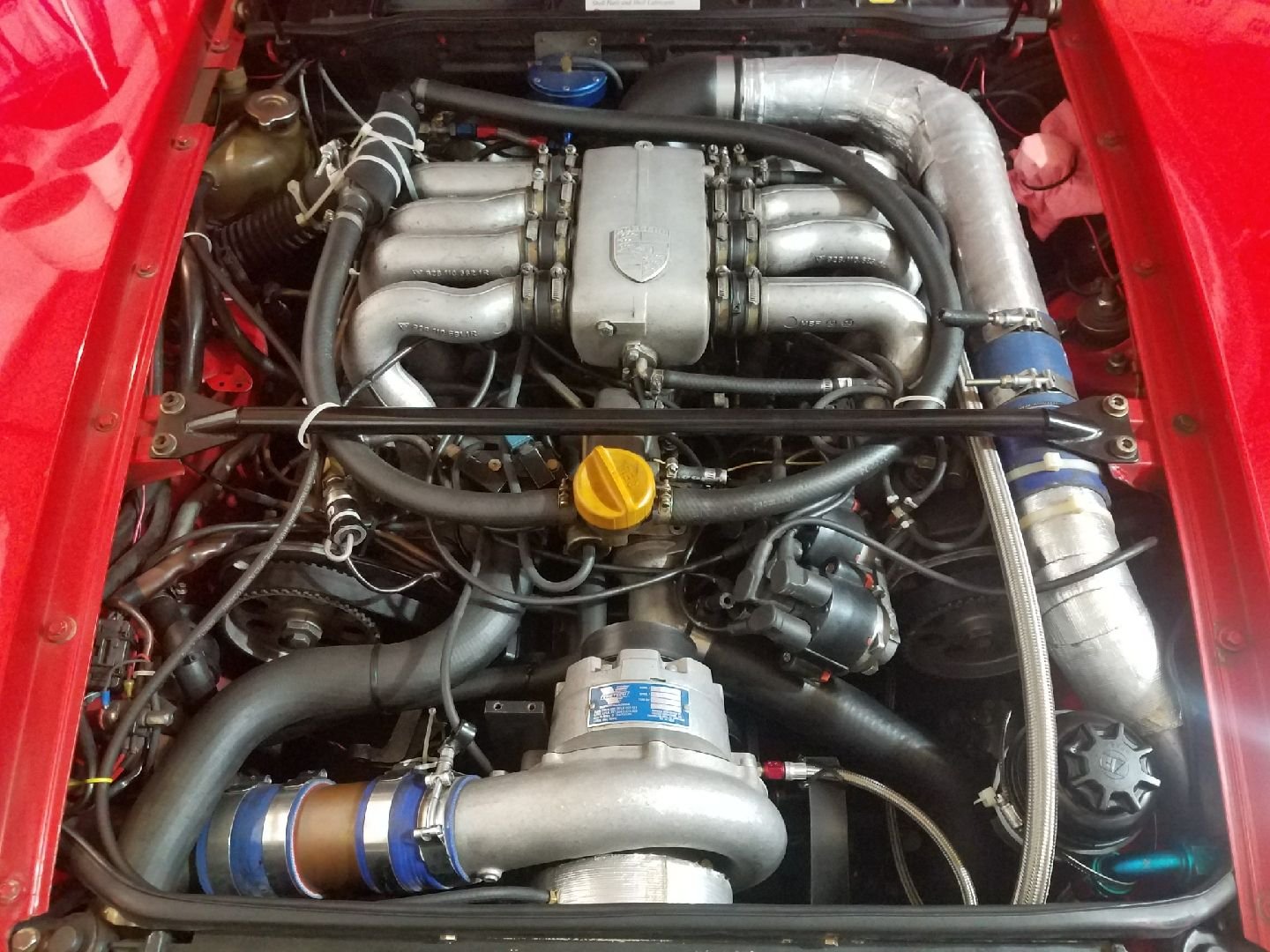
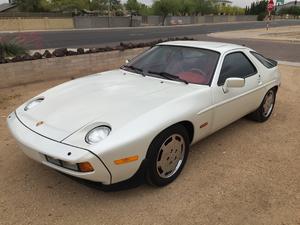
The first kit we ever sold to an L-Jet 16v install is still romping around in Manhattan. The customer loves it! I supercharged that car in 2004 and it has been in frequent use ever since. The owner owns a small fleet of BMW's and such, and he says of all his toys, the supercharged 928 is his favorite.
Here is a link to the page where we offer our different supercharger kits for the 16v and 32v 928:
Is there a kit for the 85S2? 4.7L dual distibutor - ROW LH?
Yes, I have a Stage II kit for that car (intercooled). Because of the scarcity of that particular motor, I cannot say I have done a LOT of them, but I have done one before. Recently, we have re-tooled our 16v kits and now they use the same Raptor superchargers that our 32v kits use. The Raptor is a much better head unit than the Powerdyne it replaces, and we have been very happy with them.
It seems that every turbo/SC kit I see here is built for the 32v engines.
Are there any really compelling reasons why the 16v engines don't seem to get a look in ?
I'm going to assume aftermarket EFI is a given...and for a straight K-Jet there's this http://www.frankencis.com/ as well.
So, what gives ? Why is everything 32 v ?
Thanks !
spending $7,000 plus to get 300 rwhp ..for a car that was worth $3,000 to $5,000 did not make sense to many. It is like hotrodding a smog era 305 Chevy ( not a 350) vs a late LS motor. Why not START out with the 100 hp higher 32 valve !!
spending $7,000 plus to get 300 rwhp ..for a car that was worth $3,000 to $5,000 did not make sense to many
Our Stage I kits for the 16v 928 start at $4895. NOT $7K, and they are designed for the owner to install themselves. Most do.
Still, the point is valid - most 928 owners have been more comfortable dropping 5K on a late-model 928 because it's worth more at resale than an early model 928. However, now that the value of the 928 is going up on all years and models, that comparative may lessen.
Other points to consider:
1) Its damn hard to find an early 928 with a 300 HP M28/11 or M28/21 engine in it. If you do, expect to pay into the mid teens for it. Suddenly, taking the $5,000 1983 model (for example) and adding our SC Kit makes good financial sense... you get a 300 HP 928 for a total of 10K, less than the price to buy one.
2) ...and we are just talking about the 220 HP North American engines here. We do supercharge the 300HP and 310HP Euro motors, where we get over 400 HP.
Jean-Louis in Milwaukee races a EuroS with a Murf928 sourced system, putting down 380rwhp with about 5-6psi.
My Murf928 Supercharged 81 is using the LH / EZF & intake from a EuroS so it's basically a supercharged EuroS with a low compression engine (and US heads / cams...)
Nice thing about this setup is the huge intercooler Turbo Todd designed for the Murf928 85/86 cars fits the EuroS engine:
So is the boost adjustable with your supercharger kit Carl? What are the ramifications of putting one on my low compression '86 M28/22 Euro S engine? More boost possible because of my lower static compression? Can I get it to 325 RWP?
1) typically, a supercharger owner will adjust the output of his supercharger by simply changing pulley sizes. Slow the supercharger down for less boost, speed it up for more. The caution is that it is possible to over-speed the bearings and damage them, and to move the supercharger out of its most efficient compressor map. Still, this is the most common method to adjusting output.
2) you can also install a BLV (Boost Limiter Valve). These are set to a maximum psi, and bleed off only the pressure above that point. This link shows you the BLV and describes it's operation: https://928motorsports.com/parts/boostlimitervalve.php
Do not confuse a BLV with a waste-gate from a turbocharger install. Not the same.
Last edited by Carl Fausett; Sep 29, 2017 at 04:05 PM.
What are the ramifications of putting one on my low compression '86 M28/22 Euro S engine? More boost possible because of my lower static compression? Can I get it to 325 RWP?
As to this question about your unique low-compression M28/22: I'd be pretty foolish to predict what your final output will be. More CFM will be needed because of your low CR, but what boost pressure that engine will like best is a variable determined by the piston crown shape, the shape of the combustion chamber in the head, the camshaft profiles, and the quality of the engine management used. NOT PSI.
You (if you are installing it) or we (if we are installing it) will simply take it to a dyno and strap it down and tune it. Then we can put in the optimal safe tune for that engine. No guessing.
"Is it better to run higher CR and less boost or lower CR and more boost?" This is a popular bar-stool argument. Pretend that you have two otherwise identical engines, but one is running 10.4:1 compression and 6 pounds of boost, while the other is running 8.5:1 CR and 14 pounds of boost. They both may make the very same HP. However, I am of the camp that believes that the low compression engine will be easier to tune, be more forgiving, and will likely last longer. If you got some low-octane (bad) fuel, or an injector became partially plugged so it was not fueling correctly, the low CR engine has a greater tolerance for such things than the high CR engine. Then there are the benefits to running a non-interference motor when racing
These are the reasons why I built my 900 HP race engine at 8.5:1 So, I think you will be very happy with the results you get from supercharging your low CR engine.
Last edited by Carl Fausett; Sep 29, 2017 at 04:24 PM.




 16v forced induction options.