

How important is LSD

Thread Starter
Rennlist Member

Joined: Nov 2004
Posts: 1,353
Likes: 96
From: New Jersey
 How important is LSD
How important it is to have Limited Slip Differential. I won't be tracking the car, so should that be a concern to me? any advice or comments would be heplful...
Thanks
Thanks
Team Owner
Joined: Aug 2005
Posts: 28,412
Likes: 1,611
From: Cambridge Ontario Canada
I have LSD in my 78 and the big advantage i see is in the rain accelerating out of a corner I get no wheel spin and she powers through nice . I think if anything LSD helps most here.
Addict
Joined: Jan 2007
Posts: 37,754
Likes: 15
From: Alta Loma Alone
This is the thread I started when I discovered I had LSD:
https://rennlist.com/forums/showthre...&highlight=LSD
If it turns out you do have LSD there is alot more to talk about.
https://rennlist.com/forums/showthre...&highlight=LSD
If it turns out you do have LSD there is alot more to talk about.
Instructor
Joined: Jan 2008
Posts: 101
Likes: 0
From: San Diego
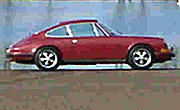
Hester has an LSD. I think 1970 was the first year it was available. My understanding of LSD is very limited and it is a gap that I would really like to fill in. As far as the question on the floor, LSD is one of those things that isn't important unless you need it.
When I was a kid (okay, when I was 21), my friends and I bought a bunch of go karts for kicks on Sundays. One of them had a "live axle" or "solid axle" meaning that the two rear (drive) wheels were connected together by a solid axle. When one wheel turned, so did the other - at the same rate and at the same time.
The problem with this setup is, when the vehicle goes around a turn, the outside wheel needs to cover more territory than the inside wheel. To do that, either the outside wheel needs to cover that extra territory by sliding (dragging) across some of it, the inside wheel needs to make up for the extra revolutions of the outside wheel by spinning, or the axle needs to break. None of those are good but on the go kart it didn't matter much. My guess is the outside wheel ended up sliding to cover the extra territory.
The answer to the problem with the solid axle and turns is the differential. The differential alllows the two rear wheel to make different numbers of revolutions with the same input from the drive gear (shaft, sprocket, whatever). This is where it gets tricky and hard to explain but I will do my best if you do your best to follow along.
The differential uses a system of gears to transmit the rotational force of the input shaft to the rear wheels and solve the problem of different rates of rotation of the drive wheels in a turn. The differential uses an additional gear or set of gears ("planet" gears) that allow one wheel to spin past the other if one is not rotating as quickly. At the same time, the planet gear directs more of the rotational force of the input to the wheel that has the least resistance to turning (i.e., is turning faster).
Therein lies the problem with the differential. Imagine one of the drive wheels on asphalt and the other on ice. The drive wheel on the asphalt will have the greater resistence to turning and the wheel on the ice will have almost none. The differential will direct all of the rotational force of the input to the wheel with the least resistance to turning. That is great for going around a turn but, in this case, it means that the wheel on the ice spins and the wheel that has traction doesn't.
Another example is your 911 powering out of a turn. The differential will direct the rotational force of the input to the wheel that has the least resistance to turning. You brake your 911 into a sharp left hand turn. When you reach the apex, you start to accelerate out. In the left hand turn, the weight of the car is over the right wheel. This condition will cause the left drive wheel to have less resistance to spinning (traction). The result is the differential directs the rotational force of the input to the left wheel and it begins to spin. The wheel with the most traction (the right wheel) gets nothing, and all of the power that your flat six is producing gets used burning up your left tire and not propelling you foward.
Just like the differential was created to solve the problem of dragging the faster turning wheel (the outside wheel) through turns with the solid axle, "limited slip" was created to solve the problem of spinning the wheel with the least traction (the inside wheel) through turns with the differential.
The LSD leaves the drive wheels unlocked to take advantage of the differential's purpose of allowing the drive wheels to spin at different rates around turns but locks the wheels together when the input torque is high to prevent wheel spin at the wheel with lower traction. The best of both worlds!
Those are the basics of the limited slip differential. From there, the topic is complicated with things like "1 way, 1.5 way, or 2 way" limited slip, and, the percentage of torque that the LSD permits to be directed to one wheel (torque split).
That is what I know about the limited slip differential. If anyone could fill in the gaps in my knowledge, I would appreciate it.
When I was a kid (okay, when I was 21), my friends and I bought a bunch of go karts for kicks on Sundays. One of them had a "live axle" or "solid axle" meaning that the two rear (drive) wheels were connected together by a solid axle. When one wheel turned, so did the other - at the same rate and at the same time.
The problem with this setup is, when the vehicle goes around a turn, the outside wheel needs to cover more territory than the inside wheel. To do that, either the outside wheel needs to cover that extra territory by sliding (dragging) across some of it, the inside wheel needs to make up for the extra revolutions of the outside wheel by spinning, or the axle needs to break. None of those are good but on the go kart it didn't matter much. My guess is the outside wheel ended up sliding to cover the extra territory.
The answer to the problem with the solid axle and turns is the differential. The differential alllows the two rear wheel to make different numbers of revolutions with the same input from the drive gear (shaft, sprocket, whatever). This is where it gets tricky and hard to explain but I will do my best if you do your best to follow along.
The differential uses a system of gears to transmit the rotational force of the input shaft to the rear wheels and solve the problem of different rates of rotation of the drive wheels in a turn. The differential uses an additional gear or set of gears ("planet" gears) that allow one wheel to spin past the other if one is not rotating as quickly. At the same time, the planet gear directs more of the rotational force of the input to the wheel that has the least resistance to turning (i.e., is turning faster).
Therein lies the problem with the differential. Imagine one of the drive wheels on asphalt and the other on ice. The drive wheel on the asphalt will have the greater resistence to turning and the wheel on the ice will have almost none. The differential will direct all of the rotational force of the input to the wheel with the least resistance to turning. That is great for going around a turn but, in this case, it means that the wheel on the ice spins and the wheel that has traction doesn't.
Another example is your 911 powering out of a turn. The differential will direct the rotational force of the input to the wheel that has the least resistance to turning. You brake your 911 into a sharp left hand turn. When you reach the apex, you start to accelerate out. In the left hand turn, the weight of the car is over the right wheel. This condition will cause the left drive wheel to have less resistance to spinning (traction). The result is the differential directs the rotational force of the input to the left wheel and it begins to spin. The wheel with the most traction (the right wheel) gets nothing, and all of the power that your flat six is producing gets used burning up your left tire and not propelling you foward.
Just like the differential was created to solve the problem of dragging the faster turning wheel (the outside wheel) through turns with the solid axle, "limited slip" was created to solve the problem of spinning the wheel with the least traction (the inside wheel) through turns with the differential.
The LSD leaves the drive wheels unlocked to take advantage of the differential's purpose of allowing the drive wheels to spin at different rates around turns but locks the wheels together when the input torque is high to prevent wheel spin at the wheel with lower traction. The best of both worlds!
Those are the basics of the limited slip differential. From there, the topic is complicated with things like "1 way, 1.5 way, or 2 way" limited slip, and, the percentage of torque that the LSD permits to be directed to one wheel (torque split).
That is what I know about the limited slip differential. If anyone could fill in the gaps in my knowledge, I would appreciate it.
Drifting

Joined: Jul 2007
Posts: 2,115
Likes: 133
From: Newfoundland
Excellent post, allow me to assist with pictures and animations. This website has some animations, pictures, and a similar explanation has hester.
Instructor
Joined: Jun 2003
Posts: 226
Likes: 2
From: Tallahassee Florida

Hester,
Thanks for taking the time to provide such a well though out tutorial on the operation of LSDs. I'm no expert on this subject but your writing was very easy to follow and made sense to me (for what that's worth)! If there are errors, I'm sure someone more versed on this subject will reply.
I have a 911 w/o LSD and a 944 w/LSD and the difference is very obvious in the wet (as Iceman noted) and also in slow speed turns of a VERY tight radius. The whole subject of differentials is somewhat of a Black Art for most of us hence the availability of LSDs with different degrees of 'lock-up'.
From a racing standpoint, I'd assume the pro-racers (read BIG FUNDING) look closely at a track's number of turns and their radius values, plug those numbers into some 'Holy Grail' formula, select the most suitable degree of LSD lock-up and install a differential that meets their needs for that race.
I have a friend that has gone to a full lock-up differential (essentially a SOLID axle from a rotational standpoint) on an SCCA GT2 class 911 with a 915 transaxle and now that he has a few races on it (he's at Roebling w/SCCA as I type) I'll ask him how he's found that to work. I DO know one thing - the car's a BITCH to push/turn around in a tight paddock/pit type area; MUCH worse than it was before!
The only comment I have is that I've always understood the term 'live axle' to refer to suspension as in 'live axle vs independent axle rear suspension'. They way I've heard it is that the 'live' terminology derives from the ability of an impact on one side's wheel to be immediately transmitted to the wheel on the other side of the axle due to the inflexible lateral link between them.
The differential and it's LSD variants would work only on the rotational aspects of the two wheels tied to that axle (whether it be a 'live' axel or an 'independent' axel). Anyway, that's my two cents.
Thanks again for an obviously well thought out response! This type of discourse is what makes the list what it is!
Barry
Thanks for taking the time to provide such a well though out tutorial on the operation of LSDs. I'm no expert on this subject but your writing was very easy to follow and made sense to me (for what that's worth)! If there are errors, I'm sure someone more versed on this subject will reply.
I have a 911 w/o LSD and a 944 w/LSD and the difference is very obvious in the wet (as Iceman noted) and also in slow speed turns of a VERY tight radius. The whole subject of differentials is somewhat of a Black Art for most of us hence the availability of LSDs with different degrees of 'lock-up'.
From a racing standpoint, I'd assume the pro-racers (read BIG FUNDING) look closely at a track's number of turns and their radius values, plug those numbers into some 'Holy Grail' formula, select the most suitable degree of LSD lock-up and install a differential that meets their needs for that race.
I have a friend that has gone to a full lock-up differential (essentially a SOLID axle from a rotational standpoint) on an SCCA GT2 class 911 with a 915 transaxle and now that he has a few races on it (he's at Roebling w/SCCA as I type) I'll ask him how he's found that to work. I DO know one thing - the car's a BITCH to push/turn around in a tight paddock/pit type area; MUCH worse than it was before!
The only comment I have is that I've always understood the term 'live axle' to refer to suspension as in 'live axle vs independent axle rear suspension'. They way I've heard it is that the 'live' terminology derives from the ability of an impact on one side's wheel to be immediately transmitted to the wheel on the other side of the axle due to the inflexible lateral link between them.
The differential and it's LSD variants would work only on the rotational aspects of the two wheels tied to that axle (whether it be a 'live' axel or an 'independent' axel). Anyway, that's my two cents.
Thanks again for an obviously well thought out response! This type of discourse is what makes the list what it is!
Barry

RL Technical Advisor
Joined: May 2001
Posts: 11,870
Likes: 75
From: Portland Oregon
The biggest benefit of an LSD is not really wheelspin control, you can do that with your right foot.

The biggest one is how the LSD stabilizes the car under hard braking by keeping the rear wheels locked together under trailing throttle. The tail wagging you feel going under braking into a corner is eliminated with an LSD (not a torque-sensing one).
Trending Topics
Instructor
Joined: Jan 2008
Posts: 101
Likes: 0
From: San Diego
I'm just learning here. This is a subject that I have wanted to understand for a long time. In my business, I find that the best way for me to really understand a subject is to try and explain it to someone else. I am starting to get a "lock" on this subject.
As I understand it, there have been all sorts of configurations of LSD; all aimed at preventing the differential from transmitting all of the rotational force of the input to the wheel with the least traction while still allowing the car to go around turns without the outside wheel dragging.
The most basic type is the "1 way" limited slip that only locks the two axles when the input torque exceeds a certain level. A "2 way" limited slip locks the two axles when torque is being transmitted in the opposite direction (i.e. under trailing throttle). A "1.5 way" limited slip locks the axles with less torque under acceleration than on acceleration (i.e., it takes less to lock under acceleration than it does on decelleration).
Now that I am getting an idea of how limited slip works, my next question is, what kind of limited slip is in Hester? I had one demonstration of Hester's limited slip one day as I made a left turn from a freeway offramp onto a surface street. I got carried away with the throttle in the left hand turn and the power of the flat six overcame the traction of both wheels. If she didn't have limited slip, the left wheel (the wheel with the least traction) would have spun by itself and the right wheel (the one with the most traction) would have been limp. In that case, the car would have been making a lot of noise but wouldn't have been going anywhere very fast - much like mom's oldsmobile. Hester's limited slip was kicking in by locking both axles which was great and sending power to both wheels allowing her to accelerate but....at some point, the power of the engine overcame the traction of the right wheel and BOTH tires started to spin. In the left hand turn, Hester's 2,300 pounds (okay, 2,500 pounds with my fat a$$ in the driver's seat) was shifting to the right side. The rear end float created when both wheels started spinning coupled with the weight shifting to the right caused THROTTLE INDUCED OVERSTEER. The back and stepped out to the right and, thanks to my practice driving in the snow, I started counter-steering like the Duke boys and managed to get her back in line.
Throttle induced oversteer is much different than the oversteer that comes from having all of the weight in the back if the 911. That oversteer comes from the transfer of weight that happens when you release the throttle in a turn. As you're accelerating in the turn, the wieght of the car is shifting from front to back. When you let off the throttle in a turn, the weight shifts from back to front and the back wheels lose traction. With the back of the car floating, it will move to the outside of the turn faster than the front wheels. The next thing you know, the car is spinning. Knowing that could happen scares the hell out of me. I have been playing Need For Speed: Porsche Unleashed which is giving me a good idea of the handling characteristics of the 911. I guess some Driver Education would be a better way to learn but the video game helps. Of course, that is an entirely different subject.
Back to the LSD. With an LSD that works under trailing throttle (e.g., a 2 way LSD), I have read that this type of LSD is very difficult to control but preferred by "drifters." Do you know anything about that, Steve? Gran Turismo 4 on my Playstation 2 allows me to manipulate the settings of the LSD. I think I will play around with it a little bit and see what I can figure out now that I have an idea of what LSD does.
As I understand it, there have been all sorts of configurations of LSD; all aimed at preventing the differential from transmitting all of the rotational force of the input to the wheel with the least traction while still allowing the car to go around turns without the outside wheel dragging.
The most basic type is the "1 way" limited slip that only locks the two axles when the input torque exceeds a certain level. A "2 way" limited slip locks the two axles when torque is being transmitted in the opposite direction (i.e. under trailing throttle). A "1.5 way" limited slip locks the axles with less torque under acceleration than on acceleration (i.e., it takes less to lock under acceleration than it does on decelleration).
Now that I am getting an idea of how limited slip works, my next question is, what kind of limited slip is in Hester? I had one demonstration of Hester's limited slip one day as I made a left turn from a freeway offramp onto a surface street. I got carried away with the throttle in the left hand turn and the power of the flat six overcame the traction of both wheels. If she didn't have limited slip, the left wheel (the wheel with the least traction) would have spun by itself and the right wheel (the one with the most traction) would have been limp. In that case, the car would have been making a lot of noise but wouldn't have been going anywhere very fast - much like mom's oldsmobile. Hester's limited slip was kicking in by locking both axles which was great and sending power to both wheels allowing her to accelerate but....at some point, the power of the engine overcame the traction of the right wheel and BOTH tires started to spin. In the left hand turn, Hester's 2,300 pounds (okay, 2,500 pounds with my fat a$$ in the driver's seat) was shifting to the right side. The rear end float created when both wheels started spinning coupled with the weight shifting to the right caused THROTTLE INDUCED OVERSTEER. The back and stepped out to the right and, thanks to my practice driving in the snow, I started counter-steering like the Duke boys and managed to get her back in line.
Throttle induced oversteer is much different than the oversteer that comes from having all of the weight in the back if the 911. That oversteer comes from the transfer of weight that happens when you release the throttle in a turn. As you're accelerating in the turn, the wieght of the car is shifting from front to back. When you let off the throttle in a turn, the weight shifts from back to front and the back wheels lose traction. With the back of the car floating, it will move to the outside of the turn faster than the front wheels. The next thing you know, the car is spinning. Knowing that could happen scares the hell out of me. I have been playing Need For Speed: Porsche Unleashed which is giving me a good idea of the handling characteristics of the 911. I guess some Driver Education would be a better way to learn but the video game helps. Of course, that is an entirely different subject.
Back to the LSD. With an LSD that works under trailing throttle (e.g., a 2 way LSD), I have read that this type of LSD is very difficult to control but preferred by "drifters." Do you know anything about that, Steve? Gran Turismo 4 on my Playstation 2 allows me to manipulate the settings of the LSD. I think I will play around with it a little bit and see what I can figure out now that I have an idea of what LSD does.
Instructor
Joined: Jun 2003
Posts: 226
Likes: 2
From: Tallahassee Florida
speednme,
Looks like a consensus might be building. If you're a competent driver and your intent is to drive the car for pleasure and enjoy trips here and there in normal weather (both wet and dry) with a good respect for local traffic laws and your ability as a driver, then an LSD is probably not on your MUST HAVE list.
LSD does, however, provide a demonstrated advantage when you're attempting to 'push' the car into it's higher performance envelope with regards to heavy braking, cornering and acceleration, especially in 'non-optimal' traction conditions.
You decide. If you're a highly capable driver (properly schooled, race trained and experienced) or wish to use your car as a tool to become so (again, with proper instruction and supervised track time) then you may very much desire an LSD. If you plan to drive in a somewhat 'less intense' fashion then a non-LSD car will do you just fine.
The only 'real life' situations I can think of that commonly occur where a LSD on a Rear Wheel Drive (RWD) car REALLY helps out the 'common soul' is at the boat-ramp or on an ice/snow-covered uphill driveway. I DO understand that everyone's mileage may vary on that point (ever lived on a red-clay Georgia road when it's wet?), just remember we're talking PORSCHE's here...
Not tracking? Not launching boats? Not dealing with ice/snow on a slow speed incline on a regular basis? Not driving like Hans Stuck in questionable grip conditions? Then, like most folks in cars, you'll do absolutely fine without an LSD.
Barry
Looks like a consensus might be building. If you're a competent driver and your intent is to drive the car for pleasure and enjoy trips here and there in normal weather (both wet and dry) with a good respect for local traffic laws and your ability as a driver, then an LSD is probably not on your MUST HAVE list.
LSD does, however, provide a demonstrated advantage when you're attempting to 'push' the car into it's higher performance envelope with regards to heavy braking, cornering and acceleration, especially in 'non-optimal' traction conditions.
You decide. If you're a highly capable driver (properly schooled, race trained and experienced) or wish to use your car as a tool to become so (again, with proper instruction and supervised track time) then you may very much desire an LSD. If you plan to drive in a somewhat 'less intense' fashion then a non-LSD car will do you just fine.
The only 'real life' situations I can think of that commonly occur where a LSD on a Rear Wheel Drive (RWD) car REALLY helps out the 'common soul' is at the boat-ramp or on an ice/snow-covered uphill driveway. I DO understand that everyone's mileage may vary on that point (ever lived on a red-clay Georgia road when it's wet?), just remember we're talking PORSCHE's here...
Not tracking? Not launching boats? Not dealing with ice/snow on a slow speed incline on a regular basis? Not driving like Hans Stuck in questionable grip conditions? Then, like most folks in cars, you'll do absolutely fine without an LSD.
Barry
RIP
Joined: Mar 2006
Posts: 2,433
Likes: 2
From: Austin, TX
I'm just learning here. This is a subject that I have wanted to understand for a long time. In my business, I find that the best way for me to really understand a subject is to try and explain it to someone else. I am starting to get a "lock" on this subject.
As I understand it, there have been all sorts of configurations of LSD; all aimed at preventing the differential from transmitting all of the rotational force of the input to the wheel with the least traction while still allowing the car to go around turns without the outside wheel dragging.
The most basic type is the "1 way" limited slip that only locks the two axles when the input torque exceeds a certain level. A "2 way" limited slip locks the two axles when torque is being transmitted in the opposite direction (i.e. under trailing throttle). A "1.5 way" limited slip locks the axles with less torque under acceleration than on acceleration (i.e., it takes less to lock under acceleration than it does on decelleration).
Now that I am getting an idea of how limited slip works, my next question is, what kind of limited slip is in Hester? I had one demonstration of Hester's limited slip one day as I made a left turn from a freeway offramp onto a surface street. I got carried away with the throttle in the left hand turn and the power of the flat six overcame the traction of both wheels. If she didn't have limited slip, the left wheel (the wheel with the least traction) would have spun by itself and the right wheel (the one with the most traction) would have been limp. In that case, the car would have been making a lot of noise but wouldn't have been going anywhere very fast - much like mom's oldsmobile. Hester's limited slip was kicking in by locking both axles which was great and sending power to both wheels allowing her to accelerate but....at some point, the power of the engine overcame the traction of the right wheel and BOTH tires started to spin. In the left hand turn, Hester's 2,300 pounds (okay, 2,500 pounds with my fat a$$ in the driver's seat) was shifting to the right side. The rear end float created when both wheels started spinning coupled with the weight shifting to the right caused THROTTLE INDUCED OVERSTEER. The back and stepped out to the right and, thanks to my practice driving in the snow, I started counter-steering like the Duke boys and managed to get her back in line.
Throttle induced oversteer is much different than the oversteer that comes from having all of the weight in the back if the 911. That oversteer comes from the transfer of weight that happens when you release the throttle in a turn. As you're accelerating in the turn, the wieght of the car is shifting from front to back. When you let off the throttle in a turn, the weight shifts from back to front and the back wheels lose traction. With the back of the car floating, it will move to the outside of the turn faster than the front wheels. The next thing you know, the car is spinning. Knowing that could happen scares the hell out of me. I have been playing Need For Speed: Porsche Unleashed which is giving me a good idea of the handling characteristics of the 911. I guess some Driver Education would be a better way to learn but the video game helps. Of course, that is an entirely different subject.
Back to the LSD. With an LSD that works under trailing throttle (e.g., a 2 way LSD), I have read that this type of LSD is very difficult to control but preferred by "drifters." Do you know anything about that, Steve? Gran Turismo 4 on my Playstation 2 allows me to manipulate the settings of the LSD. I think I will play around with it a little bit and see what I can figure out now that I have an idea of what LSD does.
As I understand it, there have been all sorts of configurations of LSD; all aimed at preventing the differential from transmitting all of the rotational force of the input to the wheel with the least traction while still allowing the car to go around turns without the outside wheel dragging.
The most basic type is the "1 way" limited slip that only locks the two axles when the input torque exceeds a certain level. A "2 way" limited slip locks the two axles when torque is being transmitted in the opposite direction (i.e. under trailing throttle). A "1.5 way" limited slip locks the axles with less torque under acceleration than on acceleration (i.e., it takes less to lock under acceleration than it does on decelleration).
Now that I am getting an idea of how limited slip works, my next question is, what kind of limited slip is in Hester? I had one demonstration of Hester's limited slip one day as I made a left turn from a freeway offramp onto a surface street. I got carried away with the throttle in the left hand turn and the power of the flat six overcame the traction of both wheels. If she didn't have limited slip, the left wheel (the wheel with the least traction) would have spun by itself and the right wheel (the one with the most traction) would have been limp. In that case, the car would have been making a lot of noise but wouldn't have been going anywhere very fast - much like mom's oldsmobile. Hester's limited slip was kicking in by locking both axles which was great and sending power to both wheels allowing her to accelerate but....at some point, the power of the engine overcame the traction of the right wheel and BOTH tires started to spin. In the left hand turn, Hester's 2,300 pounds (okay, 2,500 pounds with my fat a$$ in the driver's seat) was shifting to the right side. The rear end float created when both wheels started spinning coupled with the weight shifting to the right caused THROTTLE INDUCED OVERSTEER. The back and stepped out to the right and, thanks to my practice driving in the snow, I started counter-steering like the Duke boys and managed to get her back in line.
Throttle induced oversteer is much different than the oversteer that comes from having all of the weight in the back if the 911. That oversteer comes from the transfer of weight that happens when you release the throttle in a turn. As you're accelerating in the turn, the wieght of the car is shifting from front to back. When you let off the throttle in a turn, the weight shifts from back to front and the back wheels lose traction. With the back of the car floating, it will move to the outside of the turn faster than the front wheels. The next thing you know, the car is spinning. Knowing that could happen scares the hell out of me. I have been playing Need For Speed: Porsche Unleashed which is giving me a good idea of the handling characteristics of the 911. I guess some Driver Education would be a better way to learn but the video game helps. Of course, that is an entirely different subject.
Back to the LSD. With an LSD that works under trailing throttle (e.g., a 2 way LSD), I have read that this type of LSD is very difficult to control but preferred by "drifters." Do you know anything about that, Steve? Gran Turismo 4 on my Playstation 2 allows me to manipulate the settings of the LSD. I think I will play around with it a little bit and see what I can figure out now that I have an idea of what LSD does.
Do some DE's. What you can possibly do on the street is about 50% of "pushing it" compared to what you'll do on the track. Then decide if you need LSD. Gas, Gas, Gas.
The old "work on the nut behind the wheel first" principle, if you will.
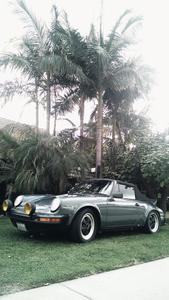
Awesome car!

Instructor
Joined: Jan 2008
Posts: 101
Likes: 0
From: San Diego
"The Auto Union race cars were designed by the famous engineer Ferdinand Porsche; they were based on an earlier design he had done using a mid-engined layout similar to the famous 1923 Benz Tropfenwagen, or "Teardrop" aerodynamic design....Additional work was needed on the car's cornering behavior; accelerating out of a corner would cause the inside rear wheel to spin furiously. This was much abated by the use of a Ferdinand Porsche innovation, a ZF manufactured limited slip differential, introduced at the end of the 1935 season."
"Model-year 1970 also brought first-time availability of an optional limited-slip differential." (Referring to the 911)."
"Porsche pushed the 911 into the '70s with a slightly larger 2.2-liter version of its flat six. Otherwise the 1970 911 lineup varied little from 1969. However, for the first time, a limited-slip differential was offered as an option."
Okay, so maybe this is going in a "911S Registry" direction.....
"Model-year 1970 also brought first-time availability of an optional limited-slip differential." (Referring to the 911)."
"Porsche pushed the 911 into the '70s with a slightly larger 2.2-liter version of its flat six. Otherwise the 1970 911 lineup varied little from 1969. However, for the first time, a limited-slip differential was offered as an option."
Okay, so maybe this is going in a "911S Registry" direction.....
Rennlist Member
Joined: Oct 2004
Posts: 20,607
Likes: 16
From: Bakersfield, CA, for now...
My view on LSD is as follows. In the mid-'80s I drove an SCCA E/P 914, and I used one of two gearboxes depending on the track we were running. Both transmissions were fitted with LSD, but they were set up differently. The gearbox for short courses like Carlsbad, Ca, and Phoenix Firebird, had an 80% unit, the long course box for Riverside, Willow Springs, etc., was fitted with a 50% LSD. I found the higher percentage was more effective in second and third gear corners while the milder setup for the longer courses gave me a nice degree of balance. As Steve stated, LSD adds a bit of stability under braking, but for me it made it easier to generate the same lap times as I could do without LSD, which meant that if I had to really crank a couple of laps to gain a position the car was up to the task. LSD preserved my rear tires, keeping their temperatures more stable, which gave me a more consistent car through an entire race. It was also a good tool in case I needed to adjust my driving to deal with handling that was going away for one reason or another.
LSD on the street? Bad weather makes a good argument for it, but in 99% of street driving I don't see a need for it.
LSD on the street? Bad weather makes a good argument for it, but in 99% of street driving I don't see a need for it.

RIP
Joined: Mar 2006
Posts: 2,433
Likes: 2
From: Austin, TX
I just bought a 1980 Euro SC with no LSD, though I haven't actually looked to verify that to be honest. You never know, sometimes you get lucky.
 I also have a 92 Carrera 2 with LSD that I've done lots of track days with. It will be interesting to see how the SC handles the track compared to the 964 in places where LSD should help. I'm thinking trail braking the SC through T1 at TWS will be fun.
I have yet to encounter a place on the street where I thought LSD would make a difference, even driving in the rain. Of course I wouldn't push it in the rain on the street either.
Instructor
Joined: Jan 2008
Posts: 101
Likes: 0
From: San Diego
I grew up in New York (which is why I live in California now) and I know what you're talking about. A rear-engined car with LSD must be so much fun to drive in the snow. I really regret not owning a VW Beetle or a Karman Ghia when I was in high school. Of course, my rat 72 Firebird with the "Posi" rear was pretty cool too.