When you click on links to various merchants on this site and make a purchase, this can result in this site earning a commission. Affiliate programs and affiliations include, but are not limited to, the eBay Partner Network.
Jack, I coach in a lot of DE type environments. The level of poor decision making and extremely low probability bonehead moves IN INCREDIBLY HIGH POWERED EQUIPMENT USING ZERO OR NEARLY ZERO SAFETY GEAR is mind boggling.
Examples?
Other than early apexing, going to fast into a turn, and trying to pass someone improperly... what are othe rthings you see at DE?
I have only done this for several events...
But the 2 crashes I saw were:
1) Taking a turn way too fast, and hitting a wall. Driver claimed mechanical issue.
2) Taking turn too fast, over correcting, hitting tire wall...
I think that one crash issue both racers and DE'ers do regularly but for different reasons. DE'ers will try to correct an off and lack the ability to do so and crash. Racer's will try to correct an off due to "red mist" and need to keep in the race and crash.
Maybe a way to look at risk is to assign where primary risk is?
Other driver actions affecting you Race > DE
mechanical failures race = DE
my own errors race = DE
now to mitigate that risk? Race car level safety gear under all conditions
How anyone thinks DE is safe in a streetcar 3pt seatbelt GT3 or Z06 capable of 150mph on just about any track is beyond me. And those riding low power low speed Miatas remember that the Z06 sharing the track with you is a 3200lb missile coming up on your six. You are at risk too.
Jack, I coach in a lot of DE type environments. The level of poor decision making and extremely low probability bonehead moves IN INCREDIBLY HIGH POWERED EQUIPMENT USING ZERO OR NEARLY ZERO SAFETY GEAR is mind boggling.
I'll take a little bit exception to Rock Climbing as #2 on the list. As a rock/ice climber for 30+ years I think the perception of the sport is similar to other risk sports - to those not involved, it looks like "you must be crazy to do that". Same thing I hear about track driving & racing. Personally I'd rank skydiving and rappelling way higher than climbing. Just like in racing, a cool head, experience, good decision making and safety gear mitigates a lot of the risk, but doesn't eliminate it. And if all the risk were gone, we wouldn't be doing it if we're honest. The difference between climbing and skydiving in my opinion, is in climbing, the equipment is backup for when **** happens. You can still climb without gear, it's your skill that's important. But in skydiving and scuba diving, the gear is required and necessary. It fails, you'll probably die.
I'll take a little bit exception to Rock Climbing as #2 on the list. As a rock/ice climber for 30+ years I think the perception of the sport is similar to other risk sports - to those not involved, it looks like "you must be crazy to do that". Same thing I hear about track driving & racing. Personally I'd rank skydiving and rappelling way higher than climbing. Just like in racing, a cool head, experience, good decision making and safety gear mitigates a lot of the risk, but doesn't eliminate it. And if all the risk were gone, we wouldn't be doing it if we're honest. The difference between climbing and skydiving in my opinion, is in climbing, the equipment is backup for when **** happens. You can still climb without gear, it's your skill that's important. But in skydiving and scuba diving, the gear is required and necessary. It fails, you'll probably die.
- Cris
#88 SP2 944 Cup
I scuba. The safety system and equipment is actually pretty good. Most diver crises are caused by anxiety with resulting inability to follow the system and utilize equipment. I've been anxious at depth and I understand how it happens.
In scuba most divers use (and most operators require) a buddy system for recreational diving. You should always be within a breath hold of your buddy and know where they are. All air systems have a back up regulator in case your primary fails or your buddy needs it. Some divers also carry a mini tank which has a separate breather and can get you to the surface. We all use computers which help keep us from decompression depth and oxygen crisis.
I scuba. The safety system and equipment is actually pretty good. Most diver crises are caused by anxiety with resulting inability to follow the system and utilize equipment. I've been anxious at depth and I understand how it happens.
Just proves my point. I'm an outsider who has no experience (or desire!) in scuba and from my perception is it's very risky.
I scuba. The safety system and equipment is actually pretty good. Most diver crises are caused by anxiety with resulting inability to follow the system and utilize equipment. I've been anxious at depth and I understand how it happens. In scuba most divers use (and most operators require) a buddy system for recreational diving. You should always be within a breath hold of your buddy and know where they are. All air systems have a back up regulator in case your primary fails or your buddy needs it. Some divers also carry a mini tank which has a separate breather and can get you to the surface. We all use computers which help keep us from decompression depth and oxygen crisis. Is it risky? Yup.
Now take it up a level to mixed gas, deep cave diving. Open water, recreational diving is low risk in comparison.
Sports are generally fairly safe, even the ones that seem risky. We tend to focus on real or imagined vividly bad outcomes, and the countless times where outcomes are fine get less attention, so our risk perception can be far off the mark.
Bigger actual risks are more insidious killers like heart disease, cancer, etc., so best to reduce those risks with good diet, exercise, managing stress, not smoking, etc. Dying gradually but prematurely isn't as dramatic as dying in a crash, but the end result is the same.
Just proves my point. I'm an outsider who has no experience (or desire!) in scuba and from my perception is it's very risky.
As compared to climbing? Not even close if you stay above recreational depths (130'). In both pursuits though the danger level really depends on how you react when the gear fails. React calmly and correctly and you survive, panic and you could die.
The Charlotte Observer keeps statistics on racing fatalities. Most of the events they include are racing only, some have DE's associated with them. It is not clear in the database if all of the fatalities they list are racing, or if some are DE's, so it's not a perfect data set.
That said, here's some information I extracted from the database (which The Observer was kind enough to make available to me in it's raw form). Most fatalities are from hitting immovable objects, but interestingly roughly 15% are heart attacks. There is no population information in the database, so there's no direct way to give a probability/100,000 type metric.
From: Mid-Atlantic (on land, not in the middle of the ocean)
^ Assuming the Charlotte Observer data is reasonably accurate, seems to be a clear downward trend in fatalities since 2001.
If there are about 10 fatalities per year, and about 12% are on road courses, that's about 1 fatality per year on road courses, and only a portion of that is associated with DE. I also estimate roughly 100 million DE miles per year in the US. Even if the true number of fatalities on road courses is up to say 5x higher, the absolute risk of fatality associated with DE is still quite low, and comparable to road fatality rates (per mile driven).
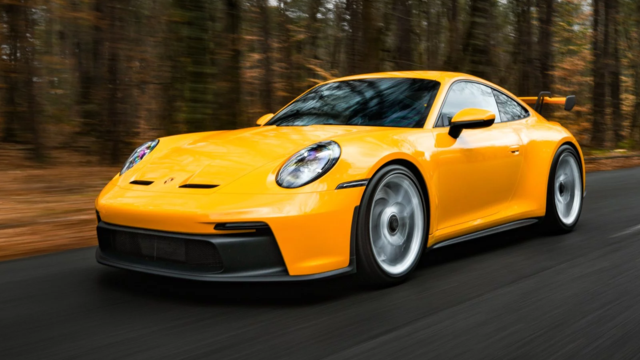
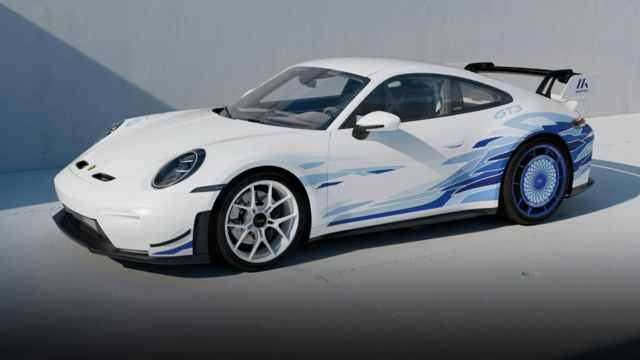
Porsche 911 GT3 Artisan Edition Pays Homage to Japanese Culture
Slideshow: Porsche has created a Japan-only 911 GT3 Artisan Edition that blends track-ready hardware with design cues inspired by traditional Japanese craftsmanship.
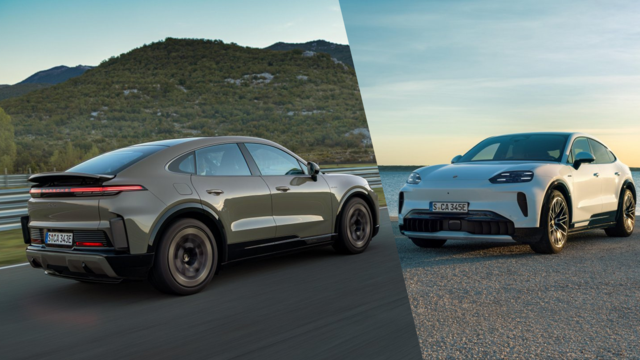
Porsche Reveals Coupe Variant of the Electric Cayenne With a Fresh Look
Slideshow: Porsche's latest electric Cayenne Coupe blends dramatic styling with supercar acceleration, turning the brand's midsize SUV into a 1,139-horsepower flagship.







 .
.