




Experience with Cobb tuning?

Rennlist Member


Joined: Apr 2014
Posts: 1,265
Likes: 881
From: Florida

Surprised there is so much skepticism about ProTunes in this forum. I can see how it may be seen as excessive for a mildly modded car, but there is no substitute for a bespoke tune file created just for you and your specific vehicle with your particular mods and your density altitude running your local fuel etc etc. You’re never going to get better results with an off the shelf tune file intended for broadly based conditions and mods to suit a large customer base by using the same tune file for everyone. I tried the OTS route first! But the custom ProTune was a game changer and the only legitimate way to match performance with longevity. The Cobb is just a conduit. It’s a tool to collect all the data (there are many others) and load the new files. The value add from the tuner comes from interpreting the data to create an adjusted file that really works just for you. For myself, I datalog on the street or the track since that’s where the car is driven.

Burning Brakes

Joined: Feb 2020
Posts: 981
Likes: 487
From: Chester Springs, PA
I'm in PA and am looking to get a ProTune done (2017 991.2 base).
I reached out to a local dealer for Cobb and they asked me what modifications I have and if they are EPA approved. My sport cats are not EPA approved.
What are my options?
I have the following mods:
Tial IC
Tial Inlet pipes
Tial intake
BMC air filter
Soul sport headers
Soul sport cats
Porsche third radiator
I reached out to a local dealer for Cobb and they asked me what modifications I have and if they are EPA approved. My sport cats are not EPA approved.
What are my options?
I have the following mods:
Tial IC
Tial Inlet pipes
Tial intake
BMC air filter
Soul sport headers
Soul sport cats
Porsche third radiator

Banned
Joined: Nov 2021
Posts: 99
Likes: 33
I'm in PA and am looking to get a ProTune done (2017 991.2 base).
I reached out to a local dealer for Cobb and they asked me what modifications I have and if they are EPA approved. My sport cats are not EPA approved.
What are my options?
I have the following mods:
Tial IC
Tial Inlet pipes
Tial intake
BMC air filter
Soul sport headers
Soul sport cats
Porsche third radiator
I reached out to a local dealer for Cobb and they asked me what modifications I have and if they are EPA approved. My sport cats are not EPA approved.
What are my options?
I have the following mods:
Tial IC
Tial Inlet pipes
Tial intake
BMC air filter
Soul sport headers
Soul sport cats
Porsche third radiator

Instructor
Joined: Dec 2022
Posts: 104
Likes: 43
for anyone concerned about how much data there is, and what the tuners have to work with.... google the Cobb accesstuner tuning guide - be prepared to spend a couple hours reading and being impressed. There is ALOT in the ecu and there is alot to understand about it. Gone are the days of the old 4g63's, volvo t5's, 944 turbos etc that you could just trick a few sensors.
it's pretty obvious cobb putt alot of work into this, and gives alot of control to the protuners.
it's pretty obvious cobb putt alot of work into this, and gives alot of control to the protuners.

Burning Brakes
Joined: Feb 2017
Posts: 1,219
Likes: 138
From: Golden, CO
I have been considering purchasing one of your tunes for my 2017 991.2 base Carrera. But, as I live in the Denver area, I am wondering how well such a tune will work at my high altitude. Obviously, the pressure ratios will be shifted by the thin air.
Anyone have any experience with a Cobb tune at high altitude? I live in the Denver area and my car spends its life between 5000 and 10,000 feet of altitude. That radically alters the operating pressure ratio of the turbochargers.
For example, my base 991.2 develops a stock boost of 13.1 psi--at sea level. If the ECU compensates for our thinner air in Denver--12.2 vs. 14.7 psi--that already increases the peak power pressure ration from 1.89 to 2.28. If the ECU maintains power at 10,000 feet--not uncommon as the great local mountain roads are all at higher altitude than Denver--the pressure ratio rises to 2.87. That's a lot higher than the seal level ratio of 1.89.
All of these numbers get worse with the higher boost employed when running a tune to increase power through higher boost pressure. With a power increase of about 50 hp, this pressure ratio becomes more like 3.1 at 10,000 feet.
I doubt that such high pressure ratios sit on a reasonable part of the compressor map of the stock turbos on a 991.2 base Carrera. And this is a hardware problem that can't be solved by software. Does anyone have any experience with the Cobb tune under such conditions?
Anyone have any experience with a Cobb tune at high altitude? I live in the Denver area and my car spends its life between 5000 and 10,000 feet of altitude. That radically alters the operating pressure ratio of the turbochargers.
For example, my base 991.2 develops a stock boost of 13.1 psi--at sea level. If the ECU compensates for our thinner air in Denver--12.2 vs. 14.7 psi--that already increases the peak power pressure ration from 1.89 to 2.28. If the ECU maintains power at 10,000 feet--not uncommon as the great local mountain roads are all at higher altitude than Denver--the pressure ratio rises to 2.87. That's a lot higher than the seal level ratio of 1.89.
All of these numbers get worse with the higher boost employed when running a tune to increase power through higher boost pressure. With a power increase of about 50 hp, this pressure ratio becomes more like 3.1 at 10,000 feet.
I doubt that such high pressure ratios sit on a reasonable part of the compressor map of the stock turbos on a 991.2 base Carrera. And this is a hardware problem that can't be solved by software. Does anyone have any experience with the Cobb tune under such conditions?
Drifting

Joined: Jan 2015
Posts: 2,103
Likes: 1,969
From: Pasadena, CA
I have been considering purchasing one of your tunes for my 2017 991.2 base Carrera. But, as I live in the Denver area, I am wondering how well such a tune will work at my high altitude. Obviously, the pressure ratios will be shifted by the thin air.
Anyone have any experience with a Cobb tune at high altitude? I live in the Denver area and my car spends its life between 5000 and 10,000 feet of altitude. That radically alters the operating pressure ratio of the turbochargers.
For example, my base 991.2 develops a stock boost of 13.1 psi--at sea level. If the ECU compensates for our thinner air in Denver--12.2 vs. 14.7 psi--that already increases the peak power pressure ration from 1.89 to 2.28. If the ECU maintains power at 10,000 feet--not uncommon as the great local mountain roads are all at higher altitude than Denver--the pressure ratio rises to 2.87. That's a lot higher than the seal level ratio of 1.89.
All of these numbers get worse with the higher boost employed when running a tune to increase power through higher boost pressure. With a power increase of about 50 hp, this pressure ratio becomes more like 3.1 at 10,000 feet.
I doubt that such high pressure ratios sit on a reasonable part of the compressor map of the stock turbos on a 991.2 base Carrera. And this is a hardware problem that can't be solved by software. Does anyone have any experience with the Cobb tune under such conditions?
Anyone have any experience with a Cobb tune at high altitude? I live in the Denver area and my car spends its life between 5000 and 10,000 feet of altitude. That radically alters the operating pressure ratio of the turbochargers.
For example, my base 991.2 develops a stock boost of 13.1 psi--at sea level. If the ECU compensates for our thinner air in Denver--12.2 vs. 14.7 psi--that already increases the peak power pressure ration from 1.89 to 2.28. If the ECU maintains power at 10,000 feet--not uncommon as the great local mountain roads are all at higher altitude than Denver--the pressure ratio rises to 2.87. That's a lot higher than the seal level ratio of 1.89.
All of these numbers get worse with the higher boost employed when running a tune to increase power through higher boost pressure. With a power increase of about 50 hp, this pressure ratio becomes more like 3.1 at 10,000 feet.
I doubt that such high pressure ratios sit on a reasonable part of the compressor map of the stock turbos on a 991.2 base Carrera. And this is a hardware problem that can't be solved by software. Does anyone have any experience with the Cobb tune under such conditions?
Rennlist Stories
The Best Porsche Posts for Porsche Enthusiasts

Genius Porsche-Themed Gifts That'll Make Any Dad or Grad Smile
Joe Kucinski
10 Used Porsches Are Selling for Way Too Cheap
Joe Kucinski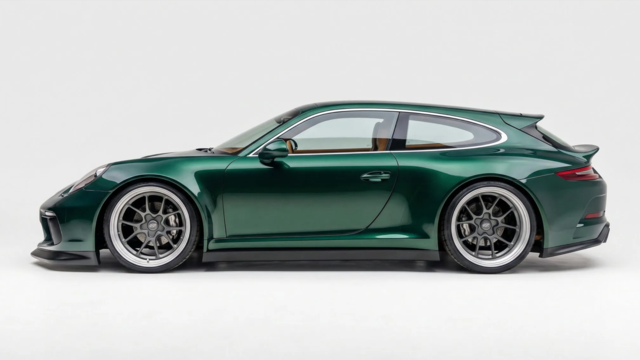
Tuner Is Converting Porsche 911s Into Shooting Brakes
Verdad Gallardo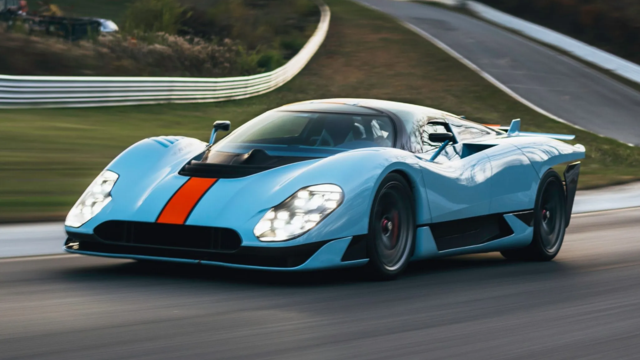
This Coachbuilt Creation Is A Modern Take on the Legendary Porsche 917
Verdad Gallardo
Is This Convertible Cayenne A Steal, Or A Returnless Investment?
Verdad Gallardo
10 Best Non-Flat Six Porsches You Can Buy For Under $100K
Joe Kucinski
Porsche's Top 5 Most Questionable Naming Decisions
Verdad Gallardo
Pogea Racing's 964 Porsche 911 Reimagination Stands Out in a Crowded Field
Verdad Gallardo