



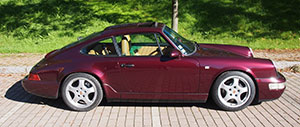

VIN Number decipher?

Thread Starter
Racer
Joined: Jan 2002
Posts: 314
Likes: 1
From: P-ville, PA
 VIN Number decipher?
Does any one know a website that can help me decipher my VIN?
or if you you'd like to help me out....
1991 C2 VIN WPOAB2965MS410529
And if your really looking for something to do can you tell me if my motor is before or after the cylinder "fix" Serial number 62M03119
Thanks dave
or if you you'd like to help me out....
1991 C2 VIN WPOAB2965MS410529
And if your really looking for something to do can you tell me if my motor is before or after the cylinder "fix" Serial number 62M03119
Thanks dave
Addict
Rennlist Member
Rennlist Member
Joined: Mar 2002
Posts: 3,606
Likes: 1
From: Highland Park, IL
You have a '91.
From John Miles' brilliant 964 website.
From John Miles' brilliant 964 website.
The easiest way to correctly identify a 964 is to check the vehicle identification number (VIN). The VIN is a 17 digit international code. Porsche use two versions, the ROW and the USA requirements code. It is much easier to identify an American 964 as compared to a ROW 964. The following brief explanation of key digits within the VIN will ensure correct identification of type and for the US version more detail can be extracted. This is very important when trying to determine if a 964 is genuine and the model is actually manufactured by Porsche and is not an aftermarket conversion.
Digit 4
Z = ROW market
A = Coupe (USA)
B = Targa (USA)
C = Cabriolet (USA)
Digit 5
Z = ROW
A = 3.3 litre turbocharged engine
B = 3.6 litre normally aspirated engine
C = 3.6 litre turbocharged engine
Digit 6
Z = ROW
0 = No airbags installed
2 = airbags installed
Digits 7 and 8
First two numbers of the type (auftragsnummer) number. In all cases for the 964 these numbers will be 96
Digit 9 is a check number and is not important. However for the USA this will be a 0 to 9 or a X and for the ROW will be a Z.
Digit 10 is the model year letter.
K = 1989
L = 1990
M = 1991
N = 1992
P = 1993
R = 1994
Digit 12 is the last number of the type and this will always be a 4.
Digits 13 to 17 make up the serial number. Digit 13 also provides version identification but can only be used for a specific model year. The numbers were changed around so a 5 in 1989 may not be the same as a 5 in 1994.
The use of this data is extremely important especially if the 964 being offered is not contained in the list of models found in the timeline section. A number of turbocharged cabriolets are being claimed as factory produced. Their VINs do not support this claim apart from the fact that such a model does not appear in the records of Porsche production for the 964.
Another issue which causes identification problems is the chassis number. This is found on a plate directly below the fuel tank in the luggage compartment. This number will always start WP0ZZZ regardless of version. The important point is that the last five digits of the chassis number match the serial number of the VIN.
964s can also be identified by type number. The type number is located on the identification label found on the underside of the luggage compartment lid and a copy of this label is found in the original service record book provided with every 964 upon original delivery.
Myths and Legends
As with any automobile model the 964 has its fair share of myths and legends. Ask many alleged experts and they will you that the 964 is riddled with faults and is expensive to maintain. This is simply not true. There were only a few problems (far less than many other automobiles then and now) which were quickly rectified by Porsche which affected the 964 series.
Engine Oil Leak
In fact this was an acknowledged design flaw by Porsche. The cylinder heads were mounted without a head gasket. Unfortunately the engine ran a little hotter than predicted and this caused a slight warp at the base of the cylinder head and oil would weep out. This problem was rectified by the installation of a head gasket during the engine production of model year 1991. A fix was also approved for the earlier engines. The main problem is that the owners of the time did not have this fix carried out. Some of the 964s now weep oil. The problem is fixable. A caveat has to be added as well regarding oil leaks. This introduction is being written in 2003 about engine produced from 1988 to 1993. The Porsche engine is an internal combustion engine and is dry sumped. All internal combustion engines develop oil leaks with age. Not with mileage but with age. Gaskets and seals eventually fail. The less the engine is used the more likely they will fail in a shorter calendar time. This is not a model or 964 problem this is just reality.
Digit 4
Z = ROW market
A = Coupe (USA)
B = Targa (USA)
C = Cabriolet (USA)
Digit 5
Z = ROW
A = 3.3 litre turbocharged engine
B = 3.6 litre normally aspirated engine
C = 3.6 litre turbocharged engine
Digit 6
Z = ROW
0 = No airbags installed
2 = airbags installed
Digits 7 and 8
First two numbers of the type (auftragsnummer) number. In all cases for the 964 these numbers will be 96
Digit 9 is a check number and is not important. However for the USA this will be a 0 to 9 or a X and for the ROW will be a Z.
Digit 10 is the model year letter.
K = 1989
L = 1990
M = 1991
N = 1992
P = 1993
R = 1994
Digit 12 is the last number of the type and this will always be a 4.
Digits 13 to 17 make up the serial number. Digit 13 also provides version identification but can only be used for a specific model year. The numbers were changed around so a 5 in 1989 may not be the same as a 5 in 1994.
The use of this data is extremely important especially if the 964 being offered is not contained in the list of models found in the timeline section. A number of turbocharged cabriolets are being claimed as factory produced. Their VINs do not support this claim apart from the fact that such a model does not appear in the records of Porsche production for the 964.
Another issue which causes identification problems is the chassis number. This is found on a plate directly below the fuel tank in the luggage compartment. This number will always start WP0ZZZ regardless of version. The important point is that the last five digits of the chassis number match the serial number of the VIN.
964s can also be identified by type number. The type number is located on the identification label found on the underside of the luggage compartment lid and a copy of this label is found in the original service record book provided with every 964 upon original delivery.
Myths and Legends
As with any automobile model the 964 has its fair share of myths and legends. Ask many alleged experts and they will you that the 964 is riddled with faults and is expensive to maintain. This is simply not true. There were only a few problems (far less than many other automobiles then and now) which were quickly rectified by Porsche which affected the 964 series.
Engine Oil Leak
In fact this was an acknowledged design flaw by Porsche. The cylinder heads were mounted without a head gasket. Unfortunately the engine ran a little hotter than predicted and this caused a slight warp at the base of the cylinder head and oil would weep out. This problem was rectified by the installation of a head gasket during the engine production of model year 1991. A fix was also approved for the earlier engines. The main problem is that the owners of the time did not have this fix carried out. Some of the 964s now weep oil. The problem is fixable. A caveat has to be added as well regarding oil leaks. This introduction is being written in 2003 about engine produced from 1988 to 1993. The Porsche engine is an internal combustion engine and is dry sumped. All internal combustion engines develop oil leaks with age. Not with mileage but with age. Gaskets and seals eventually fail. The less the engine is used the more likely they will fail in a shorter calendar time. This is not a model or 964 problem this is just reality.
Racer
Joined: Dec 2004
Posts: 441
Likes: 0
From: Suburbia
Dave - According to Adrian's book (page 8) head gaskets were installed after engine serial number 62M06836 (for Tips its after 62M52757).
I don't think that was exactly what you wanted to hear but it is what it is.
jg
I don't think that was exactly what you wanted to hear but it is what it is.
jg
Technical Specialist
Rennlist
Lifetime Member
Rennlist
Lifetime Member

Joined: May 2001
Posts: 5,865
Likes: 26
From: TX
What I'm really after is the build date for the car
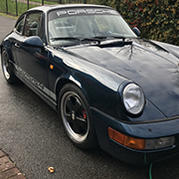
Instructor
Joined: Aug 2004
Posts: 154
Likes: 0
From: Peterborough, UK
Joey,
thanks for Vin number summary, i have added it to my 964 page and made it a nice "idots" version in color. ( well so at least i can understand it).
I put a link / acknowledgement to John Miles' site, seeing as you indicated he was the original source.
Al.
thanks for Vin number summary, i have added it to my 964 page and made it a nice "idots" version in color. ( well so at least i can understand it).
I put a link / acknowledgement to John Miles' site, seeing as you indicated he was the original source.
Al.
Trending Topics
Instructor
Joined: Aug 2004
Posts: 154
Likes: 0
From: Peterborough, UK
Originally Posted by Andy Roe
Al,
Just noticed a typo on your VIN chart. K is for 89, not 98!!
Andy
Just noticed a typo on your VIN chart. K is for 89, not 98!!
Andy
Rennlist Stories
The Best Porsche Posts for Porsche Enthusiasts

Genius Porsche-Themed Gifts That'll Make Any Dad or Grad Smile
Joe Kucinski
10 Used Porsches Are Selling for Way Too Cheap
Joe Kucinski
Tuner Is Converting Porsche 911s Into Shooting Brakes
Verdad Gallardo
This Coachbuilt Creation Is A Modern Take on the Legendary Porsche 917
Verdad Gallardo
Is This Convertible Cayenne A Steal, Or A Returnless Investment?
Verdad Gallardo
10 Best Non-Flat Six Porsches You Can Buy For Under $100K
Joe Kucinski
Porsche's Top 5 Most Questionable Naming Decisions
Verdad Gallardo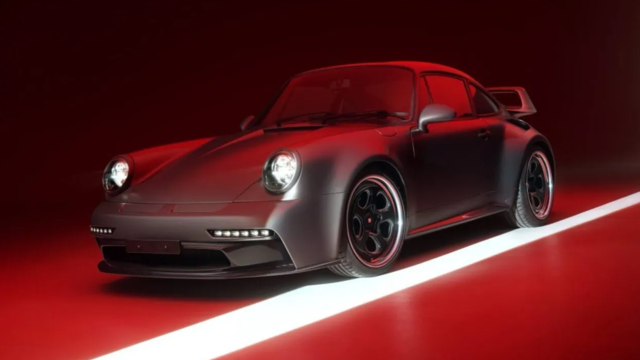
Pogea Racing's 964 Porsche 911 Reimagination Stands Out in a Crowded Field
Verdad Gallardo
6 Convertible Top MYTHS Most People Don't Understand!
Michael S. Palmer
Thread Starter
Racer
Joined: Jan 2002
Posts: 314
Likes: 1
From: P-ville, PA
Thank you Bill, I knew I had seen that number somewhere, after all if I was gonna make one up I'd pick something a little later! The date is on the door pillar sticker and reads 17 sept 1990.
thanks to all
thanks to all

