






Euro S race car supercharged
Race Car

Joined: Jul 2005
Posts: 4,794
Likes: 92
From: Mechanochondriacism

Originally Posted by Imo000
Carl,
You are indeed correct about the 928 not being compatible with the MSD boost retard boxes. Mark installed two on his turbo '86, according the direct instruction from MSD and yet still fried both of them. I have two on my shelf but will nto be using it on the 928. Its really too bad casue they are an excellent product.
You are indeed correct about the 928 not being compatible with the MSD boost retard boxes. Mark installed two on his turbo '86, according the direct instruction from MSD and yet still fried both of them. I have two on my shelf but will nto be using it on the 928. Its really too bad casue they are an excellent product.
Dan Taylor, IIRC, had one in his 928 for the duration of his ownership with no problems. But there's the rub- he bought the car with the unit installed, so I never learned about the proper wiring or any necessary alterations.
Captain Obvious
Super User
Super User
Joined: Aug 2003
Posts: 22,846
Likes: 348
From: Cambridge, Ontario, Canada
Originally Posted by SMTCapeCod
Dan Taylor, IIRC, had one in his 928 for the duration of his ownership with no problems. But there's the rub- he bought the car with the unit installed, so I never learned about the proper wiring or any necessary alterations.
Thread Starter
Rennlist Member
Joined: Jul 2004
Posts: 141
Likes: 0
From: Waukesha,WI
""""Jean-Louis, that's a pretty cool project. Do you plan on incresing the boost, or running it on straight 93?""""
I don't want to run more boost, the maximum with this setup will be 6 psi. Since this is a race car I don't want to blow the engine, run it safe for a long time this is the goal. The only thing I might do is air to air intercooler next. For the gas I will be running 3/4 93 with 1/4 110 octane, the cost of the 110 is not too bad around here $4.59 against $3.00 for the 93.
I want to thank Mike, Paul, Agnes and Tim for all the help in this project.
Jean-Louis
928 Eurogroup LLC
91GT, 84 Euro S Murf supercharged
I don't want to run more boost, the maximum with this setup will be 6 psi. Since this is a race car I don't want to blow the engine, run it safe for a long time this is the goal. The only thing I might do is air to air intercooler next. For the gas I will be running 3/4 93 with 1/4 110 octane, the cost of the 110 is not too bad around here $4.59 against $3.00 for the 93.
I want to thank Mike, Paul, Agnes and Tim for all the help in this project.
Jean-Louis
928 Eurogroup LLC
91GT, 84 Euro S Murf supercharged
Rennlist Member
Joined: Feb 2003
Posts: 29,828
Likes: 218
From: saratoga, ca
So what did you superimpose here? you calculated JP's torque based on his 350hp curve(the high torque line) and put your chevy HP curve on their also?
as long as you used the same RPM range, your comparison is valid, but it has to be redline to redline, or HP peak to HP peak and then if they are different rpms, they have to be scaled back proportionately. (eg: if one car was peak hp of 6000rpm and the other 5000rpm, those curves would have to be plotted against eachother starting from 5 and 6,000rpm being the same starting points. then 1/2 of 6000rpm would be 3000rpm and 1/2 of 5000rpm would be 2500rpm, but the data points would overlap here. ) In your plot, it looks pretty good .
as far as the chevy vs the 928.... the 928 has near 50 more hp available at 3000rpm, which will be 50% more accelerative forces to the rear wheels! However, there is a point at 3700rpm where the chevy has 25more hp but that is short lived, as then the 928 soars ahead after 4500rpm to max hp making 60 more hp (ie 290hp vs 350hp) . so, the 928 has it down low and it has it up high as well. its only deficit is a narrow range at 3700rpm, where you wouldnt really be pushing a car in racing anyway. (ie 4500 to 6000rpm is the sweet spot) But, if you wanted to lug the engine at 3000rpm, JP's supercharger would have 50% more torque to the rear wheels and HP there too!
Mk
as long as you used the same RPM range, your comparison is valid, but it has to be redline to redline, or HP peak to HP peak and then if they are different rpms, they have to be scaled back proportionately. (eg: if one car was peak hp of 6000rpm and the other 5000rpm, those curves would have to be plotted against eachother starting from 5 and 6,000rpm being the same starting points. then 1/2 of 6000rpm would be 3000rpm and 1/2 of 5000rpm would be 2500rpm, but the data points would overlap here. ) In your plot, it looks pretty good .
as far as the chevy vs the 928.... the 928 has near 50 more hp available at 3000rpm, which will be 50% more accelerative forces to the rear wheels! However, there is a point at 3700rpm where the chevy has 25more hp but that is short lived, as then the 928 soars ahead after 4500rpm to max hp making 60 more hp (ie 290hp vs 350hp) . so, the 928 has it down low and it has it up high as well. its only deficit is a narrow range at 3700rpm, where you wouldnt really be pushing a car in racing anyway. (ie 4500 to 6000rpm is the sweet spot) But, if you wanted to lug the engine at 3000rpm, JP's supercharger would have 50% more torque to the rear wheels and HP there too!
Mk
Originally Posted by Malibu310
I superimposed as best I could the Dyno I had done last friday with your Supercharged 928. I'm not sure at low RPM's how accurate the comparison is, but at mid to higher RPM's the comparison sould be fairly accurate.
As you can see your 928 has more horsepower and torque than my 6.3 litre Chevy normally aspirated, and as all 928 engines the power comes on at higher RPM's. The Chevy offers much more mid range power which is likely to be felt without driving the engine very hard. In fact the Chevy loses power after mid-range... this would have less of a top end... the supercharged 928 should have a much better top speed...
As you can see your 928 has more horsepower and torque than my 6.3 litre Chevy normally aspirated, and as all 928 engines the power comes on at higher RPM's. The Chevy offers much more mid range power which is likely to be felt without driving the engine very hard. In fact the Chevy loses power after mid-range... this would have less of a top end... the supercharged 928 should have a much better top speed...
Rennlist Member
Joined: Sep 2002
Posts: 5,855
Likes: 9
From: Gilbert, AZ
Originally Posted by mark kibort
nah, you can run in most all racing groups in a top class with any kind of blower. in ITE, its anything goes, in PCA, you get tossed into the top group with the fastest cars in the world, due to displacement and it being turboed. POC, same thing. TCRA, also top class and displacement .
the good news, get some trick intercooler and you get that think in the 400hp range quick. maybe some adjustment button for on demand extra boost!
MK
the good news, get some trick intercooler and you get that think in the 400hp range quick. maybe some adjustment button for on demand extra boost!
MK
 (or have more money! LOL)
Race Car
Joined: Jul 2005
Posts: 4,794
Likes: 92
From: Mechanochondriacism
I'm with you on the latter. Nice to see so many people with the knowledge and resources to take their cars so far on the track and as streeters. I'm just striving to stay near mediocrity!
And still harboring some hopes of getting some additional MSD install information posted up....
And still harboring some hopes of getting some additional MSD install information posted up....
Rennlist Stories
The Best Porsche Posts for Porsche Enthusiasts

Genius Porsche-Themed Gifts That'll Make Any Dad or Grad Smile
Joe Kucinski
10 Used Porsches Are Selling for Way Too Cheap
Joe Kucinski
Tuner Is Converting Porsche 911s Into Shooting Brakes
Verdad Gallardo
This Coachbuilt Creation Is A Modern Take on the Legendary Porsche 917
Verdad Gallardo
Is This Convertible Cayenne A Steal, Or A Returnless Investment?
Verdad Gallardo
10 Best Non-Flat Six Porsches You Can Buy For Under $100K
Joe Kucinski
Porsche's Top 5 Most Questionable Naming Decisions
Verdad Gallardo
Pogea Racing's 964 Porsche 911 Reimagination Stands Out in a Crowded Field
Verdad Gallardo
6 Convertible Top MYTHS Most People Don't Understand!
Michael S. Palmer
Race Car
Joined: Jul 2005
Posts: 4,794
Likes: 92
From: Mechanochondriacism
MSD, resolved
O.K. so I have more information "from the horse's mouth".
The connection between the MSD unit and the distributor is accomplished by slipping the connector on the ignition side of the green wire, and treating the sheathing and core like two different wires, one carrying the negative signal and one carrying the postive. So the wires that comprise the sheathing are simply twisted together and isolated from the core wire. Sleeving goes to MSD purple lead, core to green (according to the tech, at least).
The other connections are then made from the wires on the harness (obviously). The MSD tech recomended fabricating jumpers to work in the stock harness connector or tapping the wires on the car side, to avoid permanently ruining the harness by cutting the connector.
He also said that one of their tach signal (#8920) is required to keep the tach operational and ensure that the engine runs properly. Thats probably key for later models! Seems like some of the features like rev limiting and boost retard could be useful to some folks. Anyway, not advocating, just passing on some info.
Visual aid- Sample generic wiring diagram (Digital 6)
So that will strike some as incredibly inelegant, I suppose. But there it is. I spoke with "Joe" in their tech department. In my opinion he was knowledgeable
and knew a good bit about european ignitions and the CD/TSZ like the 928.
EDIT: After further work, the tach converter did not work with my '83 Euro tachometer. The Tachometer read the MSD tach signal just fine.
The connection between the MSD unit and the distributor is accomplished by slipping the connector on the ignition side of the green wire, and treating the sheathing and core like two different wires, one carrying the negative signal and one carrying the postive. So the wires that comprise the sheathing are simply twisted together and isolated from the core wire. Sleeving goes to MSD purple lead, core to green (according to the tech, at least).
The other connections are then made from the wires on the harness (obviously). The MSD tech recomended fabricating jumpers to work in the stock harness connector or tapping the wires on the car side, to avoid permanently ruining the harness by cutting the connector.
He also said that one of their tach signal (#8920) is required to keep the tach operational and ensure that the engine runs properly. Thats probably key for later models! Seems like some of the features like rev limiting and boost retard could be useful to some folks. Anyway, not advocating, just passing on some info.
Visual aid- Sample generic wiring diagram (Digital 6)
So that will strike some as incredibly inelegant, I suppose. But there it is. I spoke with "Joe" in their tech department. In my opinion he was knowledgeable
and knew a good bit about european ignitions and the CD/TSZ like the 928.
EDIT: After further work, the tach converter did not work with my '83 Euro tachometer. The Tachometer read the MSD tach signal just fine.
Last edited by SMTCapeCod; Jun 1, 2007 at 03:37 PM.
Race Car
Joined: Jul 2005
Posts: 4,794
Likes: 92
From: Mechanochondriacism
Crap! I just went through that issue (the signal to the fuel pump seemed to fail on the Permatune unit I had in there).
Of COURSE I should just stop messing with things that are working OK.. ...but I like OK+ !!
Of COURSE I should just stop messing with things that are working OK..
...but I like OK+ !!
Race Car
Joined: Jul 2005
Posts: 4,794
Likes: 92
From: Mechanochondriacism
M/Y
Originally Posted by Imo000
SMT.....What year is your 928. I'm looking for the same info for an '85, 32V.
With an '85, I'm not sure what-all would have to be done to isolate the ignition function from the rest of the programming & ECU control. My '85 had Jacobs units installed- two of them IIRC, and it was an impressive machine.
MSD finally has a tech phone number on their website. The guy I spoke with was Joe LaPille. When another tech answered and I started to get into the particular application, he passed me right over to Joe, so it seems like he's 'the man' for our questions, and like its a small enough tech operation that he ought to be accessible.
One of Mark Robinson's old posts said that (pertaining to coils, IIRC) he didn't like ACCEL but did see a hotter spark out of a Crane unit, and Crane also makes a mulitiple spark CD ignnition. ... We'll see...initially I was just looking at some of the add-on capacitors. But the idea of going to digital, multiple spark set up with some modest extras like a soft rev limiter is appealing. I've noticed some better response on installs in other vehicles -- I don't think there is any power, but the response is nice in its own right, as are reduced emissions.
Thread Starter
Rennlist Member
Joined: Jul 2004
Posts: 141
Likes: 0
From: Waukesha,WI
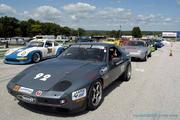
928 Euro supercharged at Road America
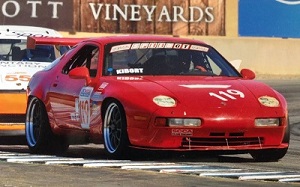
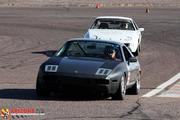
We just had a fantastic week end at Road America (Friday, Saturday and Sunday), the Euro Supercharged ran great, just had problems with coolant hoses leaking, nothing serious. The car is pulling like never before and was able to get pass some of those very expensive race car in the straight, I don't even want to talk about those GT3, they are now very far behind :-). The car ran a total of 24 sessions ( two drivers), this is almost 12 hours of driving. This is ~ 1200 miles at 5000rpm and above, the Murf SC kit ran without a problem The oil usage is normal, the engine used 3 to 4 quarts of oil for the three days week end, almost exactly like before the SC installation.
Now is just waiting for the next track week end........
We had a great time with great people from the 928GLOC and 928OC
Jean-Louis (we had plenty of that)
928 Eurogroup LLC
91GT, 83 Euro SC
Now is just waiting for the next track week end........
We had a great time with great people from the 928GLOC and 928OC
Jean-Louis
(we had plenty of that)928 Eurogroup LLC
91GT, 83 Euro SC